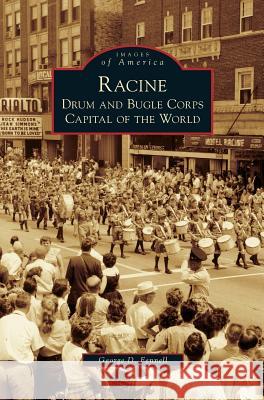
This book contains an incredible collection of facts and figures which is used to detail the history of the Racine Kiltie Kadets Drum and Bugle Corps. In it you will find scores, newsletters, rosters, lists of instructors, management and Parents Club Officers, formal and action photographs and details about all kinds of things related to the Kiltie Kadets. This book also is a trip through time that'll bring back memories of not only how prominent the Kiltie Kadets were as a Class C/Cadet Class Corps, but it's filled with competition results that recall the many corps and a whole segment of...
This book contains an incredible collection of facts and figures which is used to detail the history of the Racine Kiltie Kadets Drum and Bugle Corps....
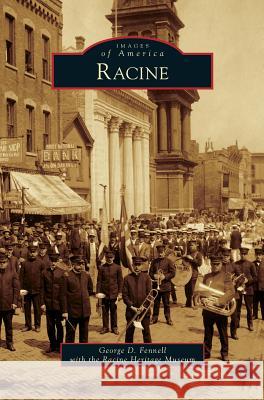
Many activities become short-lived fads. Not so for the drum and bugle corps in Racine. Here, after 150 years, drum and bugle corps activity still flourishes as a proud tradition. Racine is the self-proclaimed drum corps capital of the world. Racine had six competing drum and bugle corps during the 1960s and 1970s--very impressive for a community of 90,000. In fact, it would be difficult to find a longtime resident who is unaware of this activity. Everyone in Racine either was a member of or had family or friends who were members of a drum and bugle corps.
Many activities become short-lived fads. Not so for the drum and bugle corps in Racine. Here, after 150 years, drum and bugle corps activity still flo...
When Gilbert Knapp founded Racine in 1834 and the first pioneers settled there, no one had the remotest idea that the wilderness would one day transform into a thriving city. Ideally situated on Lake Michigan at the mouth of the Root River, the site was chosen by Knapp because of its harbor potential. The prospect of farming on the level prairies surrounding Racine also attracted many of the area's first settlers. Racine County is especially suited for growing wheat, which immediately became the county's leading agricultural product. The town of Racine quickly became a prosperous center...
When Gilbert Knapp founded Racine in 1834 and the first pioneers settled there, no one had the remotest idea that the wilderness would one day transfo...
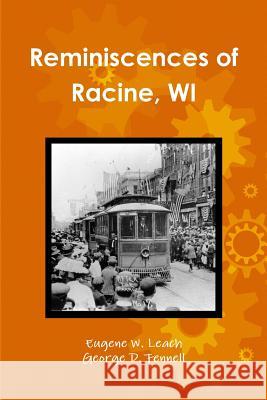
The first automobile in the history of the United States appeared on Racine, WI, streets back in 1873. It was a steam propelled horseless carriage conceived, designed and built by Rev. John Wesley Carhart, pastor of the Methodist-Episcopal Church there. A few years later, while serving as Presiding Elder of the Appleton, WI, District of the Methodist Church, an "Open Letter" written by fellow Methodist Minister George C. Haddock, and published in the Oshkosh Daily Northwestern, would change the course of John Wesley Carhart's life forever. John Wesley Carhart also was a prolific writer. One...
The first automobile in the history of the United States appeared on Racine, WI, streets back in 1873. It was a steam propelled horseless carriage con...