Rudolf Steiner's core mission--repeatedly delayed owing to the a lack of capacity in his colleagues--was to pursue contemporary spiritual-scientific research into the phenomena of reincarnation and karma. This stimulating book describes the winding biographical path of that mission. It focuses in particular on the mystery of Steiner's connection with the influential medieval philosopher and theologian Thomas Aquinas. Using numerous archival sources and publications, Thomas Meyer reveals many facts related to the core of Steiner's mission, showing the critical roles played by Wilhelm Anton...
Rudolf Steiner's core mission--repeatedly delayed owing to the a lack of capacity in his colleagues--was to pursue contemporary spiritual-scientific r...
This volume begins with Thomas Meyer's assessment of Anthroposophy's evolution since Rudolf Steiner's death and its future prospects. He offers an overview of the eighty-seven years of the development of the anthroposophic movement and the Anthroposophical Society, the worldwide organization headquartered in Dornach, Switzerland, since the death of its founder.
The Society went through a very difficult and controversial period in the ten years following Steiner's death, which culminated at its Annual Meeting in 1935. The result was the expulsion from the Society of two members...
This volume begins with Thomas Meyer's assessment of Anthroposophy's evolution since Rudolf Steiner's death and its future prospects. He offers an ove...
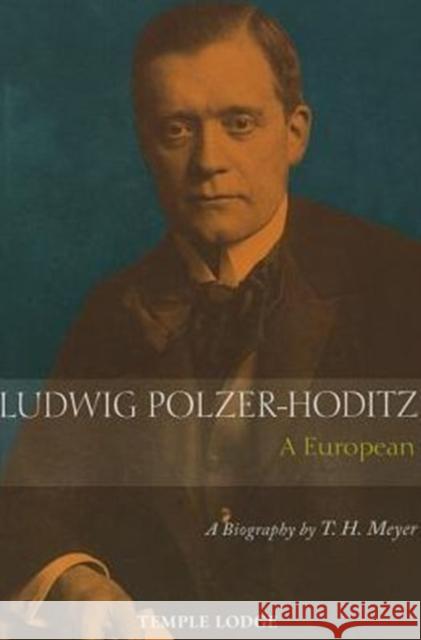
Thomas Meyer's major biography of Ludwig Polzer-Hoditz (1869-1945) offers a panoramic view of an exceptional life. One of Rudolf Steiner's most valued and independent-minded colleagues, Polzer-Hoditz was born in Prague (then in the Austro-Hungarian Empire) to an aristocratic family with royal connections. Leaving behind his background traditions, he would become a key player in Steiner's regenerative threefold social impulses, working tirelessly for a genuinely unified, free Europe. He also fought to protect Rudolf Steiner's esoteric legacy and the integrity of the Anthroposophical Society....
Thomas Meyer's major biography of Ludwig Polzer-Hoditz (1869-1945) offers a panoramic view of an exceptional life. One of Rudolf Steiner's most valued...
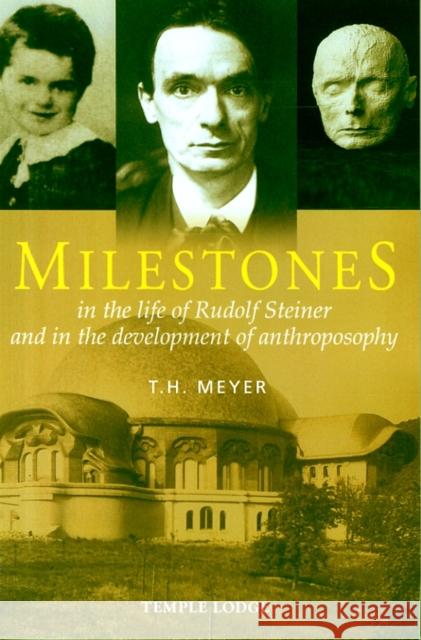
Why was the act of arson that destroyed the first Goetheanum so devastatingly successful in its malicious intent? What was the nature of the poisoning that Rudolf Steiner suffered in 1923? What was the significance of Steiner's encounter with an unknown Master in 1879, as well as his later meeting with Friedrich Nietzsche on his sickbed? Rather than presenting an accumulation of data, Thomas Meyer takes a symptomatological approach to the evolution of Rudolf Steiner's thinking, pinpointing specific moments in his biography while making numerous connections with contemporary issues....
Why was the act of arson that destroyed the first Goetheanum so devastatingly successful in its malicious intent? What was the nature of the poisoning...
Drawn by the mysterious mount Etna, Thomas Meyer sets off on a quest to discover the secrets of the Mediterranean islands of Sicily and Stromboli. The Sicilian region is not only famous for the drama of its live volcanoes, but also for its associations with numerous cultural figures, ranging from Cain, Empedocles, Klingsor, and the much maligned Cagliostro, through to Goethe and Rudolf Steiner. The author ponders their lives, work, and karmic connections, while unexpected meetings with cryptic strangers result in discussions that are filled with spiritual insights and pearls of wisdom.
...
Drawn by the mysterious mount Etna, Thomas Meyer sets off on a quest to discover the secrets of the Mediterranean islands of Sicily and Stromboli. ...