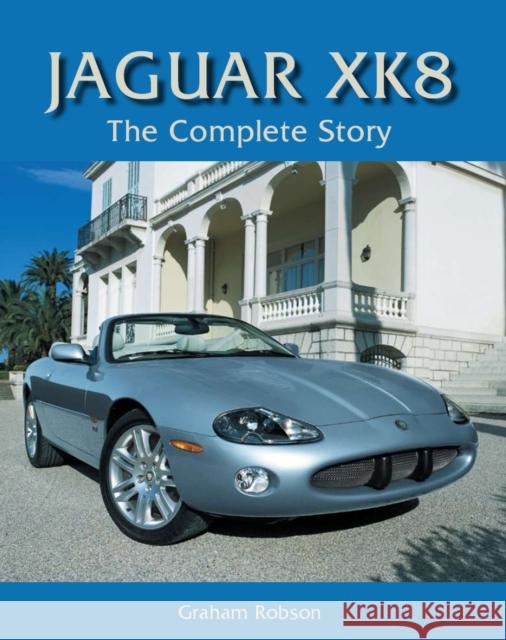
It was code-named X100 and it was to be Jaguar's latest sports cars, featuring both coupe and convertible coachwork. It was to have an all-new V8 engine and it was to replace the XJS. It would also ultimately have the most powerful forced-induction engine of any production Jaguar road card and it had a lot riding on its success. It was the XK8 - a sleek, purposeful grand tourer in the Jaguar tradition. Graham Robson, one-time Jaguar apprentice and a motoring historian with several other Jaguar books to his credit, tells the story of one of the twentieth century's most beautiful sports car,...
It was code-named X100 and it was to be Jaguar's latest sports cars, featuring both coupe and convertible coachwork. It was to have an all-new V8 engi...
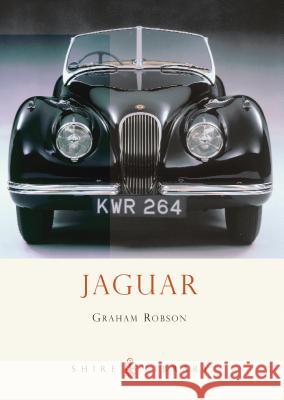
Sir William Lyons enjoyed a seemingly unstoppable rise to fame and fortune in the motor industry, and the Jaguar brand which he introduced became world-famous. Yet it did not happen overnight. In the 1920s he was in Blackpool, styling motorcycle sidecars, in the 1930s he was in Coventry developing the SS motor car, and the stand-alone Jaguar company did not appear until 1945. Until 1972, when he retired from business, Sir William was the mainstream, the chairman, the chief stylist, and the inspiration of all things Jaguar.
Helped along by the amazing new XK engine of 1948, by motor...
Sir William Lyons enjoyed a seemingly unstoppable rise to fame and fortune in the motor industry, and the Jaguar brand which he introduced became w...
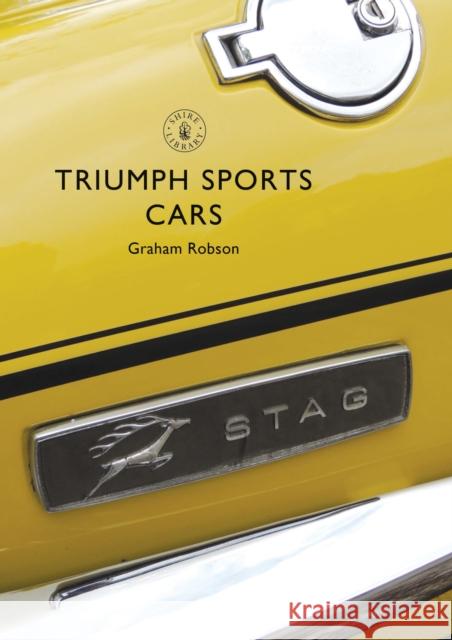
In the 1950s and 1960s, British sports cars ruled the road, and their charge was led by Triumphs. From the TR2, its first modern sports car, Triumph went on to produce a host of classic sports designs, such as the Spitfire, GT, and Stag, as well as more TR models, before ending with the TR7 in the late 1970s. These represented the epitome of the contemporary classic British sports car.
Fast, nimble, and gorgeous to behold, Triumphs offered the everyday motorist an exhilarating drive at a price they could afford. Popular both in the United Kingdom and the United States, the Triumph...
In the 1950s and 1960s, British sports cars ruled the road, and their charge was led by Triumphs. From the TR2, its first modern sports car, Triump...
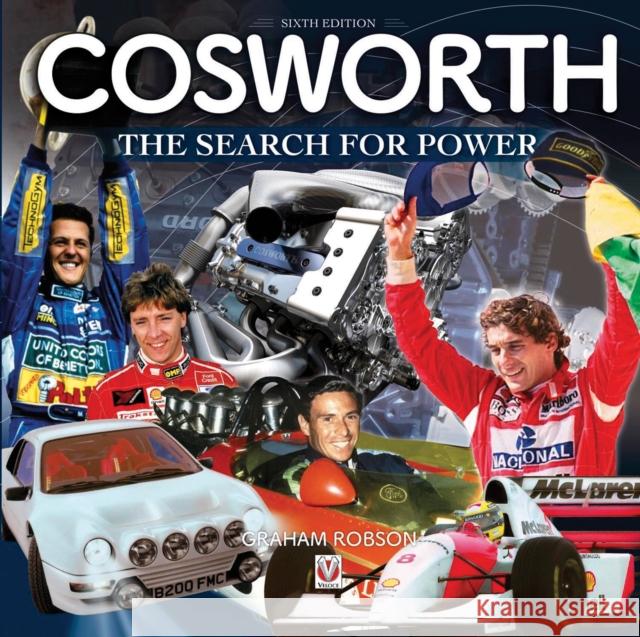
Not only has Cosworth designed and supplied many race car engines, which won F1, CART, and many other Championship races, but it has also produced many celebrated high-performance road-car engines. In more recent times, its growing expertise in developing electronic data capture components, and in providing ultra-high-tech engine manufacturing facilities, have made it a world leader at many levels. The expansion continues, and in this book the Cosworth story has been brought up-to-the-minute to celebrate the 50th anniversary of the birth of the legendary DFV F1 engine.
Not only has Cosworth designed and supplied many race car engines, which won F1, CART, and many other Championship races, but it has also produced ...
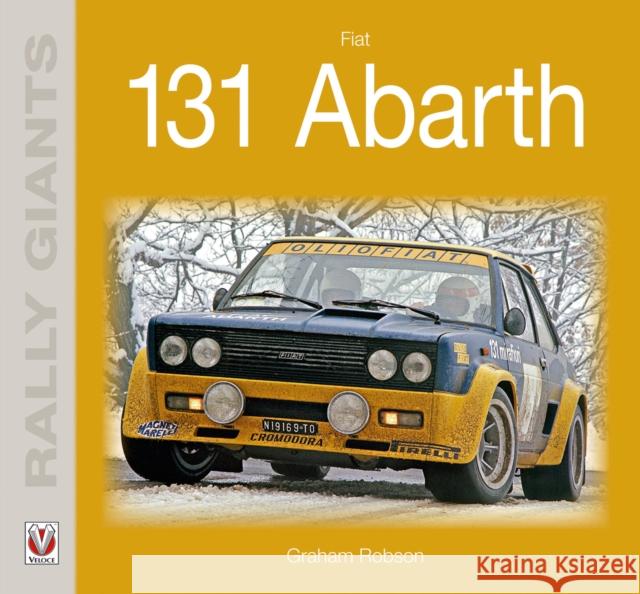
When Fiat entered rallying in 1970, its aim was to become World Rally Champion - and the 131 Abarth of 1976-1980 provided the machinery to make that possible. Within the Fiat-Lancia empire, the 131 Abarth not only replaced the 124 Abarth Spider sports car, but was also favored ahead of the charismatic Lancia Stratos.
By 1970s standards, the 131 Abarth was the most extreme and effective of all homologation specials. Compared to the 131 family car it was originally based, it had a different engine, transmission and suspension layouts, was backed by big budgets, and by a team of...
When Fiat entered rallying in 1970, its aim was to become World Rally Champion - and the 131 Abarth of 1976-1980 provided the machinery to make that p...
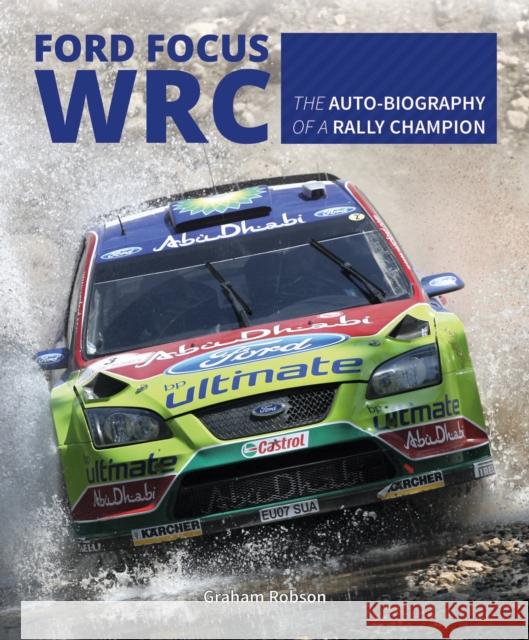
When world rallying introduced a new formula for "World Rally Cars," Ford seized the opportunity. Malcolm Wilson's M-Sport organization was contracted to do the job, completed the design in less than a year, and spent the next 12 years campaigning this turbocharged, four-wheel-drive car all round the world.
Working from state-of-the-art facilities, M-Sport built 97 Focus WRCs, all of which proved to be worthy of World level action when they won 44 World Championship events.
Stellar drivers like Colin McRae, Carlos Sainz, Markko Martin, Marcus Gronholm and Mikko Hirvonen...
When world rallying introduced a new formula for "World Rally Cars," Ford seized the opportunity. Malcolm Wilson's M-Sport organization was contracted...
Lasting six weeks and covering 16,000 miles from London to Mexico City via some of the most varying, tortuous and difficult terrain on three continents, the 1970 World Cup Rally was a unique high-speed event. Attracting many serious works teams such as Ford and British Leyland, it was, and remains, the toughest rally of all time.
Lasting six weeks and covering 16,000 miles from London to Mexico City via some of the most varying, tortuous and difficult terrain on three continent...
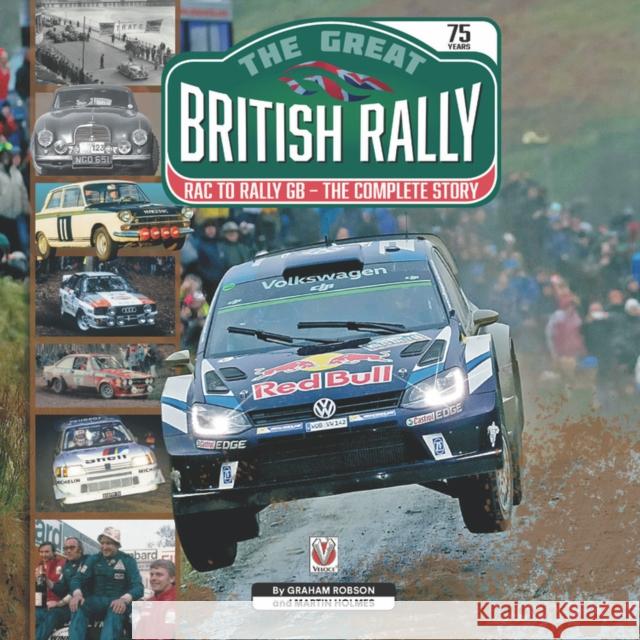
From the running of the 1932 RAC rally, mainly a social event, to the present day, when Rally GB is a high-speed endurance World Championship rally, this is the very first all-embracing history of an important part of British motorsport history. Descriptions of every event, opinions, results and images are brought together for the very first time.
From the running of the 1932 RAC rally, mainly a social event, to the present day, when Rally GB is a high-speed endurance World Championship rally, t...