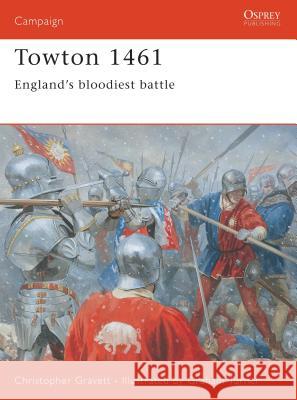
On a bitterly cold Palm Sunday, 29 March 1461, the army of King Edward IV met that of his Lancastrian enemies on a snow-covered battlefield south of the village of Towton in Yorkshire. The struggle lasted all day in the longest and bloodiest battle of the Wars of the Roses (1455-1485). With the arrival of Yorkist reinforcements under the Duke of Norfolk, the Lancastrian line eventually broke and their troops fled, many being caught and slaughtered in the death trap known as 'Bloody Meadow'. Christopher Gravett examines the campaign that marked the resurgence of the Yorkist cause and...
On a bitterly cold Palm Sunday, 29 March 1461, the army of King Edward IV met that of his Lancastrian enemies on a snow-covered battlefield south of t...
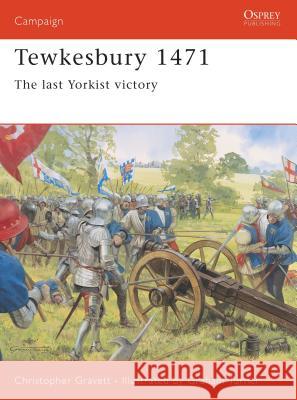
In this book Christopher Gravett details the climactic events of 1471 and the battle that virtually extinguished the Lancastrian cause. After the crushing Yorkist victory at Towton in 1461, King Edward IV appeared to have triumphed in England's bloody Wars of the Roses (1455-1485). The Lancastrian King Henry VI was even a prisoner in the Tower of London. By 1470, however, Edward's erstwhile ally the Earl of Warwick - The 'Kingmaker' - had joined the Lancastrians and a final reckoning was inevitable. Warwick perished at Barnet in April 1471, and on 4 May Edward confronted his enemies,...
In this book Christopher Gravett details the climactic events of 1471 and the battle that virtually extinguished the Lancastrian cause. After the crus...
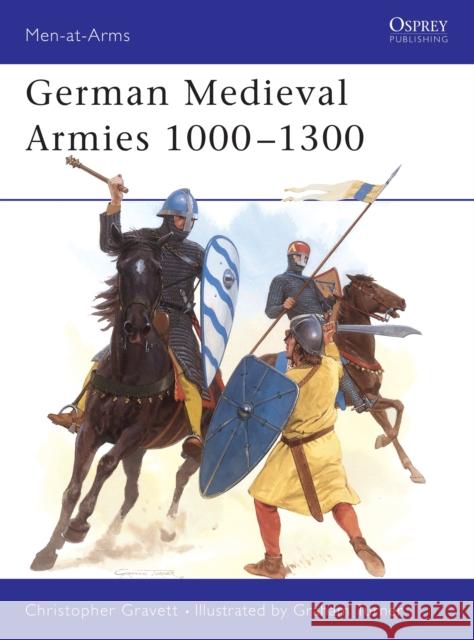
In medieval Germany violence was accepted far more than in other kingdoms. Kings were recognised as guardians of order, but this had its limitations. Lords expected to use force to secure their rights or win an argument when peaceful methods were not sufficient. Christopher Gravett does a fine job of examining the organisation and campaigns of German medieval armies from 1000-1300, in a volume containing plenty of photographs and illustrations, including eight full page colour plates by Graham Turner.
In medieval Germany violence was accepted far more than in other kingdoms. Kings were recognised as guardians of order, but this had its limitations. ...
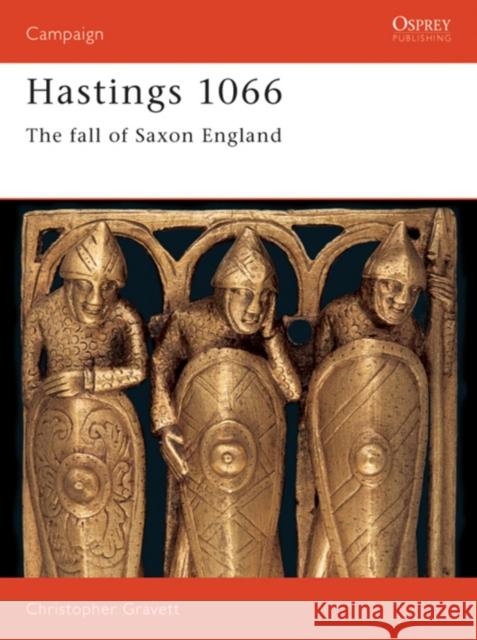
Osprey's Campaign title for the Battle of Hastings, which was fought on 14th October 1066 between Duke William of Normandy and Harold Godwinson, king of England, and whichirrevocably changed the course of English history. William's victory ensured his accession to the English throne. Hastings was also decisive in another way: the horrendous casualties suffered by the English nobility both there and at the two earlier battles of Fulford and Stamford Bridge resulted in there being very few men influential enough to lead an English resistance once William had been crowned. William would survive...
Osprey's Campaign title for the Battle of Hastings, which was fought on 14th October 1066 between Duke William of Normandy and Harold Godwinson, king ...