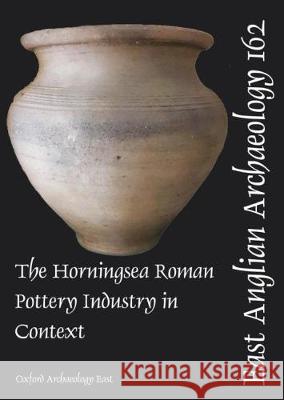
This report provides the first complete study of the Horningsea pottery industry and a commentary on Roman pottery supply in southern Cambridgeshire. Examination of Horningsea ceramic material, including all known kiln sites, has now provided a full chronology and type series for the industry, beginning in the Flavian period (AD 60-70) and ending in the late 4th century AD (c. AD 370). The distribution network of Horningsea wares is now understood and provides an important piece of missing ceramic information for the region as a whole, and Cambridgeshire in particular. This report has also...
This report provides the first complete study of the Horningsea pottery industry and a commentary on Roman pottery supply in southern Cambridgeshire. ...
Connecting poetry and philosophy of language, Philip Mills bridges the continental and analytical divide by bringing together the writings of Nietzsche and Wittgenstein. Through an expressivist philosophy of poetry, he argues that we can understand some of the core questions in the philosophy of language. Mills highlights the continuity of poetic language with ordinary language, and positions Nietzsche and Wittgenstein’s thinking as the clearest way to expand the philosophy of poetry. By tracing the expressivist tradition of philosophy of language, this study locates its roots in German...
Connecting poetry and philosophy of language, Philip Mills bridges the continental and analytical divide by bringing together the writings of Nietzsch...
How can Ordinary Language Philosophy (OLP) help us understand poetry? Against John L. Austin’s exclusion of poetic utterances as parasitical, Philip Mills explores how contemporary poetics broadens the aims and scope of OLP. Through the analysis of French and American poetry that reinterprets notions such as illocution, perlocution, and language-games, Mills develops a poetic philosophy of language, revealing its viral and transformative nature. Poetry, Performativity, and Ordinary Language Philosophy bridges philosophy and poetry, showing how...
How can Ordinary Language Philosophy (OLP) help us understand poetry? Against John L. Austin’s exclusion of poetic utterances as parasitical,&nbs...