In Does Writing Have a Future?, a remarkably perceptive work first published in German in 1987, Vilem Flusser asks what will happen to thought and communication as written communication gives way, inevitably, to digital expression. In his introduction, Flusser proposes that writing does not, in fact, have a future because everything that is now conveyed in writing--and much that cannot be--can be recorded and transmitted by other means. Confirming Flusser's status as a theorist of new media in the same rank as Marshall McLuhan, Jean Baudrillard, Paul Virilio, and Friedrich Kittler,...
In Does Writing Have a Future?, a remarkably perceptive work first published in German in 1987, Vilem Flusser asks what will happen to thought ...
Poised between hope and despair for a humanity facing an urgent communication crisis, this work by Vilem Flusser forecasts either the first truly human, infinitely creative society in history or a society of unbearable, oppressive sameness, locked in a pattern it cannot change. First published in German in 1985 and now available in English for the first time, Into the Universe of Technical Images outlines the history of communication technology as a process of increasing abstraction. Flusser charts how communication evolved from direct interaction with the world to mediation through...
Poised between hope and despair for a humanity facing an urgent communication crisis, this work by Vilem Flusser forecasts either the first truly huma...
Is there any room left for freedom in a programmed world? This is the essential question that Vilem Flusser asks in Post-History. Written as a series of lectures to be delivered at universities in Brazil, Israel, and France, it was subsequently developed as a book and published for the first time in Brazil in 1983. This first English translation of Post-History brings to an anglophone readership Flusser's first critique of apparatus as the aesthetic, ethical, and epistemological model of present times.
In his main argument, Flusser suggests that our times...
Is there any room left for freedom in a programmed world? This is the essential question that Vilem Flusser asks in Post-History. Writte...
Vilem Flusser was one of the most fascinating and original European thinkers of the late twentieth century. In this collection of his essays on emigration, nationalism, and information theory, he raises questions about the viability of ideas of national identity in a world whose borders are becoming increasingly arbitrary and permeable. Flusser argues that modern societies are in flux, with traditional linear and textual epistemologies being challenged by global circulatory networks and a growth in visual stimulation. Beyond globalization, Flusser's ideas about communication and identity are...
Vilem Flusser was one of the most fascinating and original European thinkers of the late twentieth century. In this collection of his essays on emigra...
Media philosopher Vilem Flusser proposed a revolutionary new way of thinking about photography. An analysis of the medium in terms of aesthetics, science and politics provided him with new ways of understanding both the cultural crises of the past and the new social forms nascent within them. Flusser showed how the transformation of textual into visual culture (from the linearity of history into the two-dimensionality of magic) and of industrial into post-industrial society (from work into leisure) went hand in hand, and how photography allows us to read and interpret these changes with...
Media philosopher Vilem Flusser proposed a revolutionary new way of thinking about photography. An analysis of the medium in terms of aesthetics, scie...
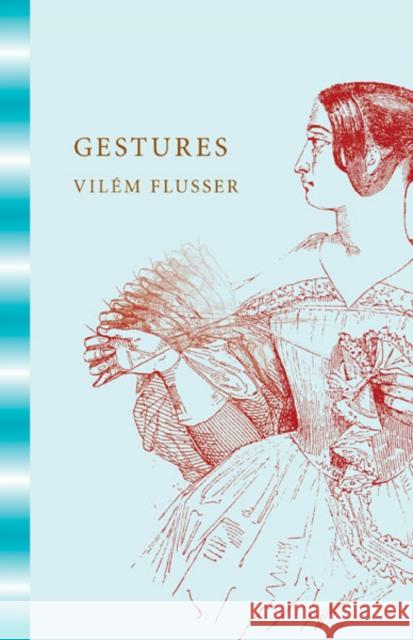
Throughout his career, the influential new media theorist Vilem Flusser kept the idea of gesture in mind: that people express their being in the world through a sweeping range of movements. He reconsiders familiar actions from speaking and painting to smoking and telephoning in terms of particular movement, opening a surprising new perspective on the ways we share and preserve meaning. A gesture may or may not be linked to specialized apparatus, though its form crucially affects the person who makes it.
These essays, published here as a collection in English for the first time,...
Throughout his career, the influential new media theorist Vilem Flusser kept the idea of gesture in mind: that people express their being in th...
Is the alphabet about to disappear? How will we communicate without it? Are there any indications of new, emergent codes? Is human communication going through a mutation? These are only some of the provocative questions posed by VilEm Flusser in Into Immaterial Culture.
The four essays of this book were delivered as a series of lectures at the School of Communication and the Arts of the University of SAo Paulo in August of 1986, one year after the publication of the first Brazilian edition of Towards a Philosophy of Photography, published as A Filosofia da...
Is the alphabet about to disappear? How will we communicate without it? Are there any indications of new, emergent codes? Is human communication go...
In Language and Reality, originally published in Sao Paulo, Brazil, in 1964, Vilem Flusser continues his philosophical and theoretical exploration into language. He begins to postulate that language is not simply a map of the world but also the driving force for projecting worlds and enters then into a feedback with what is projected.
Flusser's thesis leads him to claim, in a seemingly missed encounter of a dialogue with Wittgenstein, that language is not limited to its ontological and epistemological aspects but rather is at the service of its aesthetic. Traversing a diverse...
In Language and Reality, originally published in Sao Paulo, Brazil, in 1964, Vilem Flusser continues his philosophical and theoretical explo...
In 1986, after the international success of Towards a Philosophy of Photography, Vilém Flusser started to publish regularly in Artforum Magazine, New York. The book Artforum // Essays gathers together for the first time all twenty-eight essays, both published and unpublished, which Flusser wrote for the magazine until his tragic death in 1991.
The fundamental question that Vilém Flusser asks in this series of short provocative essays, and which he explores in most of his literary production, is this: can we really make such a clear distinction between...
In 1986, after the international success of Towards a Philosophy of Photography, Vilém Flusser started to publish regularly in Artf...
Dílo Od subjektu k projektu zachycuje Flusserovo uvažování z posledního období jeho tvorby. Také z tohoto důvodu se jedná o vrcholné formulování jeho celoživotního tématu, kterým je hledání východiska z civilizační krize. Autor z rozličných hledisek sleduje jednotlivé kroky novověkého rozpouštění subjektu i objektu. Moderní člověk ztrácí jakoukoliv oporu v něčem uchopitelném, což dle Flussera může ospravedlňovat pocit dějinné katastrofy. Proti tomuto pochopitelnému stanovisku však vykřesává jiskru naděje, kterou spojuje s projektováním. Tato...
Dílo Od subjektu k projektu zachycuje Flusserovo uvažování z posledního období jeho tvorby. Také z tohoto důvodu se jedná o vrcholné formulo...