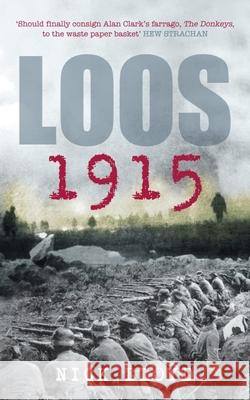
The battle of Loos was one of the most hard-fought battles that the British Expeditionary Force ever waged on the Western Front during the First World War. In three weeks of intensive fightingwhich not only witnessed the first British use of poison gas but also the debut of New Army divisions filled with citizen volunteersBritish forces managed to drive up to two miles into the German positions. However, they were unable to capitalize on their initial gains. After suffering nearly 60,000 casualties and being driven from the German second line in some disorder, bitter recrimination followed....
The battle of Loos was one of the most hard-fought battles that the British Expeditionary Force ever waged on the Western Front during the First World...
In the late summer of 1918, after four long years of senseless, stagnant fighting, the Western Front erupted. The bitter four-month struggle that ensued--known as the Hundred Days Campaign--saw some of the bloodiest and most ferocious combat of the Great War, as the Allies grimly worked to break the stalemate in the west and end the conflict that had decimated Europe. In Hundred Days, acclaimed military historian Nick Lloyd leads readers into the endgame of World War I, showing how the timely arrival of American men and materiel--as well as the bravery of French, British, and...
In the late summer of 1918, after four long years of senseless, stagnant fighting, the Western Front erupted. The bitter four-month struggle that ensu...
On the eleventh hour of the eleventh day in November 1918, the guns of the Western Front fell silent. The Armistice, which brought the Great War to an end, marked a seminal moment in modern European and World history. Yet the story of how the war ended remains little-known. In this new study, Nick Lloyd examines the last days of the war and asks the question: how did it end?
On the eleventh hour of the eleventh day in November 1918, the guns of the Western Front fell silent. The Armistice, which brought the Great War to an...
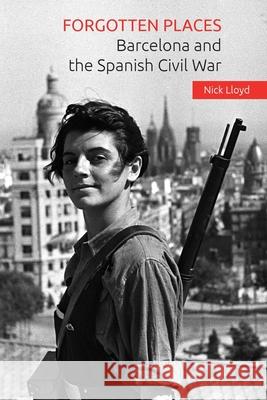
This is a guide to Barcelona in the Spanish Civil War, beginning in the 19th century with the conditions and movements which led to the social revolution of 1936, and ending with the fall of the city on 26 January 1939 when Franco's tanks drove down the Diagonal and set about destroying everything the Republic and the revolutionaries had built. Stories from the aftermath of the war, the exile and the Franco regime are also included. In addition with dealing with the more obvious issues such as anarchism, the Spanish Republic, Catalonia, George Orwell, the aerial bombing, and the May Days,...
This is a guide to Barcelona in the Spanish Civil War, beginning in the 19th century with the conditions and movements which led to the social revolut...
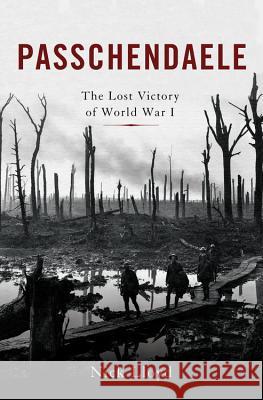
The definitive account of Passchendaele, one of the most influential and tragic battles of the First World War Passchendaele. The name of a small, seemingly insignificant Flemish village echoes across the twentieth century as the ultimate expression of meaningless, industrialized slaughter. In the summer of 1917, upwards of 500,000 men were killed or wounded, maimed, gassed, drowned, or buried in this small corner of Belgium. On the centennial of the battle, military historian Nick Lloyd brings to vivid life this epic encounter along the Western Front. Drawing on both British...
The definitive account of Passchendaele, one of the most influential and tragic battles of the First World War Passchendaele. The name of a ...
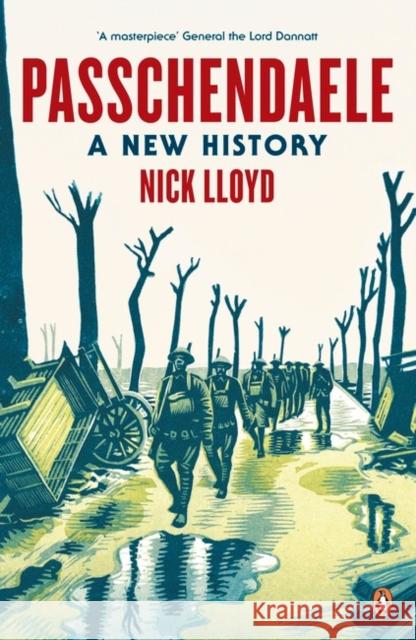
The Third Battle of Ypres was a 'lost victory' for the British Army in 1917. Between July and November 1917, in a small corner of Belgium, more than 500,000 men were killed or maimed, gassed or drowned - and many of the bodies were never found. The Ypres offensive represents the modern impression of the First World War: splintered trees, water-filled craters, muddy shell-holes. The climax was one of the worst battles of both world wars: Passchendaele. The village fell eventually, only for the whole offensive to be called off. But, as Nick Lloyd shows, notably through previously overlooked...
The Third Battle of Ypres was a 'lost victory' for the British Army in 1917. Between July and November 1917, in a small corner of Belgium, more than 5...