Presented as a series of letters between the humble copying clerk Devushkin and a distant relative of his, the young Varenka, Poor People brings to the fore the underclass of St Petersburg, who live at the margins of society in the most appalling conditions and abject poverty. As Devushkin tries to help Varenka improve her plight by selling anything he can, he is reduced to even more desperate circumstances and seeks refuge in alcohol, looking on helplessly as the object of his impossible love is taken away from him. Introducing the first in a long line of underground characters, Poor People,...
Presented as a series of letters between the humble copying clerk Devushkin and a distant relative of his, the young Varenka, Poor People brings to th...
Dostoevsky loathed the Russia's new liberal reformers, particularly the group of anti-Czarist political terrorists known as Nihilists. They murdered one of their own, and that event and the ensuing trial form the nucleus of this novel.
Dostoevsky loathed the Russia's new liberal reformers, particularly the group of anti-Czarist political terrorists known as Nihilists. They murdered o...
The apology and confession of a minor mid 19th century Russian official, Notes From Underground is a half-desperate, half-mocking political critique and a powerful, account of a man's breakaway from society and descent underground.
The apology and confession of a minor mid 19th century Russian official, Notes From Underground is a half-desperate, half-mocking political critique a...
This acclaimed English version of Dostoevsky's last novel does justice to all its levels of artistry and intention, as murder mystery, black comedy, pioneering work of psychological realism, and enduring statement about freedom, sin and suffering.
This acclaimed English version of Dostoevsky's last novel does justice to all its levels of artistry and intention, as murder mystery, black comedy, p...
This classic, begun as a novel concerned with the psychology of a crime and the process of guilt, surpasses itself to take on the tragic force of myth.
This classic, begun as a novel concerned with the psychology of a crime and the process of guilt, surpasses itself to take on the tragic force of myth...
Dostoevsky's last and greatest novel, The Karamazov Brothers (1880) is both a brilliantly told crime story and a passionate philosophical debate. The dissolute landowner Fyodor Pavlovich Karamazov is murdered; his sons--the atheist intellectual Ivan, the hot-blooded Dmitry, and the saintly novice Alyosha--are all involved at some level. Brilliantly bound up with this psychological drama is Dostoevsky's intense and disturbing exploration of many deeply felt ideas about the existence of God, freedom of will, the collective nature of guilt, and the disastrous consequences of...
Dostoevsky's last and greatest novel, The Karamazov Brothers (1880) is both a brilliantly told crime story and a passionate philosophical deb...
One of the most profound and disturbing works of nineteenth-century literature, Notes from the Underground is a probing and speculative work, often regarded as a forerunner to the Existentialist movement. The Gambler explores the compulsive nature of gambling, one of Dostoevsky's own vices and a subject he describes with extraordinary acumen and drama. Both works are new translations, specially commissioned for the World's Classics series. About the Series: For over 100 years Oxford World's Classics has made available the broadest spectrum of literature from around the globe. Each...
One of the most profound and disturbing works of nineteenth-century literature, Notes from the Underground is a probing and speculative work, often re...
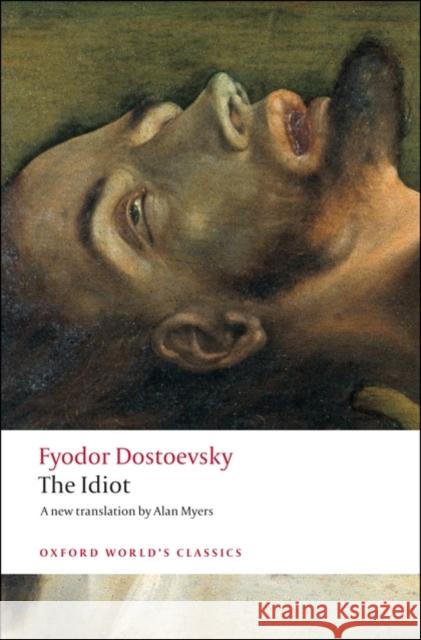
The Idiot (1868), written under the appalling personal circumstances Dostoevsky endured while travelling in Europe, not only reveals the author's acute artistic sense and penetrating psychological insight, but also affords his most powerful indictment of a Russia struggling to emulate contemporary Europe while sinking under the weight of Western materialism. It is the portrait of nineteenth-century Russian society in which a "positively good man" clashes with the emptiness of a society that cannot accommodate his moral idealism. Meticulously faithful to the original, this new...
The Idiot (1868), written under the appalling personal circumstances Dostoevsky endured while travelling in Europe, not only reveals the auth...
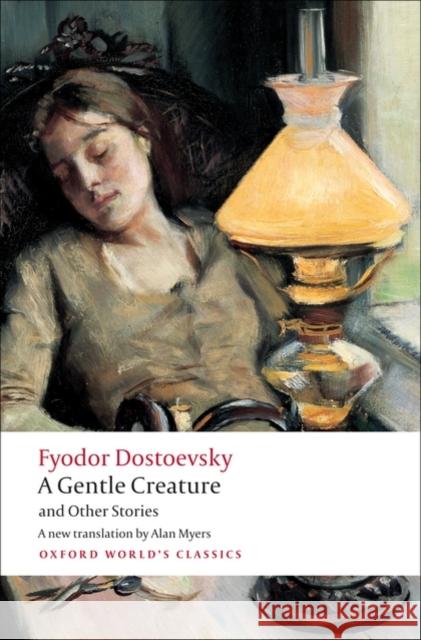
In these stories, Dostoevsky explores both the figure of the dreamer divorced from reality, and also his own ambiguous attitude toward utopianism, themes central to his great novels. In White Nights, the apparent idyll of the dreamer's romantic fantasies disguises profound loneliness and estrangement from "living life." A Gentle Creature and The Dream of a Ridiculous Man show how withdrawal from reality can end in spiritual desolation as well as moral indifference, and how, in Dostoevsky's view, the tragedy of the alienated individual can only be resolved by the rediscovery of a sense of...
In these stories, Dostoevsky explores both the figure of the dreamer divorced from reality, and also his own ambiguous attitude toward utopianism, the...
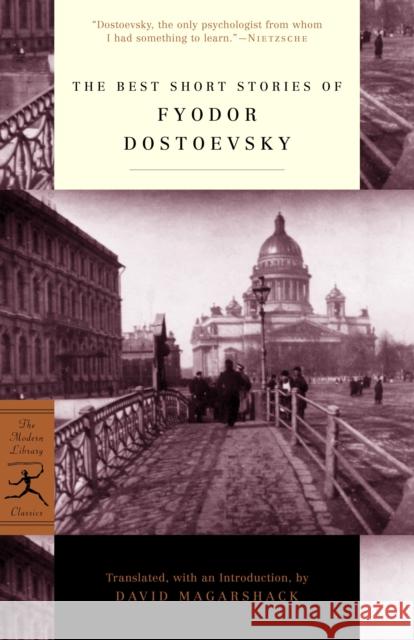
This collection, unique to the Modern Library, gathers seven of Dostoevsky's key works and shows him to be equally adept at the short story as with the novel. Exploring many of the same themes as in his longer works, these small masterpieces move from the tender and romantic White Nights, an archetypal nineteenth-century morality tale of pathos and loss, to the famous Notes from the Underground, a story of guilt, ineffectiveness, and uncompromising cynicism, and the first major work of existential literature. Among Dostoevsky's prototypical characters is Yemelyan in The...
This collection, unique to the Modern Library, gathers seven of Dostoevsky's key works and shows him to be equally adept at the short story as with th...