In this masterly synthesis, Arthur Koestler cuts through the sterile distinction between 'sciences' and 'humanities' to bring to life the whole history of cosmology from the Babylonians to Newton. He shows how the tragic split between science and religion arose and how, in particular, the modern world-view replaced the medieval world-view in the scientific revolution of the seventeenth century. He also provides vivid and judicious pen-portraits of a string of great scientists and makes clear the role that political bias and unconscious prejudice played in their creativity.
In this masterly synthesis, Arthur Koestler cuts through the sterile distinction between 'sciences' and 'humanities' to bring to life the whole histor...
On September 23, 1926, and Austrian experimental biologist named Dr. Paul Kammerer blew his brains out on a footpath in the Austrian mountains. His suicide was the climax of a great evolutionary controversy which his experiments had aroused. The battle was between the followers of Lamarck, who maintained that acquired characteristics could be inherited, and the neo-Darwinists, who upheld the theory of chance mutations preserved by natural selection. Dr. Kammerer's experiments with various amphibians, including salamanders and the midwife toad (Alytes obstetricans), lent much...
On September 23, 1926, and Austrian experimental biologist named Dr. Paul Kammerer blew his brains out on a footpath in the Austrian mountains. His...
The second volume is in Koestler s own words a typical case history of a member of the educated middle classes of Central Europe in our time. We see him in Germany, Russia, England, France and Spain, working for the cause he believed in until his eventual break with Communism in 1938. It ends with his escape from Occupied France in 1940 to England, where he found a new home. An epilogue brings the story up to 1953."
The second volume is in Koestler s own words a typical case history of a member of the educated middle classes of Central Europe in our time. We see h...
A brand new edition of Arthur Koestler's gripping tale of arrest, imprisonment, and subsequent escape to London from Nazi-occupied France. Arthur Koestler is now an essential part of the English literary landscape both as political activist, controversialist and the author of Darkness at Noon. He stands beside George Orwell as one of the key writers of the twentieth century who embraced communism but would later turn against the partyand denounce the tragic distortions and abuses that had betrayed the great vision.
A brand new edition of Arthur Koestler's gripping tale of arrest, imprisonment, and subsequent escape to London from Nazi-occupied France. Arthur Koes...
The book is the first of a trilogy, including Darkness at Noon, and Arrival and Departure, which address idealism going wrong. This is a common theme in Koestler's work and life. Koestler uses his portrayal of the original slave revolt to examine the experience of the 20thcentury political left in Europe following the rise of a Communist government in the Soviet Union. He published it on the brink of World War II. Originally written in German, the novel was translated into English for other audiences and was published in 1939.
In 1998 the British critic...
The book is the first of a trilogy, including Darkness at Noon, and Arrival and Departure, which address idealism going wrong. Th...
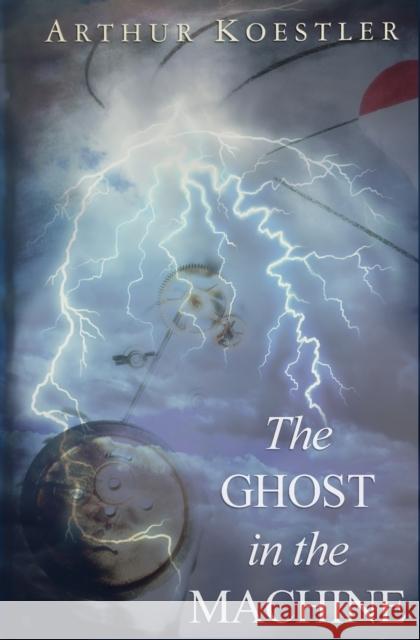
In The Sleepwalkers and The Act of Creation Arthur Koestler provided pioneering studies of scientific discovery and artistic inspiration, the twin pinnacles of human achievement. The Ghost in the Machine looks at the dark side of the coin: our terrible urge to self-destruction...
Could the human species be a gigantic evolutionary mistake? To answer that startling question Koestler examines how experts on evolution and psychology all too often write about people with an 'antiquated slot-machine model based on the naively mechanistic world-view of the nineteenth century. His...
In The Sleepwalkers and The Act of Creation Arthur Koestler provided pioneering studies of scientific discovery and artistic inspiration, the twin ...
Španělský testament popisuje autorovy zážitky z občanské války ve Španělsku a následného pobytu ve vězení. Koestler během občanské války podnikl tři cesty do Španělska, přičemž pracoval ve prospěch Kominterny i jako agent oficiální tiskové agentury loajalistické vlády a ke krytí využíval akreditaci britského deníku News Chronicle. Při svém druhém pobytu na nacionalistickém území jen o vlásek unikl zatčení Frankovou armádou, když ho v nacionalisty ovládané Seville poznal jeho bývalý kolega z berlínského nakladatelství Ullstein. Potřetí...
Španělský testament popisuje autorovy zážitky z občanské války ve Španělsku a následného pobytu ve vězení. Koestler během občanské vÃ...