This book covers the author's conception of God aside from any religion. He does not come from a religious view in order to transmit the truest conception of God that he is capable of because any religion, whatever it might be, always claims God for itself in an exclusionary fashion. In other words, you must be a follower of the chosen faith before God will accept you into his kingdom. Wells rejects this view. Any man or woman who accepts God's love as one person connecting to their own creator, is fine. An intermediary, despite what they might crow from whatever pulpits they use, is not...
This book covers the author's conception of God aside from any religion. He does not come from a religious view in order to transmit the truest con...
THE CLASSIC SCIENCE FICTION TALE THAT WILL EAT YOUR BRAINS Never before in the history of warfare had destruction been so indiscriminate and so universal. Panic descends upon planet Earth once more as H. G. Wells's terrify- ing cosmic invaders blaze a path of fiery destruction across Victorian England, leaving thousands of undead in their wake. Our adventurous narrator must survive the apocalyptic alien threat while fighting off rag- ing, bloodthirsty zombies. Who will triumph when man, Martian, and flesh-eating monster meet? Packed with fearsome supernatural...
THE CLASSIC SCIENCE FICTION TALE THAT WILL EAT YOUR BRAINS Never before in the history of warfare had destruction been so indiscriminat...
The critical introduction to this Broadview Edition gives particular emphasis to Wells's hostility towards religion as well as his thorough knowledge of the Darwinian thought of his time. Appendices provide passages from Darwin and Huxley related to Wells's early writing; in addition, excerpts from other writers illustrate late-nineteenth-century anxieties about social degeneration.
The critical introduction to this Broadview Edition gives particular emphasis to Wells's hostility towards religion as well as his thorough knowledge ...
This collection includes The Time Machine, The Island of Doctor Moreau, The War of the Worlds, The First Men in the Moon and The Invisible Man - all collected in a stunning omnibus. Five of the best science fiction novels by the Grandfather of Science Fiction: unsurpassed in their timeless capacity to thrill and transfix, these are tales that reach to the heart of human ambition, fear, intelligence and hope. The Time Machine was Wells' first major piece of fiction: a haunting vision of a far future earth orbiting a sun cooling to extinction. The War of the Worlds: still considered...
This collection includes The Time Machine, The Island of Doctor Moreau, The War of the Worlds, The First Men in the Moon and The Invisible Man - all c...
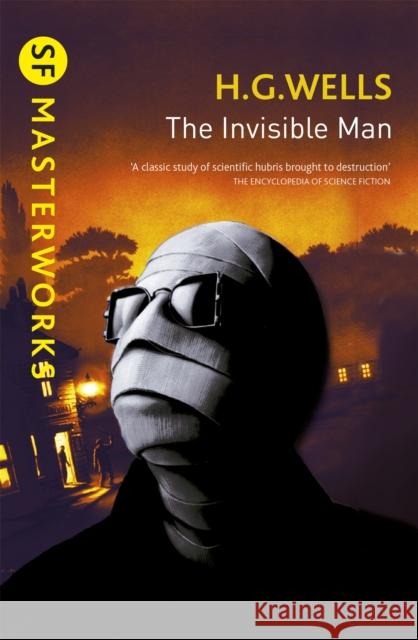
THE INVISIBLE MAN tells the story of Griffin, a brilliant and obsessed scientist dedicated to achieving invisibility. Taking whatever action is necessary to keep his incredible discovery safe, he terrorizes the local village where he has sought refuge. Wells skilfully weaves the themes of science, terror and pride as the invisible Griffin gradually loses his sanity and, ultimately, his humanity.
THE INVISIBLE MAN tells the story of Griffin, a brilliant and obsessed scientist dedicated to achieving invisibility. Taking whatever action is necess...
Edward Prendick is shipwrecked and finds himself stranded on an island in the Pacific. Here he meets the sinister Dr Moreau, a vivisectionst driven out of Britain in disgrace. And soon strange events cause Prendick to uncover the full horror of Dr Moreau's activities on the island. THE ISLAND OF DR MOREAU mixes discussion on the divide between humans and the animal kingdom and chilling macabre horror in an unrivalled fashion. Its question on how far science should go is one that rings true today as it did when it was first published.
Edward Prendick is shipwrecked and finds himself stranded on an island in the Pacific. Here he meets the sinister Dr Moreau, a vivisectionst driven ou...
The stranger arrives early in February, one wintry day, through a biting wind and a driving snow. He is wrapped up from head to foot, and the brim of his hat hides every inch of his face. Rude and rough, the stranger works with strange apparatus locked in his room all day and walks along lonely lanes at night, his bandaged face inspiring fear in children and dogs. Is he the mutilated victim of an accident? A criminal on the run? An eccentric genius? But no-one in the village comes close to guessing who has come amongst them, or what those bandages hide.
The stranger arrives early in February, one wintry day, through a biting wind and a driving snow. He is wrapped up from head to foot, and the brim of ...
No one would have believed in the last years of the nineteenth century that this world was being watched keenly and closely by intelligences greater than man's; that as men busied themselves about their various concerns they were scrutinised and studied. Yet across the gulf of space, intellects vast and cool and unsympathetic regarded this earth with envious eyes, and slowly and surely drew their plans against us.
Then, late one night, in the middle of the English countryside, they landed.
No one would have believed in the last years of the nineteenth century that this world was being watched keenly and closely by intelligences greater t...
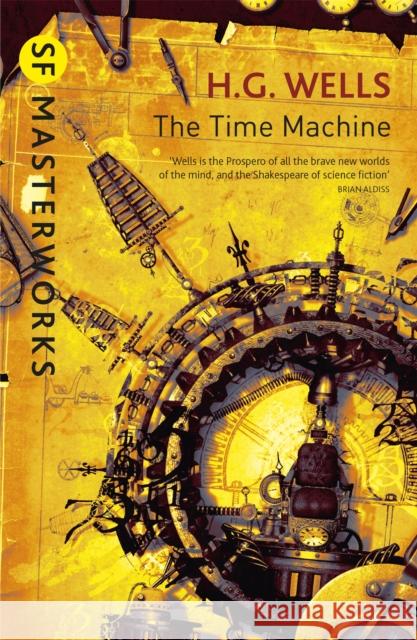
A Victorian scientist develops a time machine and travels to the year 802,171 AD. There he finds the meek, child-like Eloi who live in fear of the underground-dwelling Morlocks. When his time machine goes missing, the Traveller faces a fight to enter the Morlocks' domain and return to his own time. THE TIME MACHINE remains one of the cornerstones of science-fiction literature and has proved hugely influential.
A Victorian scientist develops a time machine and travels to the year 802,171 AD. There he finds the meek, child-like Eloi who live in fear of the und...
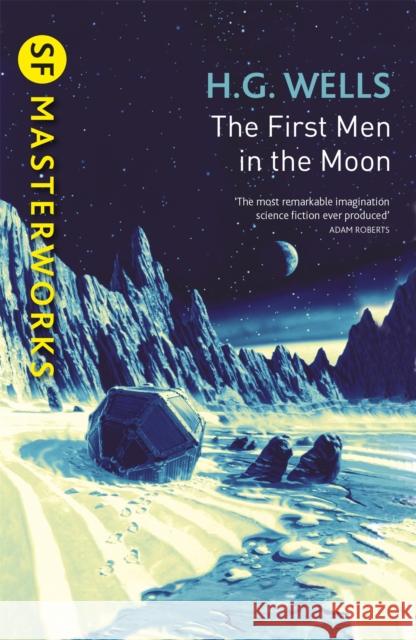
'As we saw it first it was the wildest and most desolate of scenes. We were in an enormous amphitheatre, a vast circular plain, the floor of the giant crater. Its cliff-like wall closed us in on every side . . .' Thanks to the discovery of an anti-gravity metal, Cavorite, two Victorian Englishman decide to tackle the most prestigious goal - space travel. They construct a sphere that will ultimately take them to the moon. On landing, they encounter what seems like an utterly barren landscape but they soon find signs that the planet was once very much alive. Then they hear curious hammering...
'As we saw it first it was the wildest and most desolate of scenes. We were in an enormous amphitheatre, a vast circular plain, the floor of the giant...