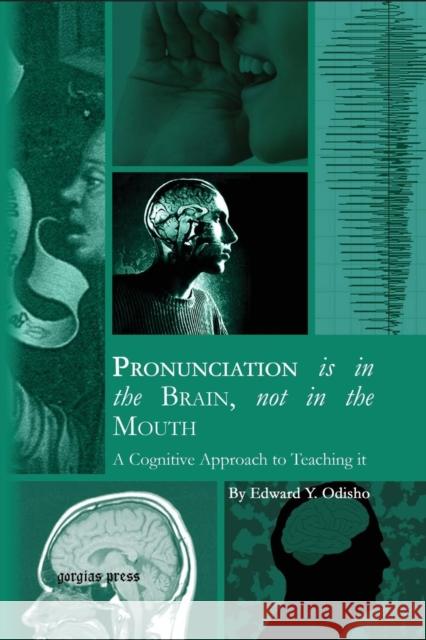
The book is designed for Arabic-speaking students of English and English-speaking students of Arabic. It is based on a cognitive approach to teaching pronunciation: all activities, drills, and instructions are directed to the brain in conjunction with the relevant vocal organs helping students to master many intricacies of pronunciation. Attention is given to subtle differences between Arabic and English in segmental (vowels and consonants) and suprasegmental (clusters, stress, rhythm and intonation) domains, both of which are treated and taught holistically as systems, then identified,...
The book is designed for Arabic-speaking students of English and English-speaking students of Arabic. It is based on a cognitive approach to teaching ...
This book is written for both Latino (Hispanic) learners and teachers of English as a second language. The book is innovative in helping Latino learners and teachers overcome chronic and difficult barriers, such as the cases relevant to certain vowels, consonants and the overall rhythm of English. The methodology and techniques used to teach the two-vowel systems of English and Spanish is rarely encountered in modern linguistic literature.
This book is written for both Latino (Hispanic) learners and teachers of English as a second language. The book is innovative in helping Latino learne...
This book introduces language as an infinite code of communication that is exclusively confined to human beings. More specifically, it investigates the cognitive roots of pronunciation in children and adults and the emergence of accent with adults when learning a second language (L2). Subsequently, any teaching of L2 pronunciation to adults should be premised on a multisensory and multicognitive approach covering a wide selection of teaching and learning strategies that are in line with the cognitive roots. From the pedagogical perspective, the book introduces the distinction between...
This book introduces language as an infinite code of communication that is exclusively confined to human beings. More specifically, it investigates th...
The book is designed for Arabic-speaking students of English and English-speaking students of Arabic. It is based on a cognitive approach to teaching pronunciation. As a general demonstration of the approach, the book highlights techniques for teaching some of the most challenging sounds and sound phenomena in both Arabic and English.
The book is designed for Arabic-speaking students of English and English-speaking students of Arabic. It is based on a cognitive approach to teaching ...