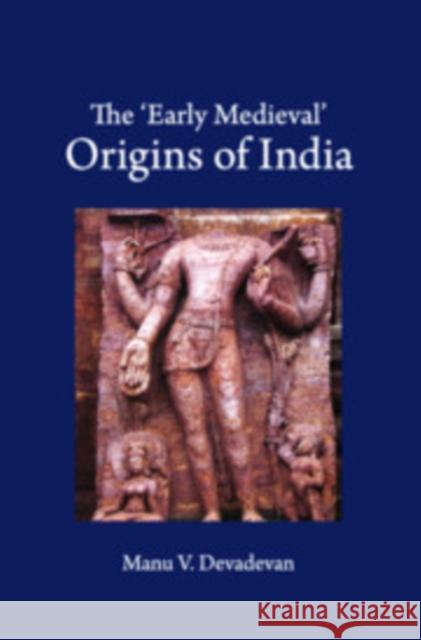
India is generally regarded as a civilization with a set of intrinsic attributes that emerged in the age of the Vedas or, better still, in the Harappan times. In recent decades, historical studies have moved away from rigid perspectives of singularity in origin and expansion; the emphasis now is on pluralities and long-term processes spanning centuries and millennia. There is also an influential school of thought which rejects antiquity claims such as these and holds that India is a construct of the colonial and nationalist imagination. In his radical reinterpretation of India's past, Manu V....
India is generally regarded as a civilization with a set of intrinsic attributes that emerged in the age of the Vedas or, better still, in the Harappa...
India is generally regarded as a civilization with a set of intrinsic attributes that emerged in the age of the Vedas or, better still, in the Harappan times. In recent decades, historical studies have moved away from rigid perspectives of singularity in origin and expansion; the emphasis now is on pluralities and long-term processes spanning centuries and millennia. There is also an influential school of thought which rejects antiquity claims such as these and holds that India is a construct of the colonial and nationalist imagination. In his radical reinterpretation of India's past, Manu V....
India is generally regarded as a civilization with a set of intrinsic attributes that emerged in the age of the Vedas or, better still, in the Harappa...