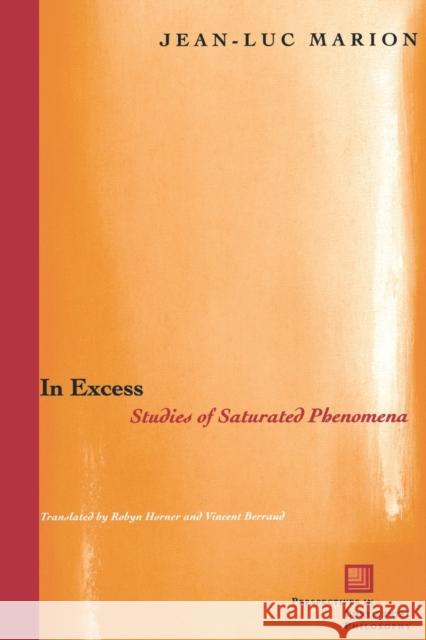
In the third book in the trilogy that includes Reduction and Givenness and Being Given. Marion renews his argument for a phenomenology of givenness, with penetrating analyses of the phenomena of event, idol, flesh, and icon. Turning explicitly to hermeneutical dimensions of the debate, Marion masterfully draws together issues emerging from his close reading of Descartes and Pascal, Husserl and Heidegger, Levinas and Henry. Concluding with a revised version of his response to Derrida, In the Name: How to Avoid Speaking of It, Marion powerfully re-articulates the theological possibilities of...
In the third book in the trilogy that includes Reduction and Givenness and Being Given. Marion renews his argument for a phenomenology of givenness, w...
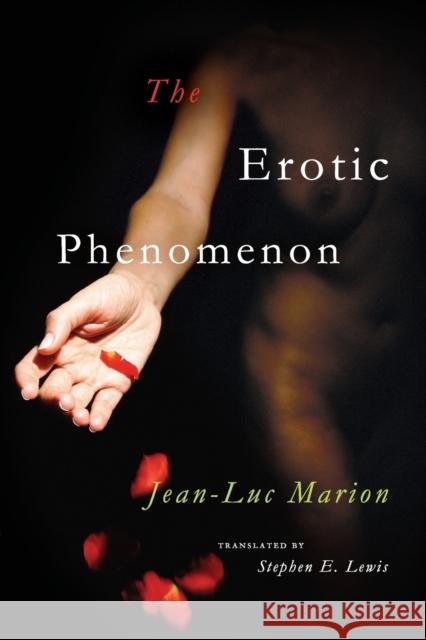
While humanists have pondered the subject of love to the point of obsessiveness, philosophers have steadfastly ignored it. One might wonder whether the discipline of philosophy even recognizes love. The word "philosophy" means "love of wisdom," but the absence of love from philosophical discourse is curiously glaring. So where did the love go? In "The Erotic Phenomenon, " Jean-Luc Marion asks this fundamental question of philosophy, while reviving inquiry into the concept of love itself.
Marion begins his profound and personal book with a critique of Descartes' equation of the ego's...
While humanists have pondered the subject of love to the point of obsessiveness, philosophers have steadfastly ignored it. One might wonder whether...
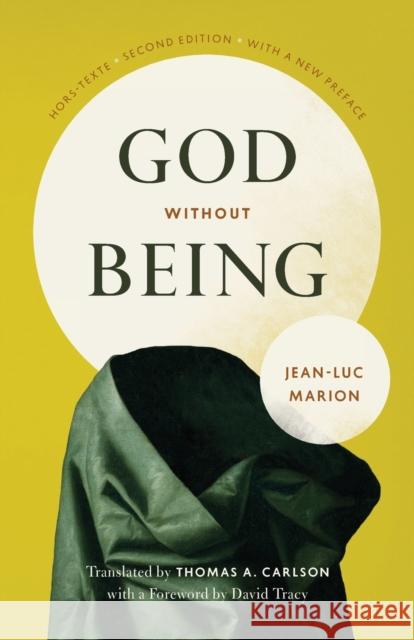
Jean-Luc Marion is one of the world's foremost philosophers of religion as well as one of the leading Catholic thinkers of modern times. In "God Without Being," Marion challenges a fundamental premise of traditional philosophy, theology, and metaphysics: that God, before all else, must be. Taking a characteristically postmodern stance and engaging in passionate dialogue with Heidegger, he locates a "God without Being" in the realm of "agape," or Christian charity and love. If God is love, Marion contends, then God loves before he actually is. First translated into English in 1991, "God...
Jean-Luc Marion is one of the world's foremost philosophers of religion as well as one of the leading Catholic thinkers of modern times. In "God W...
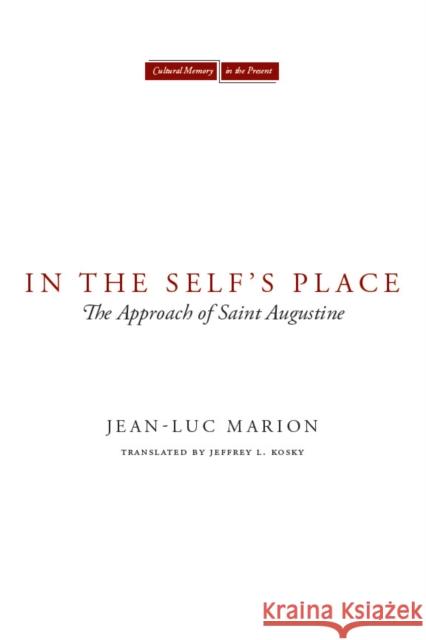
In the Self's Place is an original phenomenological reading of Augustine that considers his engagement with notions of identity in Confessions. Using the Augustinian experience of confessio, Jean-Luc Marion develops a model of selfhood that examines this experience in light of the whole of the Augustinian corpus. Towards this end, Marion engages with noteworthy modern and postmodern analyses of Augustine's most "experiential" work, including the critical commentaries of Jacques Derrida, Martin Heidegger, and Ludwig Wittgenstein. Marion ultimately concludes that Augustine...
In the Self's Place is an original phenomenological reading of Augustine that considers his engagement with notions of identity in Confessio...