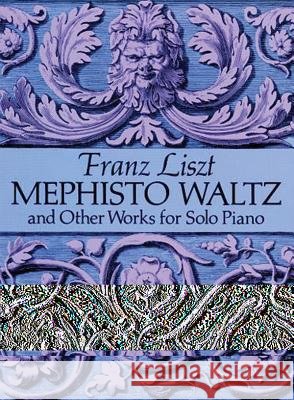
A prolific composer and virtuoso pianist, Franz Liszt (1811-1886) was the most lionized musical personality of his time. His compositions for solo piano continue to be loved and admired by pianists and their audiences for their lush Romanticism and technical fireworks. They remain among the most frequently performed works in the repertoire. This choice selection of Liszt piano works reveals the powers at this extraordinary composer's command: Mephisto Waltz No.1; Nuages Gris; Liebestraume Nos. 1, 2 & 3; Grand Galop Chromatique; Polonaises Nos. 1 & 2; Valse-Impromptu in A-flat Major; Fantasia...
A prolific composer and virtuoso pianist, Franz Liszt (1811-1886) was the most lionized musical personality of his time. His compositions for solo pia...
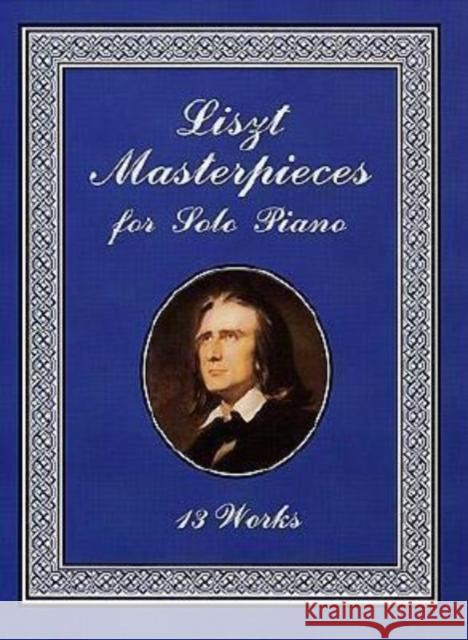
This outstanding new compilation of piano works by the supreme piano virtuoso of the 19th century includes such masterworks as Sonetto 104 di Petrarca, Hungarian Rhapsody No. 2 in C-sharp minor, Un Sospiro (Concert Etude No. 3 in D-flat major), Funerailles (from Annees de pelerinage), Consolation No. 3 in D-Flat major, Liebestraum No. 3 in A-flat major, and La Campanella (Paganini Etude No. 3). Reprinted in one convenient, modestly priced volume that will be treasured by students, musicians, and music lovers.
This outstanding new compilation of piano works by the supreme piano virtuoso of the 19th century includes such masterworks as Sonetto 104 di Petra...
Franz Liszt, Bernhard Stavenhagen, Franz Liszt, Bernhard Stavenhagen
Liszt started working on his first foray into the concerto genre as early as 1830, only completing the work in its present form in 1849. He appeared as soloist in the premiere, given at Weimar on Febrary 17, 1855, with the Staatskappelle under the direction of Hector Berlioz. The concerto has been a staple of the repertoire ever since. Just in time for the Liszt bicentennial, this new score is a digitally-enhanced reprint of the one first issued by Breitkopf und Hartel in 1914 as part of the composer's complete works.
Liszt started working on his first foray into the concerto genre as early as 1830, only completing the work in its present form in 1849. He appeared a...
The eleventh in Liszts series of thirteen tone poems for orchestra, "Hunnenschlacht" or Battle of the Huns - composed from 1855-57 - was inspired by a painting of the same title by Wilhelm von Kaulbach which portrayed the legendary Battle of the Catalaunian Plains between the Huns under Attila and a coalition of Romans, Visigoths and others fought around June 20, 451, where the fighting was supposedly so bitter that the spirits of the fallen warriors continued the battle in the skies above the field. Liszt conducted the premiere himself in Weimar on 29 December 1857. This new study score is a...
The eleventh in Liszts series of thirteen tone poems for orchestra, "Hunnenschlacht" or Battle of the Huns - composed from 1855-57 - was inspired by a...
The last work in the revolutionary series of thirteen tone poems Liszt composed for orchestra, "Von der Wiege bis zum Grabe" (From the Cradle to the Grave) was composed in 1881-82 - late in the composer's life. The three movement work, dedicated to Count Geza Zichy, was only given its premiere posthumously in 1927. This new study score is a digitally-restored reissue of the score edited by Berthold Kellermann in the tenth volume of the Liszt-Stiftung edition, published in 1913. As with all PLP scores a percentage of each sale is donated to the amazing online archive of free music scores and...
The last work in the revolutionary series of thirteen tone poems Liszt composed for orchestra, "Von der Wiege bis zum Grabe" (From the Cradle to the G...
The ninth in his ground breaking series of thirteen tone poems for orchestra, Liszts "Hungaria" or Heroic Elegy was composed in 1854 and given a tremendously successful premiere in Budapests National Theatre on 8 September 1856 under the composers direction. This new study score is a digitally-restored reissue of the score edited by Otto Taubmann in the fifth volume of the Liszt-Stiftung edition, published in 1909. As with all PLP scores a percentage of each sale is donated to the amazing online archive of free music scores and recordings, IMSLP - Petrucci Music Library.
The ninth in his ground breaking series of thirteen tone poems for orchestra, Liszts "Hungaria" or Heroic Elegy was composed in 1854 and given a treme...
"Hamlet", inspired by the well-known Shakespeare tragedy, is number ten in Liszts series of thirteen tone poems for orchestra. It was composed in 1858 but did not receive its premiere for 18 years - on 2 July 1876 in Sonderhausen. This new study score is a digitally-restored reissue of the score edited by Otto Taubmann in the fifth volume of the Liszt-Stiftung edition, published in 1909. As with all PLP scores a percentage of each sale is donated to the amazing online archive of free music scores and recordings, IMSLP - Petrucci Music Library.
"Hamlet", inspired by the well-known Shakespeare tragedy, is number ten in Liszts series of thirteen tone poems for orchestra. It was composed in 1858...
Number 8 in his series of thirteen tone poems for orchestra, Liszt's "Heroide funebre" or 'Heroic Elegy' was composed from 1849-56 and given its premiere in Breslau on 10 November 1857 with the composer conducting. This new study score is a digitally-restored reissue of the score edited by Otto Taubmann in the fourth volume of the Liszt-Stiftung edition, published in 1909. As with all PLP scores a percentage of each sale is donated to the amazing online archive of free music scores and recordings, IMSLP - Petrucci Music Library."
Number 8 in his series of thirteen tone poems for orchestra, Liszt's "Heroide funebre" or 'Heroic Elegy' was composed from 1849-56 and given its premi...
The first of a ground-breaking series of thirteen works for orchestra, Liszts "Ce quon entend sur la montagne" (What One Hears in the Mountains) drew its inspiration from a poem by Victor Hugo. Composed from 1848-54, it was given its premiere in Weimar in January of 1857 with the composer conducting the Weimar Hofkapelle.
This new study score is a digitally-restored reissue of the score edited by Otto Taubmann in the first volume of the Liszt-Stiftung edition, published in 1908. As with all PLP scores a percentage of each sale is donated to the amazing online archive of free music scores...
The first of a ground-breaking series of thirteen works for orchestra, Liszts "Ce quon entend sur la montagne" (What One Hears in the Mountains) drew ...
The third of the ground-breaking series of thirteen works composed for orchestra, Liszt's "Les Preludes" was inspired by Alphonse de Lamartine's "Nouvelles meditations poetiques." Composed from 1850-54, it was given its premiere in Weimar 23 February 1854 with the composer conducting the Weimar Hofkapelle. This new study score is a digitally-restored reissue of the score edited by Otto Taubmann in the second volume of the Liszt-Stiftung edition, published in 1908. As with all PLP scores a percentage of each sale is donated to the amazing online archive of free music scores and recordings,...
The third of the ground-breaking series of thirteen works composed for orchestra, Liszt's "Les Preludes" was inspired by Alphonse de Lamartine's "Nouv...