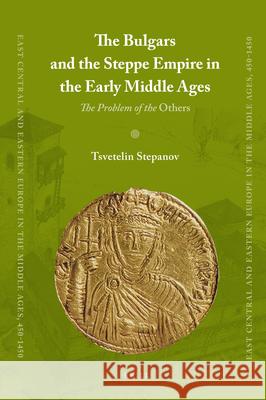
This book is about Steppe Eurasia and China, Persia, Byzantium, as well as the 'Inside' and 'Outside' Other. This dual approach helps the reader to better understand the attitudes of the Steppe to both the southern sedentary empires (in this book, the 'Outside' Other) and to the women and shamans/magicians within the nomadic confederations (in this book, the 'Inside' Other), in the so-called 'Golden Age' of the Steppe Empire, e.g. between the sixth and ninth/tenth centuries.The result is a new and vivid picture of the Steppe's attitudes to 'otherness' and 'usness'. The book covers not only a...
This book is about Steppe Eurasia and China, Persia, Byzantium, as well as the 'Inside' and 'Outside' Other. This dual approach helps the reader to be...
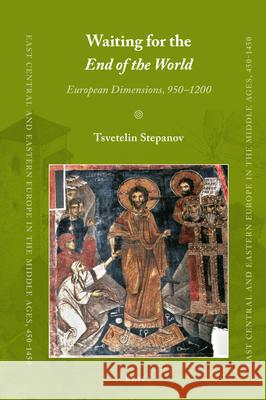
The French president Charles de Gaulle spoke of a Europe “from the Atlantic to the Urals”. Europe was spatially formed with these topographic parameters from the late 10th century onwards, with the massive Christianization of its inhabitants. At that time, however, all three monotheistic religions already had a steady presence there. Could such a macro-space be thought-and-narrated from a macro-perspective, in view of its medieval past? This has already been done through common ʻdenominatorsʻ such as the Migration Period, wars, trade, spread of Christianity. Could it also be seen...
The French president Charles de Gaulle spoke of a Europe “from the Atlantic to the Urals”. Europe was spatially formed with these topographic para...