A New Translation From The French By Marion Wiesel
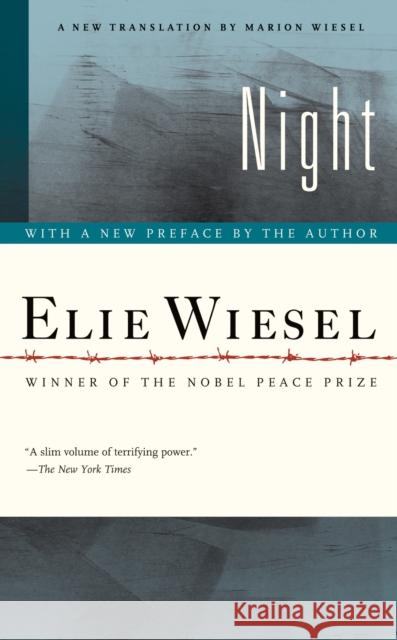
Night is Elie Wiesel's masterpiece, a candid, horrific, and deeply poignant autobiographical account of his survival as a teenager in the Nazi death camps. This new translation by Marion Wiesel, Elie's wife and frequent translator, presents this seminal memoir in the language and spirit truest to the author's original intent. And in a substantive new preface, Elie reflects on the enduring importance of Night and his lifelong, passionate dedication to ensuring that the world never forgets man's capacity for inhumanity to...
A New Translation From The French By Marion Wiesel
Night is Elie Wiesel's masterpiece, a candid, horrific, and deeply poignant ...
The Trial of God (as it was held on February 25, 1649, in Shamgorod) A Play by Elie Wiesel Translated by Marion Wiesel Introduction by Robert McAfee Brown Afterword by Matthew Fox
Where is God when innocent human beings suffer? This drama lays bare the most vexing questions confronting the moral imagination.
Set in a Ukranian village in the year 1649, this haunting play takes place in the aftermath of a pogrom. Only two Jews, Berish the innkeeper and his daughter Hannah, have survived the brutal Cossack raids. When three itinerant actors arrive...
The Trial of God (as it was held on February 25, 1649, in Shamgorod) A Play by Elie Wiesel Translated by Marion Wiesel Introduction...
"Not since Albert Camus has there been such an eloquent spokesman for man." "--The New York Times Book Review"
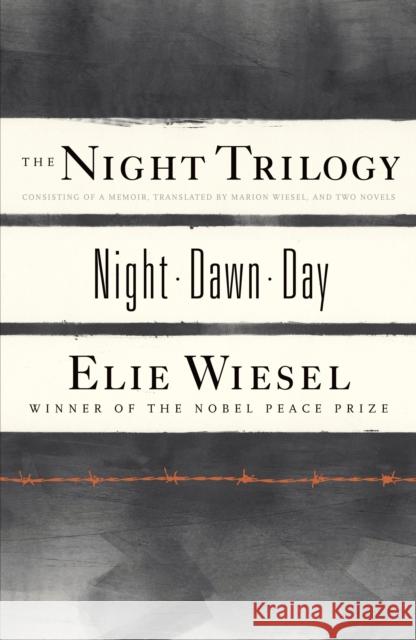
The publication of "Day "restores Elie Wiesel's original title to the novel initially published in English as "The Accident" and clearly establishes it as the powerful conclusion to the author's classic trilogy of Holocaust literature, which includes his memoir "Night" and novel "Dawn." "In "Night "it is the I' who speaks," writes Wiesel. "In the other two, it is the I' who listens and questions."
In its opening paragraphs, a successful journalist and Holocaust survivor steps...
"Not since Albert Camus has there been such an eloquent spokesman for man." "--The New York Times Book Review"
Night is one of the masterpieces of Holocaust literature. First published in 1958, it is the autobiographical account of an adolescent boy and his father in Auschwitz. Elie Wiesel writes of their battle for survival and of his battle with God for a way to understand the wanton cruelty he witnesses each day. In the short novel Dawn (1960), a young man who has survived World War II and settled in Palestine joins a Jewish underground movement and is commanded to execute a British officer who has been taken hostage. In Day (previously titled The...
Night is one of the masterpieces of Holocaust literature. First published in 1958, it is the autobiographical account of an adolescen...
John K Roth (Edward J Sexton Professor Emeritus of Philosophy Claremont McKenna College), Elie Wiesel
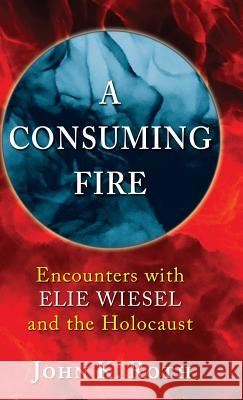
No catastrophe challenges treasured beliefs and cherished hopes more than the Holocaust, Nazi Germany's genocide against the European Jews during World War II. Fueled by virulent, racist anti-Semitism, that disaster, which targeted Judaism as well as every Jewish life within the Third Reich's lethal grasp, still underlines the fragile status of human rights and ethics, still undercuts optimism about human ""progress,"" and still undermines confidence about God's moral authority, providential engagement with human history, and even God's existence itself. Elie Wiesel, who died in 2016, was one...
No catastrophe challenges treasured beliefs and cherished hopes more than the Holocaust, Nazi Germany's genocide against the European Jews during Worl...