"I hope that reading this book can become a kind of inner conversation. If this conversation unfolds in such a way that it reveals the hidden inner forces that can be awakened in every soul, then reading this book may lead to genu-ine, inner soul work. As a result you may find yourself gradually impelled to undertake the journey of the soul that truly leads to vision of the spiritual world." --Rudolf Steiner
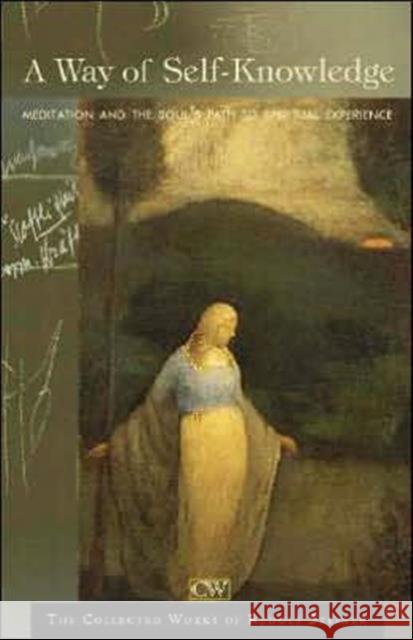
Part one, "A Way of Self-Knowledge": Eight meditations that take the reader on a journey through human experience. Beginning with ordinary experience,...
"I hope that reading this book can become a kind of inner conversation. If this conversation unfolds in such a way that it reveals the hidden inner fo...
14 lectures, Basel, April 20-May 16, 1920 (CW 301) Following a lecture of November 27, 1919 requested by the Basel Department of Education, sixty members of the audience invited Rudolf Steiner to return and deliver a complete lecture course on his approach to education. These lectures are the result. Rudolf Steiner begins by outlining the gradual development of the child with the help of spiritual forces and enlightened educational practices, which form the basis for Steiner's approach to education. He describes the problems that modern educators face and provides practical solutions....
14 lectures, Basel, April 20-May 16, 1920 (CW 301) Following a lecture of November 27, 1919 requested by the Basel Department of Education, sixty ...
"This is what it comes down to: that we learn to experience that those who have passed through the gate of death have only assumed another form. Having died, they stand before our feelings like those who, through life experiences, have traveled to distant lands, whither we can follow them only later. We have therefore nothing to fear but a time of separation. Spiritual science must help us learn to feel and experience this in the most living way we can." --Rudolf Steiner
"Living and working with the concepts and exercises in these talks and meditations has changed my life....
"This is what it comes down to: that we learn to experience that those who have passed through the gate of death have only assumed another form. Havin...
Rudolf Steiner is perhaps best known for his influence and wisdom in the fields of education, agriculture, medicine, science, and art.
It is often forgotten that it was as a spiritual teacher that he made these contributions. Unfortunately, while his immediate students had the advantage of Steiner as a personal guide to their inner lives, later readers have had only his written works to guide them.
Steiner, however, did give a few lectures on inner development--especially on beginning a path of practice. This book now collects these lectures--some of which have never been in...
Rudolf Steiner is perhaps best known for his influence and wisdom in the fields of education, agriculture, medicine, science, and art.
The mystics Steiner writes about in this book were early giants in the modern art of illumined self-knowledge. Their ways of seeing the world, God, and themselves foreshadowed all that we practice now in the best of meditation, both East and West. Here, you can read about their essential passion for unity, their practice of intensification of perception, and their ever-fresh insights into the process of knowing itself.
Contents:
Foreword by Christopher Bamford
Preface to the 1923 Edition
Introduction: Mystics, Natural Science, and the Modern World...
The mystics Steiner writes about in this book were early giants in the modern art of illumined self-knowledge. Their ways of seeing the world, God, an...
The point, line, plane and solid objects represent the first three dimensions, but a kind of reversal of space is involved in the ascent to a fourth dimension. Steiner leads us to the brink of this new perspective--as nearly as it can be done with words, diagrams, analogies, and examples of many kinds. In doing so, he continues his lifelong project of demonstrating that our objective, everyday thinking is the lowest rung of a ladder that reaches up to literally infinite heights. The talks in this series and the selections from the question-and-answer sessions on many mathematical topics...
The point, line, plane and solid objects represent the first three dimensions, but a kind of reversal of space is involved in the ascent to a fourth d...
5 lectures at The Hague, November 13-18, 1923 (CW 231)
What is our relationship to the planets we see in the night sky? Does the cosmos have any affect on our individual lives? Modern science tells us that we are an insignificant accident in a vast, indifferent universe. Rudolf Steiner maintains that we are intimately enmeshed with the whole cosmos, right down to the very structure of our physical bodies.
In these talks, Steiner explores our relationship as individuals to the spiritual cosmos--where we will all become cosmonauts one day. The key to being at home...
5 lectures at The Hague, November 13-18, 1923 (CW 231)
What is our relationship to the planets we see in the night sky? Does the cos...
10 lectures, Basel, September 15-26, 1909 (CW 114)
Rudolf Steiner was born with clairvoyant capacities, but it was not until he was forty that he could connect his inner experiences with Jesus Christ. After that "solemn festival of knowledge," as he described it in his Autobiography, Steiner received ceaseless revelations about the significance of the Christ's incarnation. For the next twenty years, he spoke of the hidden background to all four gospels, the Book of Revelations, and even what he called the Fifth Gospel, read directly from the spirit worlds.
10 lectures, Basel, September 15-26, 1909 (CW 114)
Rudolf Steiner was born with clairvoyant capacities, but it was not until he was ...
11 lectures, Stuttgart and Dornach, Dec. 23, 1919 - Aug. 8, 1921 (CW 320) Rudolf Steiner's course on light, which includes explorations of color, sound, mass, electricity and magnetism, presages the dawn of a new worldview in the natural sciences that will stand our notion of the physical world on its head. This "first course" in natural science, given to the teachers of the new Stuttgart Waldorf school as an inspiration for developing the physics curriculum, is based on Goethe's phenomenological approach to the study of nature. Acknowledging that modern physicists had come to...
11 lectures, Stuttgart and Dornach, Dec. 23, 1919 - Aug. 8, 1921 (CW 320) Rudolf Steiner's course on light, which includes explorations of ...
5 lectures, Berlin and Stuttgart, January-March 1912 (CW 135)
"Just as an age was once ready to receive the Copernican theory of the universe, so is our own age ready for the ideas of reincarnation and karma to be brought into the general consciousness of humanity." --Rudolf Steiner
Steiner introduced the West to his detailed, scientific knowledge of reincarnation and karma. He gave concrete descriptions of the way individuals transform during the course of successive incarnations and specific examples of how karma works.
Steiner also provides...
5 lectures, Berlin and Stuttgart, January-March 1912 (CW 135)
"Just as an age was once ready to receive the Copernican theory of the...