Wootton's translation brings out the liveliness of More's work and offers an accurate and reliable version of a masterpiece of social theory. His edition is further distinguished by the inclusion of a translation of Erasmus's 'The Sileni of Alcibiades, ' a work very close in sentiment to Utopia, and one immensely influential in the sixteenth century. This attractive combination suits the edition especially well for use in Renaissance and Reformation courses as well as as for Western Civilization survey courses. Wootton s Introduction simultaneously provides a remarkably useful guide to...
Wootton's translation brings out the liveliness of More's work and offers an accurate and reliable version of a masterpiece of social theory. His e...
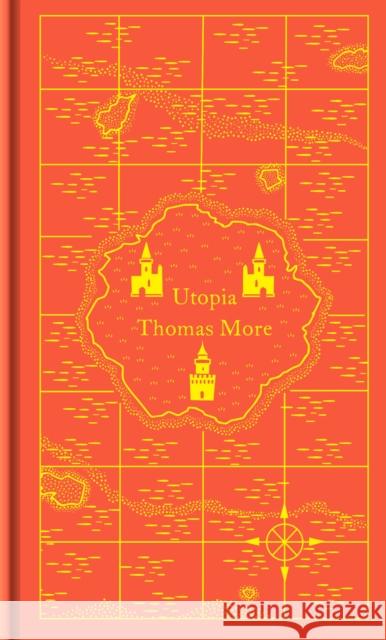
In Utopia Thomas More painted a fantastical picture of a distant island where society is perfected and people live in harmony, yet its title means 'no place', and More's hugely influential work was ultimately an attack on his own corrupt, dangerous times, and on the failings of humanity. Throughout history, some books have changed the world. They have transformed the way we see ourselves - and each other. They have inspired debate, dissent, war and revolution. They have enlightened, outraged, provoked and comforted. They have enriched lives - and destroyed them. Now Penguin brings you the...
In Utopia Thomas More painted a fantastical picture of a distant island where society is perfected and people live in harmony, yet its title means 'no...
A major new translation of Thomas More's popular work of philosophical fiction In his most famous and controversial book, Utopia, Thomas More imagines a perfect island nation where thousands live in peace and harmony, men and women are both educated, and all property is communal. Through dialogue and correspondence between the protagonist Raphael Hythloday and his friends and contemporaries, More explores the theories behind war, political disagreements, social quarrels, and wealth distribution and imagines the day-to-day lives of those citizens enjoying freedom from fear,...
A major new translation of Thomas More's popular work of philosophical fiction In his most famous and controversial book, Utopia, Th...
This Norton Critical Edition is built on the translation that Robert M. Adams created for it in 1975. For the Third Edition, George M. Logan has carefully revised the translation, improving its accuracy while preserving the grace and verve that have made it the most highly regarded modern rendering of More's Renaissance Latin work "Backgrounds" includes a wide-ranging selection of the major secular and religious texts--from Plato to Amerigo Vespucci--that informed More's thinking, as well as a selection of the responses to his book by members of his own humanist circle and an account by G. R....
This Norton Critical Edition is built on the translation that Robert M. Adams created for it in 1975. For the Third Edition, George M. Logan has caref...
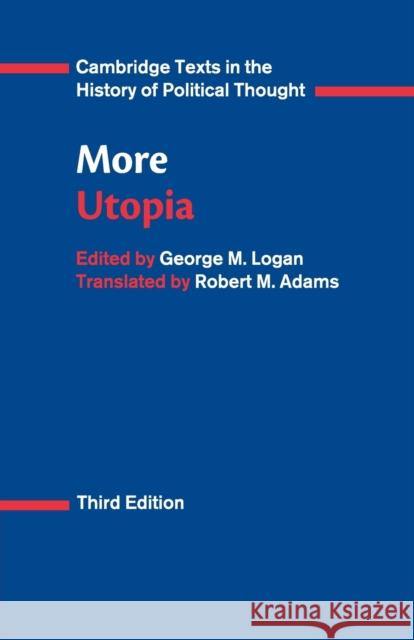
This is a fully revised edition of one of the most successful volumes in the Cambridge Texts in the History of Political Thought series. Incorporating extensive updates to the editorial apparatus, including the introduction, suggestions for further reading, and footnotes, this third edition of More's Utopia has been comprehensively re-worked to take into account scholarship published since the second edition in 2002. The vivid and engaging translation of the work itself by Robert M. Adams includes all the ancillary materials by More's fellow humanists that, added to the book at his own...
This is a fully revised edition of one of the most successful volumes in the Cambridge Texts in the History of Political Thought series. Incorporating...
In Thomas More's hugely influential Utopia, a traveller recounts his discovery of an island nation in which the inhabitants enjoy unprecedented social cohesion and justice. The book imagines a community in which laws, personal relations and professional ambition are based on reason, in contrast with the tradition-bound superstitions of Europe, which were, in More's eyes, impediments to equality and peaceful coexistence. One of the indicators of the profound cultural and political influence of More's masterpiece is today's common use of the word "Utopia" - a term he invented. This...
In Thomas More's hugely influential Utopia, a traveller recounts his discovery of an island nation in which the inhabitants enjoy unprecedented ...
In Utopia, Thomas More gives us a traveller's account of a newly discovered island where the inhabitants enjoy a social order based on natural reason and justice, and human fulfilment is open to all. As the traveller, Raphael, describes the island to More, a bitter contrast is drawn between this rational society and the custom-driven practices of Europe. So how can the philosopher try to reform his society? In his fictional discussion, More takes up a question first raised by Plato and which is still a challenge in the contemporary world. In the history of political thought few works have...
In Utopia, Thomas More gives us a traveller's account of a newly discovered island where the inhabitants enjoy a social order based on natural reason ...