Over himself, over his own body and mind, the individual is sovereign. The whole of John Stuart Mill's On Liberty is dedicated to this simple principle. While many of his immediate predecessors and contemporaries, from Adam Smith to Godwin and Thoreau, had celebrated liberty, it was Mill who organized the idea into a philosophy and put it into the form in which it is known today. In this text, Mill argues that liberty must play a central role in social policy, necessitating a redrawing of the line between the authority wielded by the state and the independence of the individual.
Over himself, over his own body and mind, the individual is sovereign. The whole of John Stuart Mill's On Liberty is dedicated to this simple principl...
One of the most important nineteenth-century schools of thought, Utilitarianism propounds the view that the value or rightness of an action rests in how well it promotes the welfare of those affected by it, aiming for 'the greatest happiness of the greatest number'. Jeremy Bentham (1748-1832) was the movement's founder, as much a social reformer as a philosopher. His greatest interpreter, John Stuart Mill (1806-73), set out to humanize Bentham's pragmatic Utilitarianism by balancing the claims of reason and the imagination, individuality and social well-being in essays such as...
One of the most important nineteenth-century schools of thought, Utilitarianism propounds the view that the value or rightness of an action res...
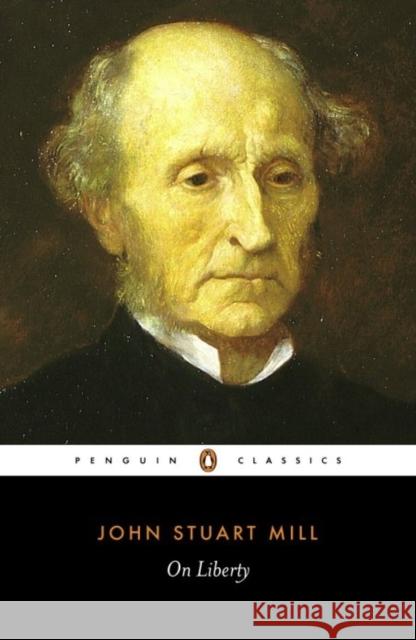
Since its first publication in 1859, few works of political philosophy have provoked such continuous controversy as Mill's 'On Liberty', a passionate argument on behalf of freedom of self-expression. This edition contains an introduction which puts the work in its biographical and political context.
Since its first publication in 1859, few works of political philosophy have provoked such continuous controversy as Mill's 'On Liberty', a passionate ...
Two cornerstones of liberalism from the great social radical of English philosophy John Stuart Mill was a prodigious thinker who sharply challenged the beliefs of his age. In On Liberty, one of the sacred texts of liberalism, he argues that any democracy risks becoming a "tyranny of opinion" in which minority views are suppressed if they do not conform to those of the majority. The Subjection of Women, written shortly after the death of Mill's wife, Harriet, stresses the importance of sexual equality. Together they provide eloquent testimony to the hopes and...
Two cornerstones of liberalism from the great social radical of English philosophy John Stuart Mill was a prodigious thinker who sharply c...
This volume unites, for the first time, Books IV and V of Mill's great treatise on political economy with his fragmentary Chapters on Socialism. It shows him applying his classical economic theory to policy questions of lasting concern: the desirability of sustained growth of national wealth and population, the merits of capitalism versus socialism, and the suitable scope of government intervention in the competitive market economy. His answers to those questions have profound relevance today, and they serve to illustrate the enduring power and imagination of his distinctive liberal...
This volume unites, for the first time, Books IV and V of Mill's great treatise on political economy with his fragmentary Chapters on Socialism
This expanded edition of John Stuart Mill's Utilitarianism includes the text of his 1868 speech to the British House of Commons defending the use of capital punishment in cases of aggravated murder. The speech is significant both because its topic remains timely and because its arguments illustrate the applicability of the principle of utility to questions of large-scale social policy.
This expanded edition of John Stuart Mill's Utilitarianism includes the text of his 1868 speech to the British House of Commons defending th...
This volume includes the complete texts of two of John Stuart Mill's most important works, Utilitarianism and On Liberty, and selections from his other writings, including the complete text of his Remarks on Bentham's Philosophy. The selection from Mill's A System of Logic is of special relevance to the debate between those who read Mill as an Act-Utilitarian and those who interpret him as a Rule-Utilitarian.
Also included are selections from the writings of Jeremy Bentham, founder of modern Utilitarianism and mentor (together with James Mill) of John Stuart Mill. Bentham's...
This volume includes the complete texts of two of John Stuart Mill's most important works, Utilitarianism and On Liberty, and selections from his o...
'it is only the cultivation of individuality which produces, or can produce, well developed human beings' Mill's four essays, 'On Liberty', 'Utilitarianism', 'Considerations on Representative Government', and 'The Subjection of Women' examine the most central issues that face liberal democratic regimes - whether in the nineteenth century or the twenty-first. They have formed the basis for many of the political institutions of the West since the late nineteenth century, tackling as they do the appropriate grounds for protecting individual liberty, the basic principles of...
'it is only the cultivation of individuality which produces, or can produce, well developed human beings' Mill's four essays, 'On...
Utilitarianism is a classic work of ethical theory, arguably the most persuasive and comprehensible presentation of this widely influential position. While he didn't invent utilitarianism, John Stuart Mill offered its clearest expression and strongest defense, and he expanded the theory to account for the variety in quality that we find among pleasures and pains. The complete text of the 1871 edition is included, along with selections from Jeremy Bentham's An Introduction to the Principles of Morals and Legislation. Andrew Bailey's detailed introduction examines the context of...
Utilitarianism is a classic work of ethical theory, arguably the most persuasive and comprehensible presentation of this widely influenti...