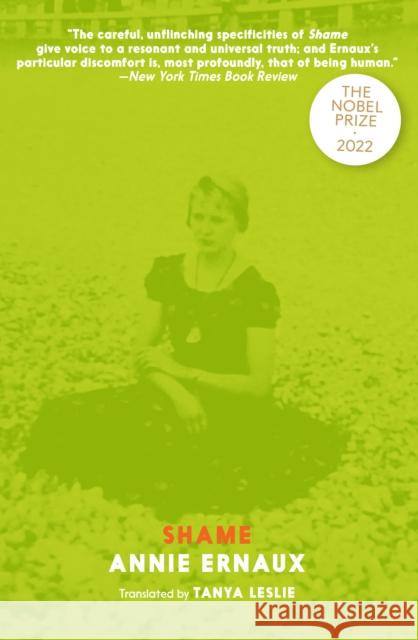
"My father tried to kill my mother one Sunday in June, in the early afternoon," begins Shame, the probing story of the twelve-year-old girl who will become the author herself, and the single traumatic memory that will echo and resonate throughout her life. With the emotionally rich voice of great fiction and the diamond-sharp analytical eye of a scientist, Annie Ernaux provides a powerful reflection on experience and the power of violent memory to endure through time, to determine the course of a life.
"My father tried to kill my mother one Sunday in June, in the early afternoon," begins Shame, the probing story of the twelve-year-old girl who will b...
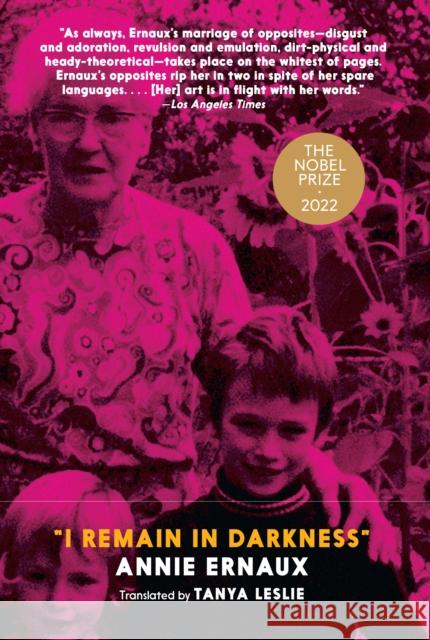
In the summer of 1983, Annie Ernaux's mother fell ill and was diagnosed with Alzheimer's disease. This collection of journal entries traces the descent of her mother into the depths of the disease and reveals the author's own complex feelings.
In the summer of 1983, Annie Ernaux's mother fell ill and was diagnosed with Alzheimer's disease. This collection of journal entries traces the descen...
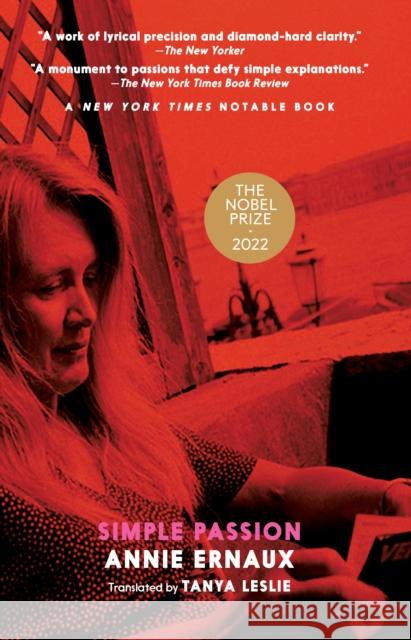
In her spare, stark style, Annie Ernaux documents the desires and indignities of a human heart ensnared in an all-consuming passion. Blurring the line between fact and fiction, an unnamed narrator attempts to plot the emotional and physical course of her two-year relationship with a married foreigner where every word, event, and person either provides a connection with her beloved or is subject to her cold indifference. With courage and exactitude, she seeks the truth behind an existence lived entirely for someone else, and, in the pieces of its aftermath, she is able to find it.
In her spare, stark style, Annie Ernaux documents the desires and indignities of a human heart ensnared in an all-consuming passion. Blurring the line...
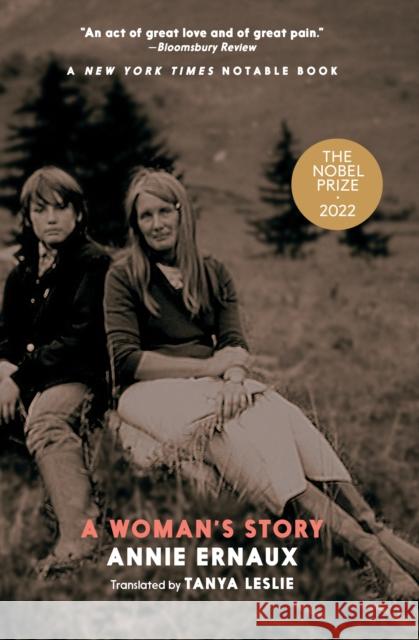
A Woman s Story is Annie Ernaux s "deeply affecting account of mothers and daughters, youth and age, and dreams and reality" (Kirkus Reviews). Upon her mother s death from Alzheimer s, Ernaux embarks on a daunting journey back through time, as she seeks to "capture the real woman, the one who existed independently from me, born on the outskirts of a small Normandy town, and who died in the geriatric ward of a hospital in the suburbs of Paris." She explores the bond between mother and daughter, tenuous and unshakable at once, the alienating worlds that separate them, and the inescapable truth...
A Woman s Story is Annie Ernaux s "deeply affecting account of mothers and daughters, youth and age, and dreams and reality" (Kirkus Reviews). Upon he...
Annie Ernaux s work, wrote Richard Bernstein in the New York Times, represents a severely pared-down Proustianism, a testament to the persistent, haunting and melancholy quality of memory. In the New York Times Book Review, Kathryn Harrison concurred: Keen language and unwavering focus allow her to penetrate deep, to reveal pulses of love, desire, remorse. In this journal Ernaux turns her penetrating focus on those points in life where the everyday and the extraordinary intersect, where things seen reflect a private life meeting the larger world. From the war crimes tribunal in...
Annie Ernaux s work, wrote Richard Bernstein in the New York Times, represents a severely pared-down Proustianism, a testament to the persisten...
Considered by many to be the iconic French memoirist's defining work, THE YEARS is a narrative of the period 1941 to 2006 told through the lens of memory, impressions past and present, cultural habits, language, photos, books, songs, radio, television, advertising and news headlines. Annie Ernaux invents a form that is subjective and impersonal, private and collective, and a new genre - the collective autobiography - in order to capture the passing of time. At the confluence of autofiction and sociology, THE YEARS is 'a REMEMBRANCE OF THINGS PAST for our age of media domination and...
Considered by many to be the iconic French memoirist's defining work, THE YEARS is a narrative of the period 1941 to 2006 told through the lens of mem...
A powerful meditation on ageing and familial love, I REMAIN IN DARKNESS recounts Annie Ernaux's attempts to help her mother recover from Alzheimer's disease, and then, when that proves futile, to bear witness to the older woman's gradual decline and her own experience as a daughter losing a beloved parent. Haunting and devastatingly poignant, I REMAIN IN DARKNESS showcases Ernaux's unique talent for evoking life's darkest and most bewildering episodes.
A powerful meditation on ageing and familial love, I REMAIN IN DARKNESS recounts Annie Ernaux's attempts to help her mother recover from Alzheimer's d...