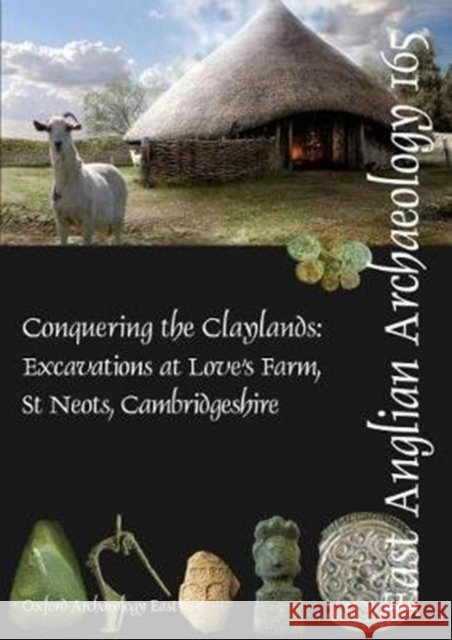
Love’s Farm, St Neots, lies on the claylands near the western boundary of Cambridgeshire. Fieldwork conducted over 60ha by the county field unit, CAM ARC (now Oxford Archaeology East), followed geophysical survey, fieldwalking and evaluation. This extensive project permitted a detailed archaeological examination of a later prehistoric and Roman agricultural landscape on a previously unprecedented scale within the county. Evidence was revealed for the exploitation of the area in early prehistory, with field systems present from the middle Iron Age, if not before. By the late Iron Age,...
Love’s Farm, St Neots, lies on the claylands near the western boundary of Cambridgeshire. Fieldwork conducted over 60ha by the county field unit, CA...
A research and community-training excavation took place over two summer seasons in 2013-14 within the Roman extramural settlement at Maryport, including the backplot. The primary aim of the project, which attracted around 125 volunteers, was to enhance understanding of the settlement through the excavation of a single building plot, the first time this had been undertaken at Maryport in modern times. Using geophysical survey evidence, a plot located 150 m north-east of the fort, adjacent to the main Roman road, was selected for investigation. The earliest feature was a small ditch,...
A research and community-training excavation took place over two summer seasons in 2013-14 within the Roman extramural settlement at Maryport, includi...
Archaeological and palaeoenvironmental investigations by Oxford Archaeology reveal the evolving prehistoric coastal landscapes and settlement history of the Humber Estuary. Combining geoarchaeology and excavation, this volume explores Mesolithic to medieval activity at Goxhill, North Lincolnshire and Paull, East Yorkshire.
Archaeological and palaeoenvironmental investigations by Oxford Archaeology reveal the evolving prehistoric coastal landscapes and settlement history ...