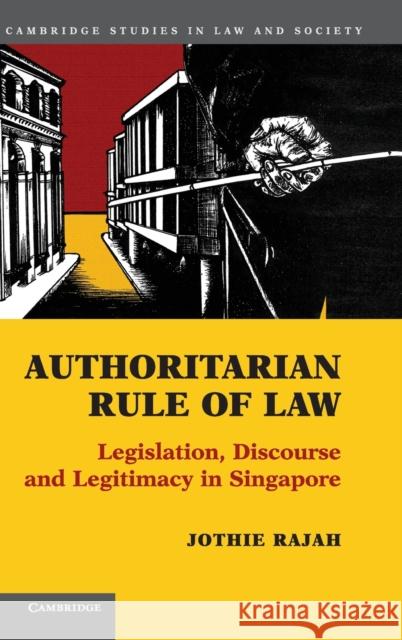
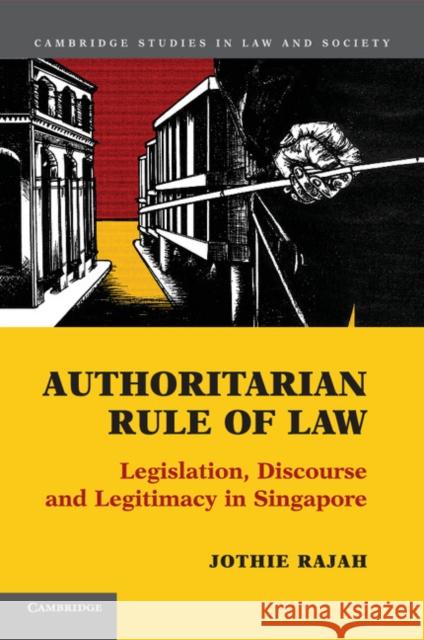
Scholars have generally assumed that authoritarianism and rule of law are mutually incompatible. Convinced that free markets and rule of law must tip authoritarian societies in a liberal direction, nearly all studies of law and contemporary politics have neglected that improbable coupling: authoritarian rule of law. Through a focus on Singapore, this book presents an analysis of authoritarian legalism. It shows how prosperity, public discourse, and a rigorous observance of legal procedure have enabled a reconfigured rule of law such that liberal form encases illiberal content. Institutions...
Scholars have generally assumed that authoritarianism and rule of law are mutually incompatible. Convinced that free markets and rule of law must tip ...
Scholars have generally assumed that authoritarianism and rule of law are mutually incompatible. Convinced that free markets and rule of law must tip authoritarian societies in a liberal direction, nearly all studies of law and contemporary politics have neglected that improbable coupling: authoritarian rule of law. Through a focus on Singapore, this book presents an analysis of authoritarian legalism. It shows how prosperity, public discourse, and a rigorous observance of legal procedure have enabled a reconfigured rule of law such that liberal form encases illiberal content. Institutions...
Scholars have generally assumed that authoritarianism and rule of law are mutually incompatible. Convinced that free markets and rule of law must tip ...