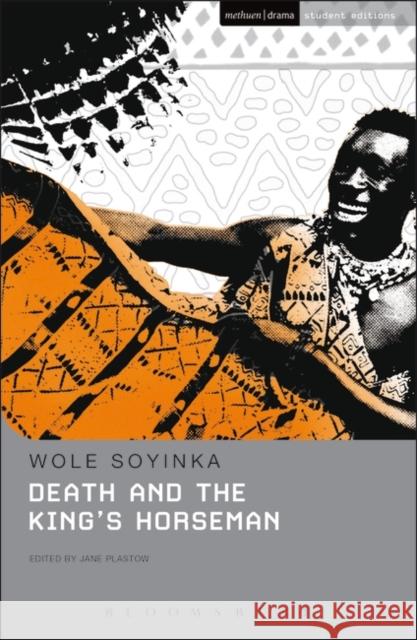
Based on events that took place in Oyo, an ancient Yoruba city of Nigeria, in 1946, Wole Soyinka's powerful play concerns the intertwined lives of Elesin Oba, the king's chief horseman; his son, Olunde, now studying medicine in England; and Simon Pilkings, the colonial district officer. The king has died and Elesin, his chief horseman, is expected by law and custom to commit suicide and accompany his ruler to heaven. The stage is set for a dramatic climax when Pilkings learns of the ritual and decides to intervene and Elesin's son arrives home.
Based on events that took place in Oyo, an ancient Yoruba city of Nigeria, in 1946, Wole Soyinka's powerful play concerns the intertwined lives of Ele...
Wole Soyinka, Richard Boon (University of Leeds), Jane Plastow (University of Leeds)
Theater, in a variety of forms and contexts, can make, and indeed has made, positive political and social interventions in a range of developing cultures around the world. In this book a distinguished team of theater historians and dramatists explore how theater has a dynamic and often difficult relationship with societies and states, arguing positively that theatrical activity can make a difference. The collection begins with a foreword by Wole Soyinka and, throughout the volume, specially chosen plays, projects and movements are examined in countries such as Brazil and Argentina, Nigeria,...
Theater, in a variety of forms and contexts, can make, and indeed has made, positive political and social interventions in a range of developing cultu...
A member of the unique generation of African writers and intellectuals who came of age in the last days of colonialism, Wole Soyinka has witnessed the promise of independence and lived through postcolonial failure. He deeply comprehends the pressing problems of Africa, and, an irrepressible essayist and a staunch critic of the oppressive boot, he unhesitatingly speaks out.
In this magnificent new work, Soyinka offers a wide-ranging inquiry into Africa's culture, religion, history, imagination, and identity. He seeks to understand how the continent's history is entwined with the...
A member of the unique generation of African writers and intellectuals who came of age in the last days of colonialism, Wole Soyinka has witnessed...
Winner of the 1986 Nobel Prize for Literature, this Nigerian poet, playwright, and novelist writes of the rich cultural traditions as well as the hopes and frustrations of black Africa. This two-volume collection of his plays includes A Dance of the Forests, The Swamp Dwellers, The Strong Breed, The Road, and The Bacchae of Euripides in the first volume, and The Lion and the Jewel, Kongi's Harvest, The Trials of Brother Jero, Jero's Metamorphosis, and Madmen and Specialists in the second volume.
Winner of the 1986 Nobel Prize for Literature, this Nigerian poet, playwright, and novelist writes of the rich cultural traditions as well as the hope...
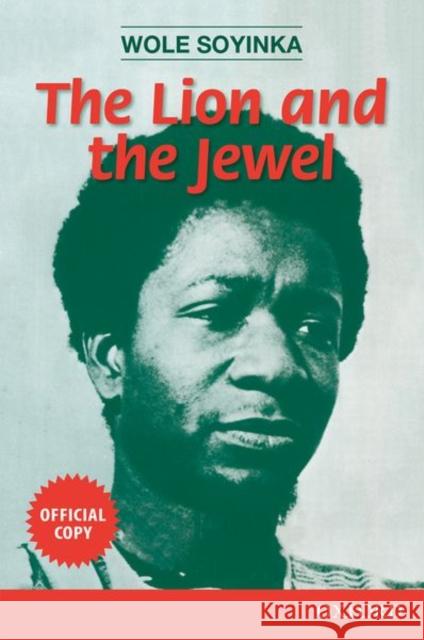
This is one of the best-known plays by Africa's major dramatist, Wole Soyinka. It is set in the Yoruba village of Ilunjinle. The main characters are Sidi (the Jewel), 'a true village belle' and Baroka (the Lion), the crafty and powerful Bale of the village, Lakunle, the young teacher, influenced by western ways, and Sadiku, the eldest of Baroka's wives. How the Lion hunts the Jewel is the theme of this ribald comedy.
This is one of the best-known plays by Africa's major dramatist, Wole Soyinka. It is set in the Yoruba village of Ilunjinle. The main characters are S...
In this title, colour photography and specially commissioned cutaway illustrations of important buildings combine with in-depth descriptions of major cultural, architectural and historical sites.
In this title, colour photography and specially commissioned cutaway illustrations of important buildings combine with in-depth descriptions of major ...