Rousseau's explosive cry for human liberty helped to spark the French Revolution and has haunted our discussions of how we should rule one another ever since - seen as both a blue-print for political terror and as a fundamental statement of democracy.
Rousseau's explosive cry for human liberty helped to spark the French Revolution and has haunted our discussions of how we should rule one another eve...
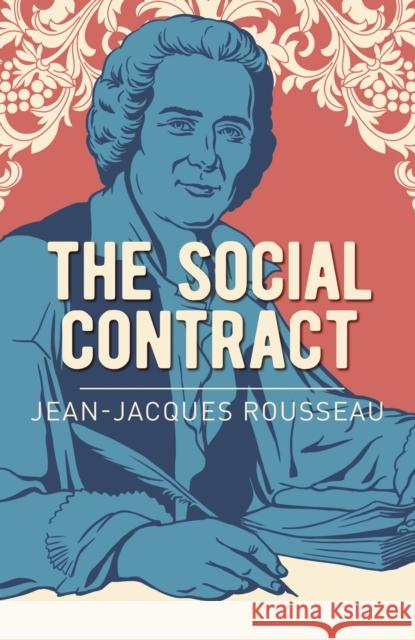
A lively new translation of Rousseau's best-known work, accompanied by additional political writings "Man is born free, and everywhere he is in chains" are the famous opening words of Jean-Jacques Rousseau'sSocial Contract, a work of political philosophy that has stirred vigorous debate ever since its publication in 1762. Rejecting the view that anyone has a natural right to sovereignty, Rousseau argues instead for a pact a "social contract" that should exist among all the citizens of a state and that should be the source of governing power. From this premise, he goes on to...
A lively new translation of Rousseau's best-known work, accompanied by additional political writings "Man is born free, and everywhere he i...
Revolutionary in its own time and controversial to this day, this work is a permanent classic of political theory and a key source of democratic belief. Rousseau's concepts of "the general will" as a mode of self-interest uniting for a common good, and the submission of the individual to government by contract inform the heart of democracy, and stand as its most contentious components today. Also included in this edition is Rousseau's Discourse on Political Economy," a key transitional work between his Discourse on Inequality and The Social Contract. This new...
Revolutionary in its own time and controversial to this day, this work is a permanent classic of political theory and a key source of democratic belie...
In his Confessions Jean-Jacques Rousseau tells the story of his life, from the formative experience of his humble childhood in Geneva, through the achievement of international fame as novelist and philosopher in Paris, to his wanderings as an exile, persecuted by governments and alienated from the world of modern civilization. In trying to explain who he was and how he came to be the object of others' admiration and abuse, Rousseau analyses with unique insight the relationship between an elusive but essential inner self and the variety of social identities he was led to adopt. The book...
In his Confessions Jean-Jacques Rousseau tells the story of his life, from the formative experience of his humble childhood in Geneva, through the ach...
In his Discourses (1755), Rousseau argues that inequalities of rank, wealth, and power are the inevitable result of the civilizing process. If inequality is intolerable - and Rousseau shows with unparalledled eloquence how it robs us not only of our material but also of our psychological independence - then how can we recover the peaceful self-sufficiency of life in the state of nature? We cannot return to a simpler time, but measuring the costs of progress may help us to imagine alternatives to the corruption and oppressive conformity of modern society. Rousseau's sweeping account of...
In his Discourses (1755), Rousseau argues that inequalities of rank, wealth, and power are the inevitable result of the civilizing process. If inequal...
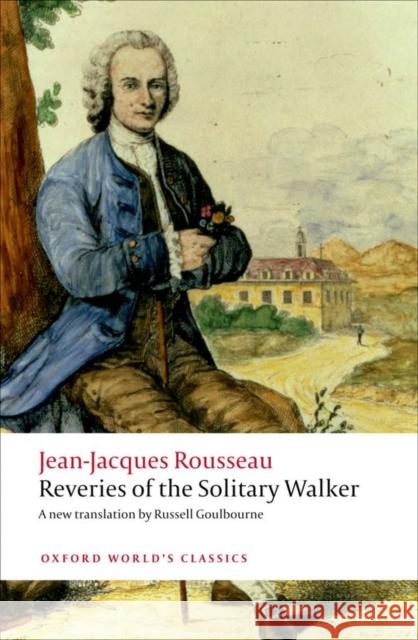
Rousseau's last great work, Reveries of the Solitary Walker is part reminiscence, part meditation, as the philosopher tries to come to terms with his isolation and to find happiness in solitude and nature. The Reveries are an important complement to Rousseau's other philosophical and autobiographical works and address many of the same issues, making it a useful introduction for anyone interested in reading Rousseau for the first time. Russell Goulbourne offers a fresh new translation that marries accuracy with readability. In addition, his Introduction discusses the nature of the work and...
Rousseau's last great work, Reveries of the Solitary Walker is part reminiscence, part meditation, as the philosopher tries to come to terms with his ...
Individualist and communitarian. Anarchist and totalitarian. Classicist and romanticist. Progressive and reactionary. Since the eighteenth century, Jean-Jacques Rousseau has been said to be all of these things. Few philosophers have been the subject of as much or as intense debate, yet almost everyone agrees that Rousseau is among the most important and influential thinkers in the history of political philosophy. This new edition of his major political writings, published in the year of the three-hundredth anniversary of his birth, renews attention to the perennial importance of Rousseau's...
Individualist and communitarian. Anarchist and totalitarian. Classicist and romanticist. Progressive and reactionary. Since the eighteenth century,...
'No true Democracy has ever existed, nor ever will exist.' In this selection from The Social Contract, Rousseau asserts that a state's only legitimate political authority comes from its people. One of 46 new books in the bestselling Little Black Classics series, to celebrate the first ever Penguin Classic in 1946. Each book gives readers a taste of the Classics' huge range and diversity, with works from around the world and across the centuries - including fables, decadence, heartbreak, tall tales, satire, ghosts, battles and elephants.
'No true Democracy has ever existed, nor ever will exist.' In this selection from The Social Contract, Rousseau asserts that a state's only legitimate...