"Man was born free, and he is everywhere in chains"
These are the famous opening words of a treatise that has not ceased to stir vigorous debate since its first publication in 1762. Rejecting the view that anyone has a natural right to wield authority over others, Rousseau argues instead for a pact, or 'social contract', that should exist between all the citizens of a state and that should be the source of sovereign power. From this fundamental premise, he goes on to consider issues of liberty and law, freedom and justice, arriving at a view of society that has seemed to some...
"Man was born free, and he is everywhere in chains"
These are the famous opening words of a treatise that has not ceased to stir vigo...
Jean-Jacques Rousseau, Christopher Kelly, Roger D. Masters, Judith R. Bush
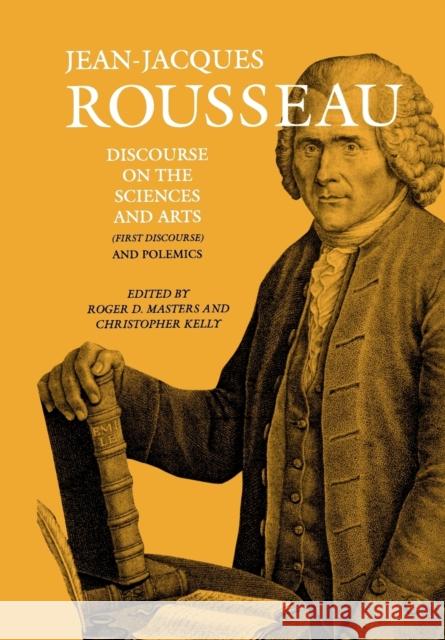
Rousseau attacks the social and political effects of the dominant forms of scientific knowledge. Contains the entire First Discourse, contemporary attacks on it, Rousseau's replies to his critics, and his summary of the debate in his preface to Narcissus. A number of these texts have never before been available in English. The First Discourse and Polemics demonstrate the continued relevance of Rousseau's thought. Whereas his critics argue for correction of the excesses and corruptions of knowledge and the sciences as sufficient, Rousseau attacks the social and political effects of the...
Rousseau attacks the social and political effects of the dominant forms of scientific knowledge. Contains the entire First Discourse, contemporary att...
Jean-Jacques Rousseau, Christopher Kelly, Roger D. Masters, Terence Marshall, Judith R. Bush
Includes the Second Discourse (complete with the author's extensive notes), contemporary critiques by Voltaire, Diderot, Bonnet, and LeRoy, Rousseau's replies (some never before translated), and Political Economy, which first outlined principles that were to become famous in the Social Contract. This is the first time that the works of 1755 and 1756 have been combined with careful commentary to show the coherence of Rousseau's "political system." The Second Discourse examines man in the true "state of nature," prior to the formation of the first human societies, tracing the "hypothetical...
Includes the Second Discourse (complete with the author's extensive notes), contemporary critiques by Voltaire, Diderot, Bonnet, and LeRoy, Rousseau's...
Jean-Jacques Rousseau, Christopher Kelly, Roger D. Masters, Peter G. Stillman, Christopher Kelly
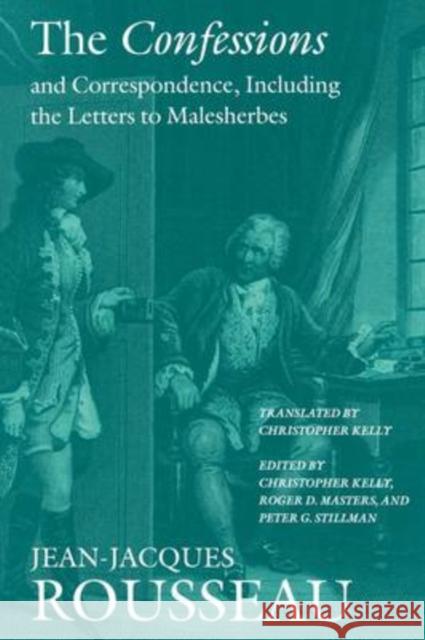
When Rousseau first read his Confessions to a 1770 gathering in Paris, reactions varied from admiration of his candor to doubts about his sanity to outrage. Indeed, Rousseau's intent and approach were revolutionary. As one of the first attempts at autobiography, the Confessions' novelty lay not in just its retelling the facts of Rousseau's life, but in its revelation of his innermost feelings and its frank description of the strengths and failings of his character. Based on his doctrine of natural goodness, Rousseau intended the Confessions as a testing ground to explore his belief that,...
When Rousseau first read his Confessions to a 1770 gathering in Paris, reactions varied from admiration of his candor to doubts about his sanity to ou...
Donald Cress's highly regarded translation, based on the critical Pleiade edition of 1964, is here issued with a lively introduction by James Miller, who brings into sharp focus the cultural and intellectual milieu in which Rousseau operated. This new edition includes a select bibliography, a note on the text, a translator s note, and Rousseau s own Notes on the Discourse."
Donald Cress's highly regarded translation, based on the critical Pleiade edition of 1964, is here issued with a lively introduction by James Mille...
This autobiography includes the record of a sexual and spiritual quest, exploring the deepest recesses of the author's mind while narrating the farcical comedy of errors which was his life. P.N. Furbank is the author of E.M. Forster: A Life.
This autobiography includes the record of a sexual and spiritual quest, exploring the deepest recesses of the author's mind while narrating the farcic...
""The Government of Poland" is the only finished work in which Rousseau himself dons the mantle of legislator, applying the principles of the "Social Contract" to the real world around him. "Poland" teaches us much about the mysterious art of the "Social Contract's" 'legislator, ' how he transforms each individual into part of a larger whole. Only in . . . "Poland" do we find what this crucial transformation entails and what it presupposes. But probably the greatest lesson to be learned from . . . Poland concerns Rousseau's understanding of the proper relationship between theory and practice....
""The Government of Poland" is the only finished work in which Rousseau himself dons the mantle of legislator, applying the principles of the "Social ...
In his pioneering treatise on education, the French philosopher Jean-Jacques Rousseau presents concepts that had influence on the development of pedagogy in the eighteenth century. Here, Rousseau asserts his main thesis that human beings are by nature good; it is only the distorting influences of civilization that have corrupted them.
In his pioneering treatise on education, the French philosopher Jean-Jacques Rousseau presents concepts that had influence on the development of pedag...
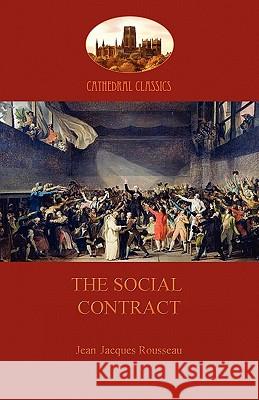
Written in 1762, 'The Social Contract' is Rousseau's attempt to describe a society in which individuals are bound to each other without infringing upon their freedom. Rousseau's social contract is an agreement between a person and civil society, resulting in a community that guarantees personal liberty and mutual preservation. His founding concepts, General Will, Sovereignty, Law, etc., require that all individuals enter into this social contract, even at the risk of coercion, leading to the now (in)famous quote that such people must be "forced to be free."
Written in 1762, 'The Social Contract' is Rousseau's attempt to describe a society in which individuals are bound to each other without infringing upo...