This collection of Alex Danchev's essays shows us how works of art can help us to explore the most difficult ethical and political issues of our time: war, terror, extermination, torture and abuse. It takes seriously the idea of the artist as moral witness to this realm, considering war photography, for example, as a form of humanitarian intervention. War poetry, war films and war diaries are also considered in a broad view of art, and of war. Kafka is drawn upon to address torture and abuse in the war on terror; Homer is utilised to analyse current talk of 'barbarisation'. The paintings...
This collection of Alex Danchev's essays shows us how works of art can help us to explore the most difficult ethical and political issues of our time:...
In this one-of-a-kind volume, indispensable for students of art, architecture and film, Alex Danchev presents 100 Artists' Manifestos, each reproduced with an introduction on the author and the associated movement, in Penguin Modern Classics. This remarkable collection of 100 manifestos from the last 100 years is cacophony of voices from such diverse movements as Futurism, Dadaism, Surrealism, Feminism, Communism, Destructivism, Vorticism, Stridentism, Cannibalism and Stuckism, taking in along the way film, architecture, fashion, and cookery. Artists' manifestos are nothing if not...
In this one-of-a-kind volume, indispensable for students of art, architecture and film, Alex Danchev presents 100 Artists' Manifestos, each reproduced...
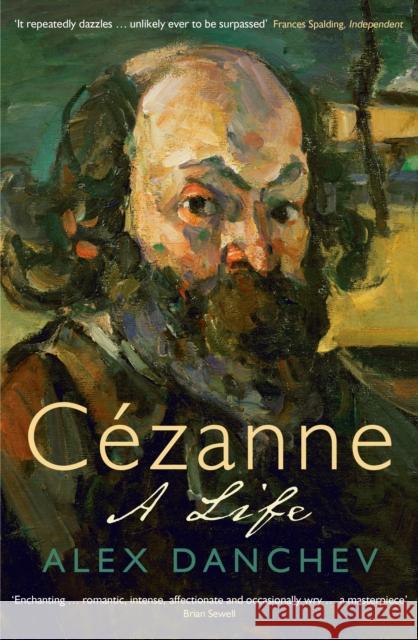
Today we view Cezanne as a monumental figure, but during his lifetime (1839-1906), many did not understand him or his work. This book tells the story of an artist who was never accepted into the official Salon: he was considered a revolutionary at best and a barbarian at worst, whose paintings were unfinished, distorted and strange.
Today we view Cezanne as a monumental figure, but during his lifetime (1839-1906), many did not understand him or his work. This book tells the story ...
How can works of the imagination help us to understand good and evil in the modern world? In this new collection of essays, Alex Danchev treats the artist as a crucial moral witness of our troubled times, and puts art to work in the service of political and ethical inquiry. He takes inspiration from Seamus Heaney's dictum: 'the imaginative transformation of human life is the means by which we can most truly grasp and comprehend it'. This is a book of blasphemers, world menders, troublemakers, torturers and turbulent priests of every persuasion.
How can works of the imagination help us to understand good and evil in the modern world? In this new collection of essays, Alex Danchev treats the ar...