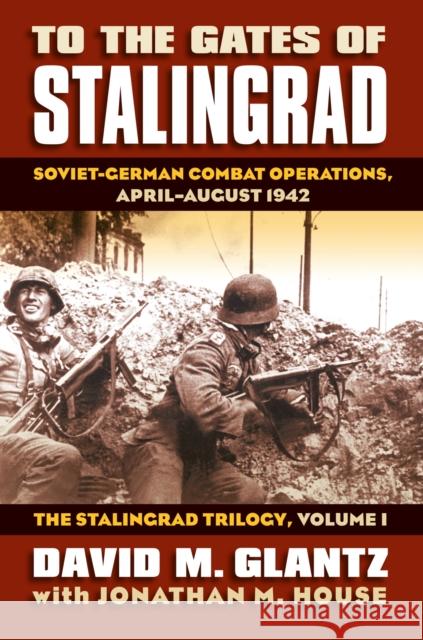
The confrontation between German and Soviet forces at Stalingrad was a titanic clash of armies on an unprecedented scale--a campaign that was both a turning point in World War II and a lasting symbol of that war's power and devastation. Yet despite the attention lavished on this epic battle by historians, much about it has been greatly misunderstood or hidden from view--as David Glantz, the world's foremost authority on the Red Army in World War II, now shows. This first volume in Glantz's masterly trilogy draws on previously unseen or neglected sources to provide the definitive account...
The confrontation between German and Soviet forces at Stalingrad was a titanic clash of armies on an unprecedented scale--a campaign that was both a t...
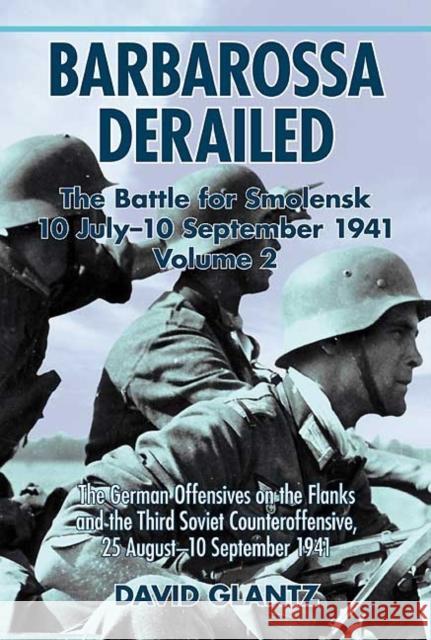
At dawn on 10 July 1941, massed tanks and motorized infantry of German Army Group Center's Second and Third Panzer Groups crossed the Dnepr and Western Dvina Rivers, beginning what Adolf Hitler, the Fuhrer of Germany's Third Reich, and most German officers and soldiers believed would be a triumphal march on Moscow, the capital of the Soviet Union. Less than three weeks before, on 22 June Hitler had unleashed his Wehrmacht's Armed Forces] massive invasion of the Soviet Union code-named Operation Barbarossa, which sought to defeat the Soviet Union's Red Army, conquer the country, and unseat...
At dawn on 10 July 1941, massed tanks and motorized infantry of German Army Group Center's Second and Third Panzer Groups crossed the Dnepr and Wester...
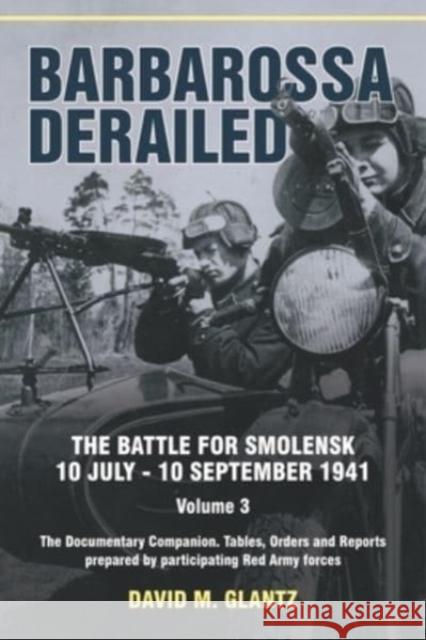
Volume 3, the Documentary Companion to Barbarossa Derailed, contains the documentary evidence for the two volumes of narrative. In addition to key Fuhrer Directives issued by Adolf Hitler to provide direction to his forces during the Barbarossa Campaign, as well as vital orders issued by German Army Group Center, this book includes the daily operational summaries of the participating Soviet fronts, armies, and some divisions and many if not most of the orders and reports issued by the struggling Soviet armies. Precise translations illustrate not only the capabilities and states-of-mind of key...
Volume 3, the Documentary Companion to Barbarossa Derailed, contains the documentary evidence for the two volumes of narrative. In addition to key Fuh...
At dawn on 10 July 1941, massed tanks and motorized infantry of German Army Group Center's Second and Third Panzer Groups crossed the Dnepr and Western Dvina Rivers, beginning what Adolf Hitler, the Fuhrer of Germany's Third Reich, and most German officers and soldiers believed would be a triumphal march on Moscow, the capital of the Soviet Union. Less than three weeks before, on 22 June Hitler had unleashed his Wehrmacht's Armed Forces] massive invasion of the Soviet Union code-named Operation Barbarossa, which sought to defeat the Soviet Union's Red Army, conquer the country, and unseat...
At dawn on 10 July 1941, massed tanks and motorized infantry of German Army Group Center's Second and Third Panzer Groups crossed the Dnepr and Wester...
This groundbreaking new study, now significantly expanded, exploits a wealth of Soviet and German archival materials, including the combat orders and operational of the German OKW, OKH, army groups, and armies and of the Soviet Stavka, the Red Army General Staff, the Western Main Direction Command, the Western, Central, Reserve, and Briansk Fronts, and their subordinate armies to present a detailed mosaic and definitive account of what took place, why, and how during the prolonged and complex battles in the Smolensk region from 10 July through 10 September 1941. The structure of the study is...
This groundbreaking new study, now significantly expanded, exploits a wealth of Soviet and German archival materials, including the combat orders and ...