Jean-Paul Sartre, Arlette Elkaïm-Sartre, Annie Cohen-Solal, Carol Macomber
It was to correct common misconceptions about his thought that Jean-Paul Sartre, the most dominent European intellectual of the post-World War II decades, accepted an invitation to speak on October 29, 1945, at the Club Maintenant in Paris. The unstated objective of his lecture ("Existentialism Is a Humanism") was to expound his philosophy as a form of "existentialism," a term much bandied about at the time. Sartre asserted that existentialism was essentially a doctrine for philosophers, though, ironically, he was about to make it accessible to a general audience. The published text of his...
It was to correct common misconceptions about his thought that Jean-Paul Sartre, the most dominent European intellectual of the post-World War II deca...
First published in French in 1964, this is a classic critique of France's policies in Algeria in the 1950s and 1960s and inspired much subsequent writing on colonialism, post-colonialism, politics, and literature.
First published in French in 1964, this is a classic critique of France's policies in Algeria in the 1950s and 1960s and inspired much subsequent writ...
"What is Literature?" remains the most significant critical landmark of French literature since World War II. Neither abstract nor abstruse, it is a brilliant, provocative performance by a writer more inspired than cautious. "What is Literature?" challenges anyone who writes as if literature could be extricated from history or society. But Sartre does more than indict. He offers a definitive statement about the phenomenology of reading, and he goes on to provide a dashing example of how to write a history of literature that takes ideology and institutions into account. This new...
"What is Literature?" remains the most significant critical landmark of French literature since World War II. Neither abstract nor abstruse, it...
Four seminal plays by one of the greatest philosophers of the twentieth century. An existential portrayal of Hell in Sartre's best-known play, as well as three other brilliant, thought-provoking works: the reworking of the Electra-Orestes story, the conflict of a young intellectual torn between theory and conflict, and an arresting attack on American racism.
Four seminal plays by one of the greatest philosophers of the twentieth century. An existential portrayal of Hell in Sartre's best-known p...
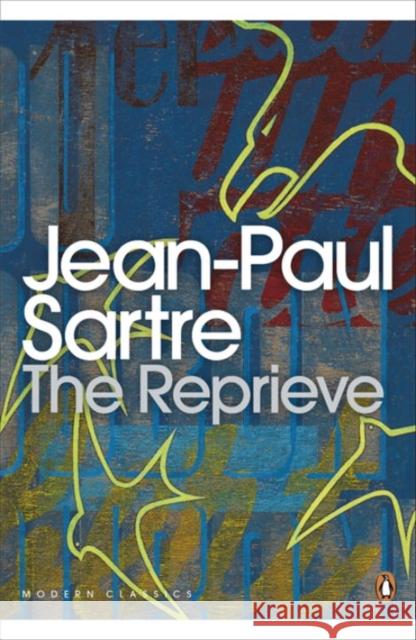
It is September 1938 and during a heatwave Europe tensely awaits the outcome of the Munich conference, where they will learn if there is to be a war. In Paris people are waiting too, among them Mathieu, Jacques and Philippe, each wrestling with their own love affairs, doubts and angsts - and none of them ready to fight. The second volume in Sartre's wartime Roads to Freedom trilogy, The Reprieve cuts between locations and characters to build an impressionistic collage of the hopes, fears and self-deception of an entire continent as it blinkers itself against the imminent threat of war.
It is September 1938 and during a heatwave Europe tensely awaits the outcome of the Munich conference, where they will learn if there is to be a war. ...
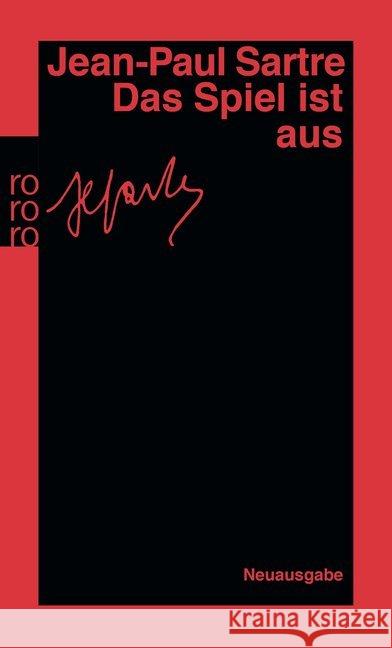
Pierre, der Revolutionär, und Eve, eine Dame der Gesellschaft, sterben zu gleicher Stunde durch Gewalt, begegnen sich in einer Welt der Schatten, verlieben sich bis zu dem gewagten Anspruch -Ich gäbe meine Seele, wenn ich um deinetwillen noch einmal leben dürfte-. Sie dürfen leben. Die Uhr des Schicksals wird zurückgestellt unter der Bedingung, daß sie sich vorbehaltlos der Liebe ergeben, um derentwillen ihnen das Leben wieder verliehen wurde. Aber die Vergangenheit stellt ihre Forderungen, und sie verlieren das zweite Leben an der Unfreiheit des ersten. Eines der erfolgreichsten...
Pierre, der Revolutionär, und Eve, eine Dame der Gesellschaft, sterben zu gleicher Stunde durch Gewalt, begegnen sich in einer Welt der Schatten, ver...
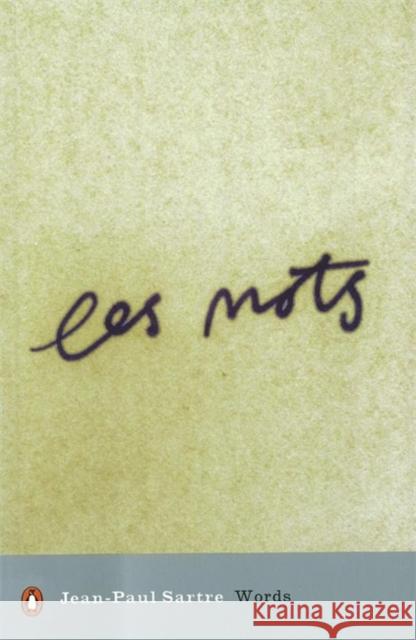
After his father's early death Jean-Paul Sartre was brought up at his grandfather's home in a world even then eighty years out of date. This work provides background to the philosophy of one of the profoundest thinkers of the twentieth century.
After his father's early death Jean-Paul Sartre was brought up at his grandfather's home in a world even then eighty years out of date. This work prov...
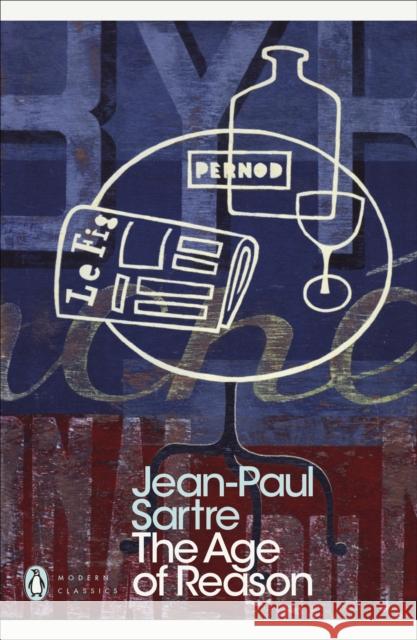
The first volume in his Roads to Freedom trilogy, Jean-Paul Sartre's The Age of Reason is a philosophical novel exploring existentialist notions of freedom, translated by Eric Sutton with an introduction by David Caute in Penguin Modern Classics. Set in the volatile Paris summer of 1938, The Age of Reason follows two days in the life of Mathieu Delarue, a philosophy teacher, and his circle in the cafes and bars of Montparnasse. Mathieu has so far managed to contain sex and personal freedom in conveniently separate compartments. But now he is in trouble, urgently trying to raise 4,000 francs...
The first volume in his Roads to Freedom trilogy, Jean-Paul Sartre's The Age of Reason is a philosophical novel exploring existentialist notions of fr...
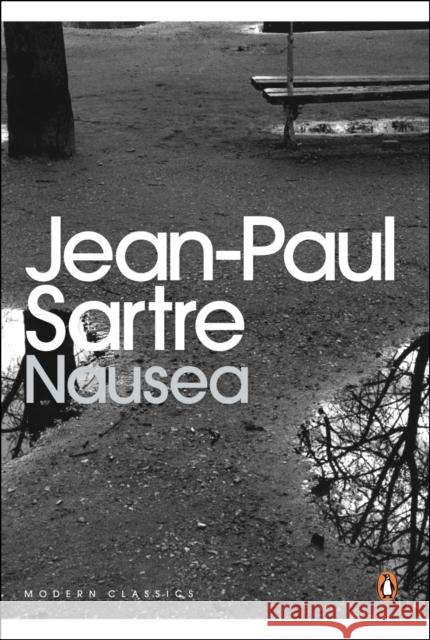
A story of the troubled life of an introspective historian, Antoine Roquentin, and an exposition of one of the most influential and significant philosophical attitudes of modern times - existentialism. It chronicles Antoine's struggle with the realisation that he is an entirely free agent in a world devoid of meaning.
A story of the troubled life of an introspective historian, Antoine Roquentin, and an exposition of one of the most influential and significant philos...