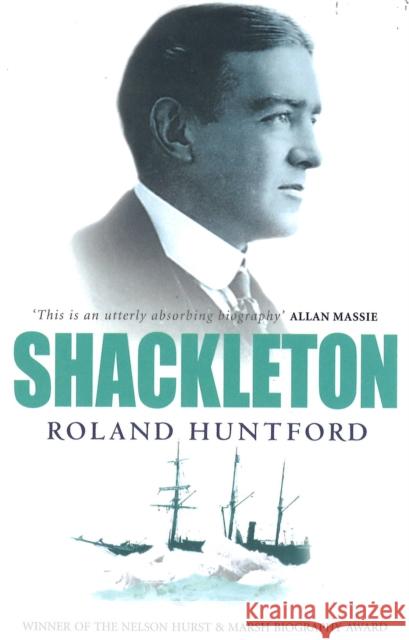
A biography of Ernest Shackleton, the quintessential Edwardian hero. A contemporary of Scott, he sailed on the Discovery expedition of 1900, and mounted three expeditions of his own. A social adventurer, it was the pursuit of wealth, fame and power that attracted him more than snow and ice. Shacketon an Anglo-Irishman who letf school at 16, he needed status to raise money for his own expeditions. A frustrated poet, he was never successful with money, but did succeed in marrying it. At his height he was feted as an national hero, knighted by Edward VII, and granted u20,000 by the government...
A biography of Ernest Shackleton, the quintessential Edwardian hero. A contemporary of Scott, he sailed on the Discovery expedition of 1900, and mount...
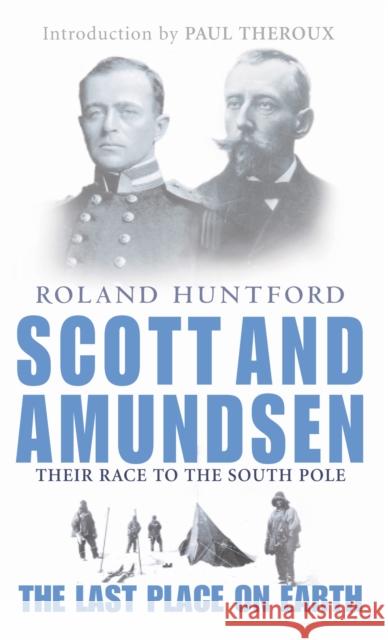
At the beginning of the 20th century, the South Pole was the most coveted prize in the fiercely nationalistic age of exploration. In this work, Roland Huntford re-examines every detail of the gret race to the South Pole between Britain's Robert Scott and Norway's Roald Amundsen. Scott, who dies along with four of his men only 11 miles from his next cache of supplies, becomes Britain's beloved failure, while Amundsen, who not only beat Scott to the Pole, but returned alive, was largely forgotten. This account of their race aims to capture the driving ambitions of the era and the comples, often...
At the beginning of the 20th century, the South Pole was the most coveted prize in the fiercely nationalistic age of exploration. In this work, Roland...
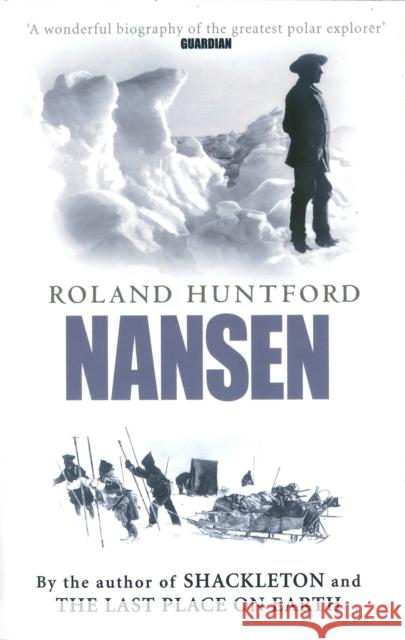
Behind the great polar explorers of the early twentieth century - Amundsen, Shackleton, Scott in the South and Peary in the North - looms the spirit of Fridtjof Nansen (1861-1930), the mentor of them all. He was the father of modern polar exploration, the last act of territorial discovery before the leap into space began. Nansen was a prime illustration of Carlyle's dictum that 'the history of the world is but the biography of great men'. He was not merely a pioneer in the wildly diverse fields of oceanography and skiing, but one of the founders of neurology. A restless, unquiet Faustian...
Behind the great polar explorers of the early twentieth century - Amundsen, Shackleton, Scott in the South and Peary in the North - looms the spirit o...
Roland Huntford's brilliant history begins 20,000 years ago in the last ice age on the icy tundra of an unformed earth. Man is a travelling animal, and on these icy slopes skiing began as a means of survival. That it has developed into the leisure and sporting pursuit of choice by so much of the globe bears testament to its elemental appeal. In polar exploration, it has changed the course of history. Elsewhere, in war and peace, it has done so too. The origins of skiing are bound up in with the emergence of modern man and the world we live in today.
Roland Huntford's brilliant history begins 20,000 years ago in the last ice age on the icy tundra of an unformed earth. Man is a travelling animal,...