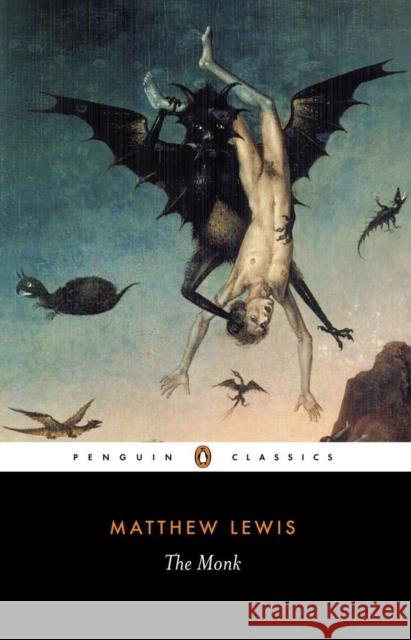
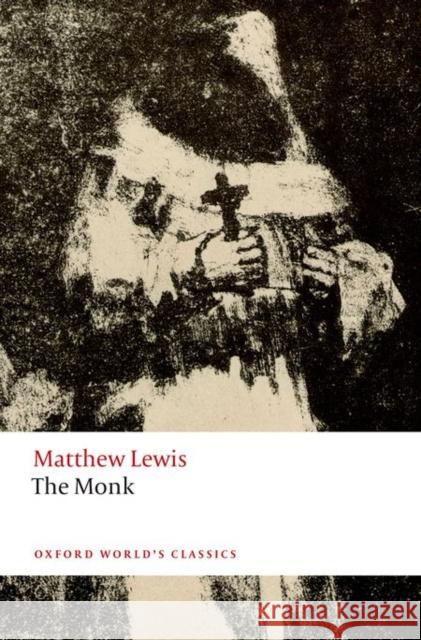
'Few could sustain the glance of his eye, at once fiery and penetrating'
Savaged by critics for its supposed profanity and obscenity, and bought in large numbers by readers eager to see whether it lived up to its lurid reputation, The Monk became a succes de scandale when it was published in 1796 - not least because its author was a member of parliament and only twenty years old. It recounts the diabolical decline of Ambrosio, a Capuchin superior, who succumbs first to temptations offered by a young girl who has entered his monastery disguised as a boy, and continues his...
'Few could sustain the glance of his eye, at once fiery and penetrating'
Savaged by critics for its supposed profanity and obscenity, and bou...
'He was deaf to the murmurs of conscience, and resolved to satisfy his desires at any price.' The Monk (1796) is a sensational story of temptation and depravity, a masterpiece of Gothic fiction and the first horror novel in English literature. The respected monk Ambrosio, the Abbot of a Capuchin monastery in Madrid, is overwhelmed with desire for a young girl; once having abandoned his monastic vows he begins a terrible descent into immorality and violence. His appalling fall from grace embraces blasphemy, black magic, torture, rape, and murder, and places his...
'He was deaf to the murmurs of conscience, and resolved to satisfy his desires at any price.' The Monk (1796) is a sensa...
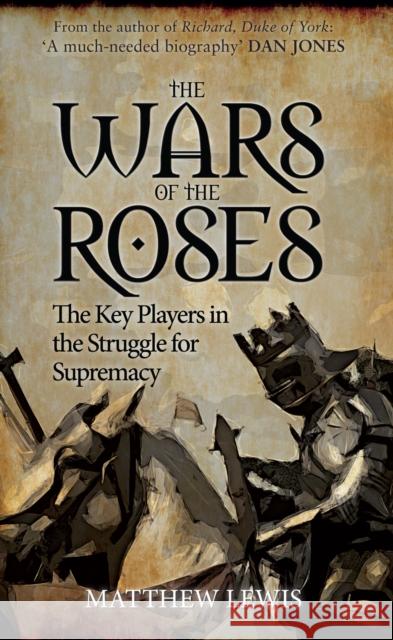
In the second half of the fifteenth century, for over thirty years, civil war tore England apart. However, its roots were deeper and its thorns were felt for longer than this time frame suggests. The Wars of the Roses were not a coherent period of continual warfare. There were distinct episodes of conflict, interspersed with long periods of peace. But the struggles never really ceased. Motives changed, fortunes waxed and waned, the nature of kingship was weighed and measured and the mettle of some of England's greatest families was put to the test. Matthew Lewis examines the people behind...
In the second half of the fifteenth century, for over thirty years, civil war tore England apart. However, its roots were deeper and its thorns were f...
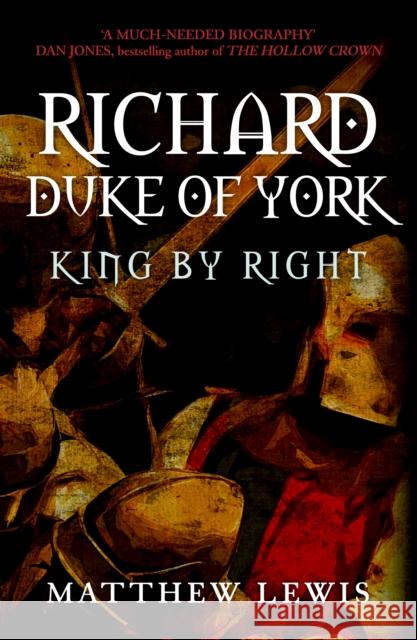
Richard, 3rd Duke of York is frequently used to recall the colours of the rainbow with the mnemonic 'Richard Of York Gave Battle In Vain', wrongly believed to be the Grand Old Duke of York who had 10,000 men, or mistaken for his youngest son, Richard III. The son of a traitor, he inherited a dukedom aged four, became the wealthiest man in England at thirteen and later rebelled against his king, and if he is remembered, it is as a man who ignited the Wars of the Roses. Further eclipsed by two of his sons, who would become the mighty warrior Edward IV and the recently rediscovered Richard III,...
Richard, 3rd Duke of York is frequently used to recall the colours of the rainbow with the mnemonic 'Richard Of York Gave Battle In Vain', wrongly bel...
New B-format paperback edition. A definitive new biography of one of British history's most controversial figures, that seeks to bring peace to Richard III's reputation.
New B-format paperback edition. A definitive new biography of one of British history's most controversial figures, that seeks to bring peace to Richar...
The Anarchy was the first civil war in post-Conquest England, enduring throughout the reign of King Stephen between 1135 and 1154. It ultimately brought about the end of the Norman dynasty and the birth of the mighty Plantagenet kings. When Henry I died having lost his only legitimate son in a shipwreck, he had caused all of his barons to swear to recognize his daughter Matilda, widow of the Holy Roman Emperor, as his heir and remarried her to Geoffrey, Count of Anjou. When she was slow to move to England on her father's death, Henry's favourite nephew Stephen of Blois rushed to have himself...
The Anarchy was the first civil war in post-Conquest England, enduring throughout the reign of King Stephen between 1135 and 1154. It ultimately broug...