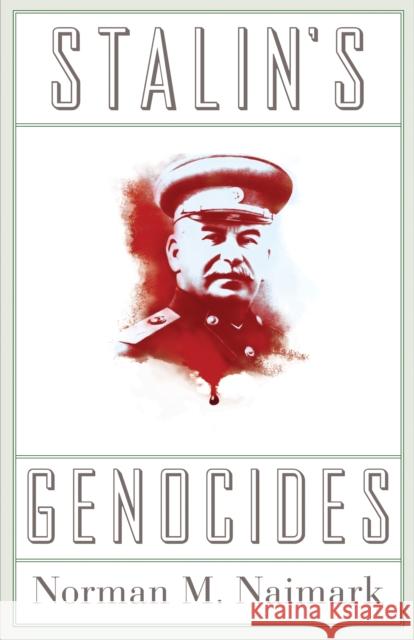
Between the early 1930s and his death in 1953, Joseph Stalin had more than a million of his own citizens executed. Millions more fell victim to forced labor, deportation, famine, bloody massacres, and detention and interrogation by Stalin's henchmen. Stalin's Genocides is the chilling story of these crimes. The book puts forward the important argument that brutal mass killings under Stalin in the 1930s were indeed acts of genocide and that the Soviet dictator himself was behind them.
Norman Naimark, one of our most respected authorities on the Soviet era, challenges the...
Between the early 1930s and his death in 1953, Joseph Stalin had more than a million of his own citizens executed. Millions more fell victim to for...
Europe on Trial explores the history of collaboration, retribution, and resistance during World War II. These three themes are examined through the experiences of people and countries under German occupation, as well as Soviet, Italian, and other military rule. Those under foreign rule faced innumerable moral and ethical dilemmas, includin
Europe on Trial explores the history of collaboration, retribution, and resistance during World War II. These three themes are examined through the ex...
The collaborative effort of scholars from Russia and the United States, this book reevaluates the history of postwar Eastern Europe from 1944 to 1949, incorporating information gleaned from newly opened archives in Eastern Europe. For nearly five decades, the countries of Yugoslavia, Poland, Albania, Bulgaria, Romania, Hungary, Czechoslovakia, and
The collaborative effort of scholars from Russia and the United States, this book reevaluates the history of postwar Eastern Europe from 1944 to 1949,...