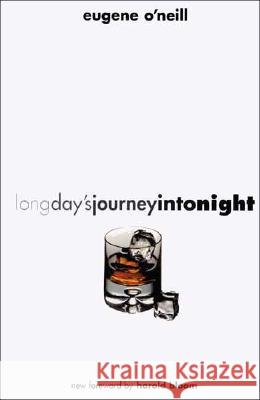
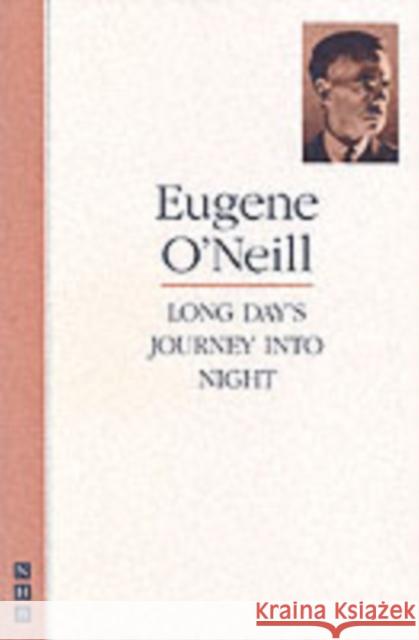
Eugene O'Neill's autobiographical play Long Day's Journey into Night isregarded as his finest work. First published by Yale University Press in 1956, it won the Pulitzer Prize in 1957 and has since sold more than one million copies. This edition, which includes a new foreword by Harold Bloom, coincides with a new production of the play starring Brian Dennehy, which opens in Chicago in January 2002 and in New York in April.
"By common consent, Long Day's Journey into Night isEugene O'Neill's masterpiece. . . . The helplessness of family...
Eugene O'Neill's autobiographical play Long Day's Journey into Night isregarded as his finest work. First published by Yale University ...
A Touch of the Poet and More Stately Mansions are regarded as two of Eugene O'Neill's finest plays. Companion pieces, linked by characters and themes, they form part of a projected series of eleven interconnected plays in which the playwright intended to give a psychological and economic account of American life. Now these works, the only surviving plays in O'Neill's "Cycle," are brought together for the first time in a paperback volume. The version of More Stately Mansions presented here is O'Neill's unexpurgated text, scrupulously edited by Martha Gilman Bower, which...
A Touch of the Poet and More Stately Mansions are regarded as two of Eugene O'Neill's finest plays. Companion pieces, linked by characte...
Eugene O'Neill was the first American playwright to win the Nobel Prize in Literature. He completed The Iceman Cometh in 1939, but he delayed production until after the war, when it enjoyed a long run of performances in 1946 after receiving mixed reviews. Three years after O'Neill's death, Jason Robards starred in a Broadway revival that brought new critical attention to O'Neill's darkest and most nihilistic play. In the half century since, The Iceman Cometh has gained enormously in stature, and many critics now recognize it as one of the greatest plays in American drama. The...
Eugene O'Neill was the first American playwright to win the Nobel Prize in Literature. He completed The Iceman Cometh in 1939, but he delayed p...
Unashamedly autobiographical, as the author puts it himself in the dedicatory note, 'a play of old sorrow, written in tears and blood', a harrowing attempt to understand himself and his family.
Unashamedly autobiographical, as the author puts it himself in the dedicatory note, 'a play of old sorrow, written in tears and blood', a harrowing at...
Written around 1940, but not staged until 1956, this autobiographical work by the Nobel Prize-winning playwright recreates his own family experience, in an attempt to understand himself and those to whom he was tied by fate and love. This is the complete text, with a critical introduction.
Written around 1940, but not staged until 1956, this autobiographical work by the Nobel Prize-winning playwright recreates his own family experience, ...
A three-part reworking of themes from Greek tragedy, the plays are set in New England in 1865, just after the Civil War. A returning victor, General Ezra Mannon (Agamemnon), is poisoned by his unfaithful wife Christine (Clytemnestra) and then avenged by his son Orin (Orestes) and daughter (Lavinia). With Orin's subsequent suicide, Lavinia (the Electra of the title) becomes a fatalistic recluse in the Mannon mansion.
A three-part reworking of themes from Greek tragedy, the plays are set in New England in 1865, just after the Civil War. A returning victor, General E...
Into a waterfront bar, full of life's failures, subsisting solely on their dreams, comes Hickey with his urge to make them face the truth. This play, first staged in 1946, is written by the author of Anna Christie and Strange Interlude, who won the Nobel Prize for Literature in 1936.
Into a waterfront bar, full of life's failures, subsisting solely on their dreams, comes Hickey with his urge to make them face the truth. This play, ...
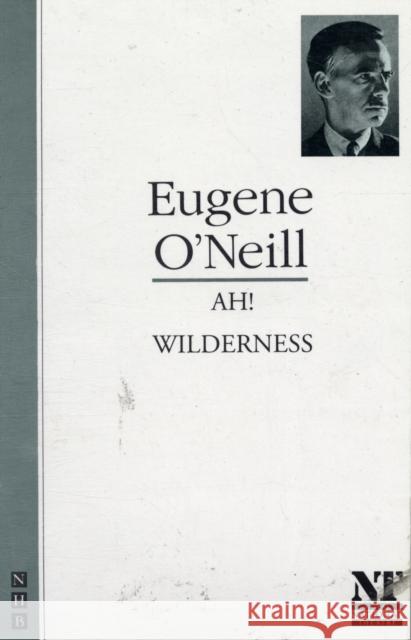
Revived in 1998 to acclaim at New York's Lincoln Center, Ah, Wilderness is a sharp departure from the gritty reality of the author's renowned dramas. Taking place over the July 4th weekend of 1906 in an idyllic Connecticut town, it offers a tender, retrospective portrait of small town family values, teenage growing pains, and young love.
Revived in 1998 to acclaim at New York's Lincoln Center, Ah, Wilderness is a sharp departure from the gritty reality of the author's renowned dramas....