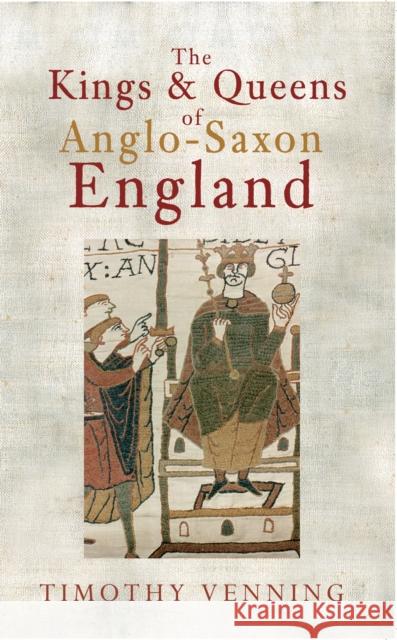
The Anglo-Saxon era is one of the most important in English history, covering the period from the end of Roman authority in the British Isles to the Norman Conquest of 1066 in which the very idea of England was born. In The Kings& Queens of Anglo-Saxon England, Venning examines the rulers of Anglo-Saxon England, beginning with the legendary leaders of the Anglo-Saxon invasion as Hengest and Horsa or Cerdic and Cynric and moving on through such figures as Aethelbert of Kent, the first king to be converted to Christianity and his daughter Aethelburh, whose marriage began the conversion of...
The Anglo-Saxon era is one of the most important in English history, covering the period from the end of Roman authority in the British Isles to the N...
In contrast to most of Scotland, the north-western coast and the islands beyond were a region of mixed political control as well as culture into the sixteenth century. The divergent influences of Celtic and Scandinavian culture were more marked here than in the evolving mainland kingdom of Scots. It was a physically remote region of substantial autonomy under its own dynasties. Timothy Venning explores the whole of the lordship of the Isles at its widest extent, under Somerled MacGillebride (ruled c. 1130-64), encompassing the kingdom of Man during its independent history, plus the mainland...
In contrast to most of Scotland, the north-western coast and the islands beyond were a region of mixed political control as well as culture into the s...
The Welsh kings and queens who ruled prior to the Norman Conquest of Wales are shrouded in mystery. Most of what we know is from legend, names in annals, and from their opponents. This book sets out to identify what we know or can reasonably surmise about these rulers, to disentangle their history, and to assess their achievements. The Welsh ruled over large areas of Britain in the pre- and post- Roman eras, before they were pushed back into Wales itself by the Anglo-Saxons. Caratacus and Boudicca are names that stand out from early tribal states, and medieval Welsh legends refer to shadowy...
The Welsh kings and queens who ruled prior to the Norman Conquest of Wales are shrouded in mystery. Most of what we know is from legend, names in anna...
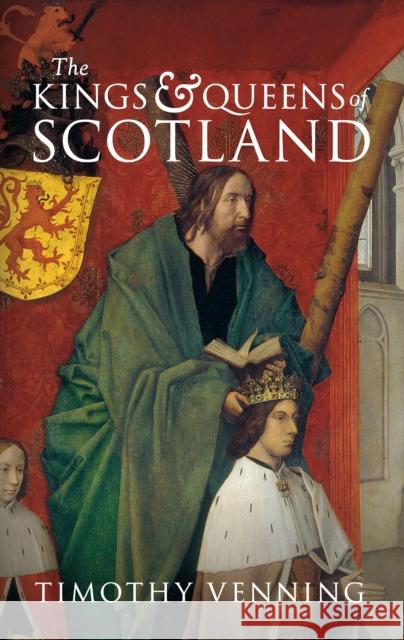
The kingdom of Scots was the last of the non-Anglo-Saxon states of Britain to survive as a political entity. Alone of the 'Celtic' nations, it was not absorbed into England by conquest. James VI of Scotland came to the throne of England in 1603, and when union with England finally came in 1707 during the reign of Queen Anne, it was technically on equal terms. This success owed much to the abilities and tenacity of a succession of rulers. The story of the rulers of Scotland's constituent states and then of the united kingdom of Scots from Kenneth MacAlpin onwards is complex and often violent....
The kingdom of Scots was the last of the non-Anglo-Saxon states of Britain to survive as a political entity. Alone of the 'Celtic' nations, it was not...
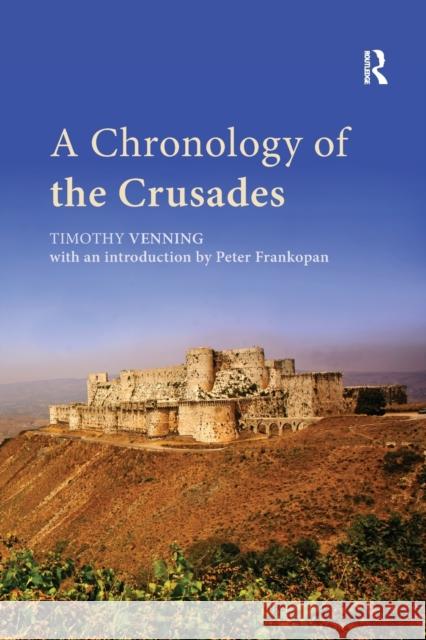
A Chronology of the Crusades provides a day-by-day development of the Crusading movement, the Crusades and the states created by them through the medieval period. Beginning in the run-up to the First Crusade in 1095, to the fall of Constantinople in 1453, and ending with the Turkish attack on Belgrade in 1456, this reference is a comprehensive guide to the events of each Crusade, concentrating on the Near East, but also those Christian expeditions sanctioned by the Papacy as ‘Crusades’ in the medieval era. As well as clashes between Christians and Muslims in the Latin States, Timothy...
A Chronology of the Crusades provides a day-by-day development of the Crusading movement, the Crusades and the states created by them through the medi...