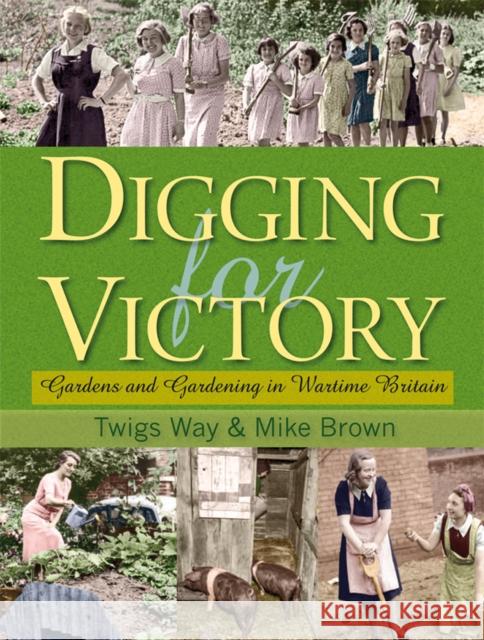
Beans as bullets', 'Vegetables for Victory' and 'Cloches against Hitler': these slogans convey just how vital gardening and growing food were to the British war effort during the Second World War. Exhorted to 'Grow More Food', then to 'Dig for Victory', Britain's 'allotment army' was soon out in force, growing as many vegetables as possible in suburban allotments, private gardens, even the grounds of stately homes. Richly illustrated with contemporary photographs and ephemera relating to the 'Dig For Victory' campaign, this expertly researched, highly engaging and informative account also...
Beans as bullets', 'Vegetables for Victory' and 'Cloches against Hitler': these slogans convey just how vital gardening and growing food were to the B...
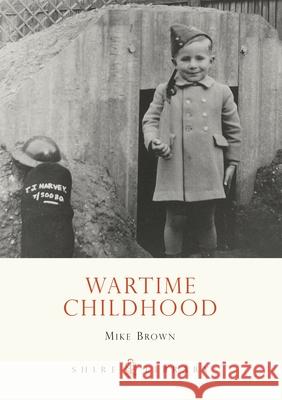
Growing up as a child during the Second World War could be a frightening, strange or even an exciting experience. For many city children the war brought evacuation to the countryside and a way of life very different from the one they were used to. For children who remained in areas that suffered from German air strikes, escaping to bomb shelters, and donning the 'Mickey Mouse' gas mask, became part of life. War brought new excitement for boys who could now add parts of downed German aircraft, or parts of bombs, to their collections of conkers and string. For many girls the war brought greater...
Growing up as a child during the Second World War could be a frightening, strange or even an exciting experience. For many city children the war broug...
World War II affected every aspect of everyday life on the home front. From food rationing to air raid shelters, war work to the Squander Bug, those left at home had to take huge changes in their stride as Britain mobilized, economized, and saved in the name of Victory.
Wartime Britain takes a look at what these changes actually meant for families: how families coped when parents went to fight and children were evacuated; how pets were fed during rationing; the rise in road accidents during the blackout; and 'shelter cough'.
World War II affected every aspect of everyday life on the home front. From food rationing to air raid shelters, war work to the Squander Bug, thos...
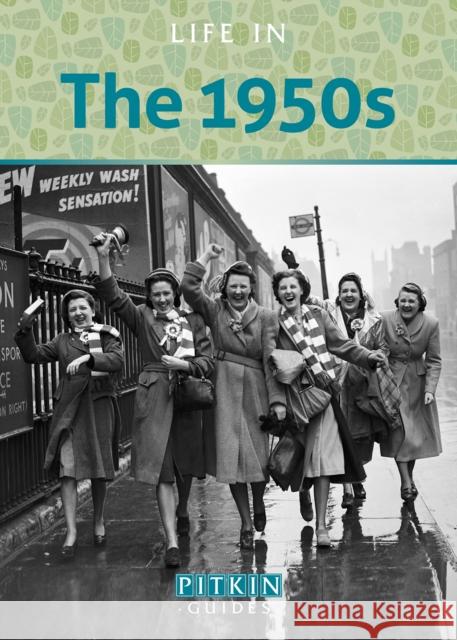
The 1950s began in the shadow of War. In Britain, food was still rationed as the country strove to pay off the huge debts that were the legacy of war. However, by the end of the decade the British had "never had it so good," as prime Minister Harold MacMillan told them. In this book, Mike Brown looks at some of the major aspects of living in Britain at that time of change: how ordinary people lived, worked, and played, of the experiences of childhood, and of a new group--teenagers. How did people spend their new-found wealth, what they ate, wore, watched, and listened to; the stories and...
The 1950s began in the shadow of War. In Britain, food was still rationed as the country strove to pay off the huge debts that were the legacy of w...
Covering the standout social, cultural, political events, and news stories from the 1960s The 1960s have gone down in history as the swinging sixties, when the permissive society swept the country in a haze of mini-skirts, psychedelic posters, pop festivals, and "love-ins." But what was it really like for ordinary British people? In this book, Mike Brown looks at some of the major aspects of living in Britain at the time: how people lived, worked, and played, how they shopped, what they ate, wore, drove, watched, and listened to. He looks at the stories and people who made the headlines; the...
Covering the standout social, cultural, political events, and news stories from the 1960s The 1960s have gone down in history as the swinging sixties,...
The Utility symbol, CC41, is one of the most iconic symbols in the history of clothing in Britain; instantly recognizable to anyone who lived in Britain through the Second World War or the immediate post-war years. Clothes rationing began in June 1941 in an effort to cut down the nation's consumption of scarce resources; the Utility scheme was started 3 months later as a method of providing cheap, but well-made clothes for the less-well-off. The scheme was such a success that over the next few years it was extended to cover goods as widespread as shoes, furniture, lighters, pencils and...
The Utility symbol, CC41, is one of the most iconic symbols in the history of clothing in Britain; instantly recognizable to anyone who lived in Brita...