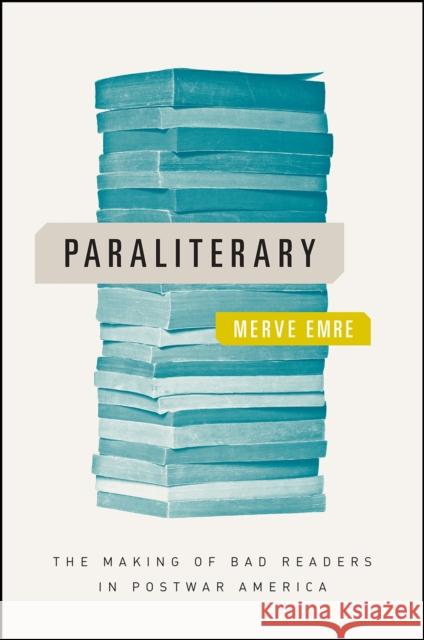
Literature departments are staffed by, and tend to be focused on turning out, "good" readers--attentive to nuance, aware of history, interested in literary texts as self-contained works. But the vast majority of readers are, to use Merve Emre's tongue-in-cheek term, "bad" readers. They read fiction and poetry to be moved, distracted, instructed, improved, engaged as citizens. How should we think about those readers, and what should we make of the structures, well outside the academy, that generate them? We should, Emre argues, think of such readers not as non-literary but as...
Literature departments are staffed by, and tend to be focused on turning out, "good" readers--attentive to nuance, aware of history, interested in lit...
A SPECTATOR BOOK OF THE YEAR `History that reads like biography that reads like a novel - a fluid narrative that defies expectations and plays against type' New York Times `Brilliant and savage' Philip Hensher An unprecedented history of the personality test conceived a century ago by a mother and her daughter - fiction writers with no formal training in psychology - and how it insinuated itself into our boardrooms, classrooms, and beyond. The...
A SPECTATOR BOOK OF THE YEAR `History that reads like biography that reads like a novel - a fluid narrative t...