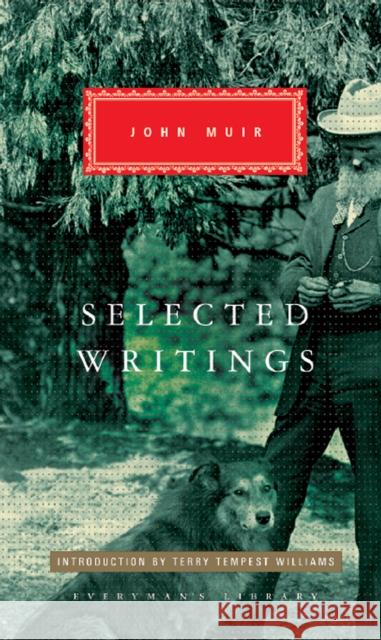
John Muir, America s pioneer conservationist and father of the national park system, was a man of considerable literary talent. As he explored the wilderness of the western part of the United States for decades, he carried notebooks with him, narrating his wanderings, describing what he saw, and recording his scientific researches. This reprint of his journals, edited by Linnie Marsh Wolfe in 1938 and long out of print, offers an intimate picture of Muir and his activities during a long and productive period of his life. The sixty extant journals and numerous notes in this volume were...
John Muir, America s pioneer conservationist and father of the national park system, was a man of considerable literary talent. As he explored the wil...
In the late 1800s, John Muir made several trips to the pristine, relatively unexplored territory of Alaska, irresistibly drawn to its awe-inspiring glaciers and its wild menagerie of bears, bald eagles, wolves, and whales. Half-poet and half-geologist, he recorded his experiences and reflections in Travels in Alaska, a work he was in the process of completing at the time of his death in 1914. As Edward Hoagland writes in his Introduction, "A century and a quarter later, we are reading Muir's] account because there in the glorious fiords . . . he is at our elbow, nudging us along,...
In the late 1800s, John Muir made several trips to the pristine, relatively unexplored territory of Alaska, irresistibly drawn to its awe-inspiring gl...
John Muir, a young Scottish immigrant, had not yet become a famed conservationist when he first trekked into the foothills of the Sierra Nevada, not long after the Civil War. He was so captivated by what he saw that he decided to devote his life to the glorification and preservation of this magnificent wilderness. My First Summer in the Sierra, whose heart is the diary Muir kept while tending sheep in Yosemite country, enticed thousands of Americans to visit this magical place, and resounds with Muir's regard for the "divine, enduring, unwasteable wealth" of the natural world. A...
John Muir, a young Scottish immigrant, had not yet become a famed conservationist when he first trekked into the foothills of the Sierra Nevada, not l...
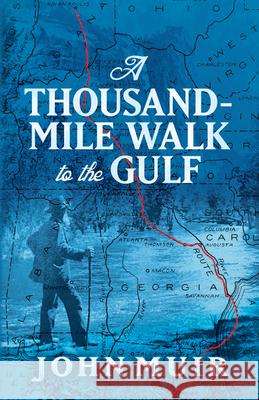
* Muir is perhaps the nation's greatest conservationist * His books reveal why he devoted his life to preserving the West's greatest natural treasures The name John Muir (1838-1914) has come to stand for the protection of wilderness both in the United States and abroad. This is a collection of his eight most influential works in a single volume. The collection represents the lifelong relationship between the landscape and an inspirational architect of the conservation movement. Arranged in the order of Muir's life are: The Story of My Boyhood and Youth, A Thousand Mile Walk...
* Muir is perhaps the nation's greatest conservationist * His books reveal why he devoted his life to preserving the West's greatest natural ...
Part of John Muir's appeal to modern readers is that he not only explored the American West and wrote about its beauties but also fought for their preservation. His successes dot the landscape and are evident in all the natural features that bear his name: forests, lakes, trails, and glaciers. Here collected are some of Muir's finest wilderness essays, ranging in subject matter from Alaska to Yellowstone, from Oregon to the High Sierra.This book is part of a series that celebrates the tradition of literary naturalists--writers who embrace the natural world as the setting for some of our...
Part of John Muir's appeal to modern readers is that he not only explored the American West and wrote about its beauties but also fought for their ...