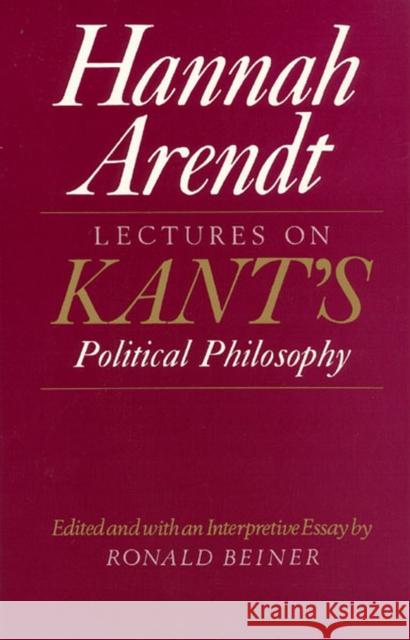
Hannah Arendt's last philosophical work was an intended three-part project entitled The Life of the Mind. Unfortunately, Arendt lived to complete only the first two parts, Thinking and Willing. Of the third, Judging, only the title page, with epigraphs from Cato and Goethe, was found after her death. As the titles suggest, Arendt conceived of her work as roughly parallel to the three Critiques of Immanuel Kant. In fact, while she began work on The Life of the Mind, Arendt lectured on "Kant's Political Philosophy," using the Critique of Judgment...
Hannah Arendt's last philosophical work was an intended three-part project entitled The Life of the Mind. Unfortunately, Arendt lived to comple...
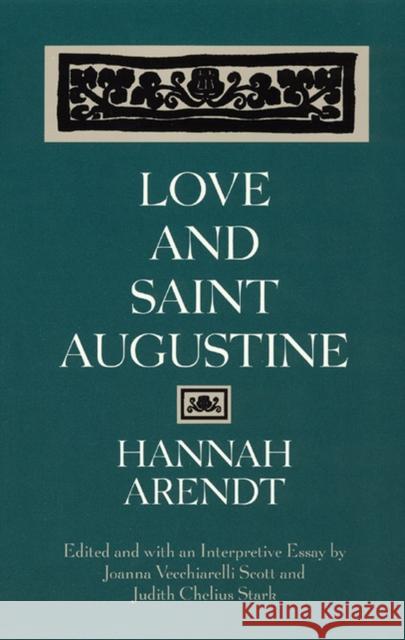
Hannah Arendt began her scholarly career with an exploration of Saint Augustine's concept of caritas, or neighborly love, written under the direction of Karl Jaspers and the influence of Martin Heidegger. After her German academic life came to a halt in 1933, Arendt carried her dissertation into exile in France, and years later took the same battered and stained copy to New York. During the late 1950s and early 1960s, as she was completing or reworking her most influential studies of political life, Arendt was simultaneously annotating and revising her dissertation on Augustine,...
Hannah Arendt began her scholarly career with an exploration of Saint Augustine's concept of caritas, or neighborly love, written under the dir...
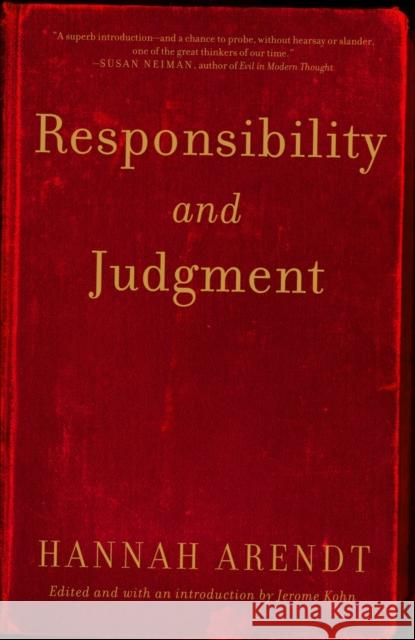
Responsibility and Judgment gathers together unpublished writings from the last decade of Arendt's life, where she addresses fundamental questions and concerns about the nature of evil and the making of moral choices. At the heart of the book is a profound ethical investigation, "Some Questions of Moral Philosophy," in which Arendt confronts the inadequacy of traditional moral "truths" as standards to judge what we are capable of doing and examines anew our ability to distinguish good from evil and right from wrong. We also see how Arendt comes to understand that alongside the radical evil...
Responsibility and Judgment gathers together unpublished writings from the last decade of Arendt's life, where she addresses fundamental questions and...
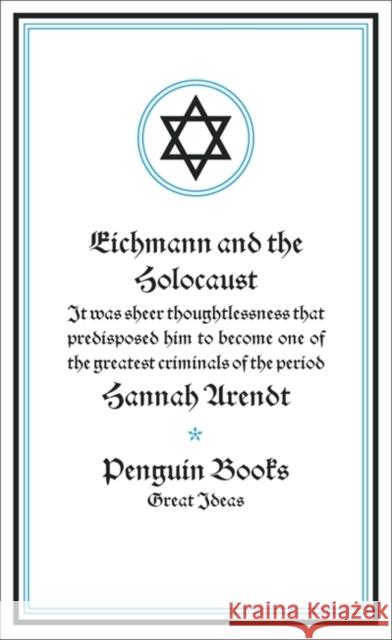
Throughout history, some books have changed the world. They have transformed the way we see ourselves - and each other. They have inspired debate, dissent, war and revolution. They have enlightened, outraged, provoked and comforted. They have enriched lives - and destroyed them. Now Penguin brings you the works of the great thinkers, pioneers, radicals and visionaries whose ideas shook civilization and helped make us who we are. Inspired by the trial of a bureaucrat who helped cause the Holocaust, this radical work on the banality of evil stunned the world with its exploration of a regime's...
Throughout history, some books have changed the world. They have transformed the way we see ourselves - and each other. They have inspired debate, dis...
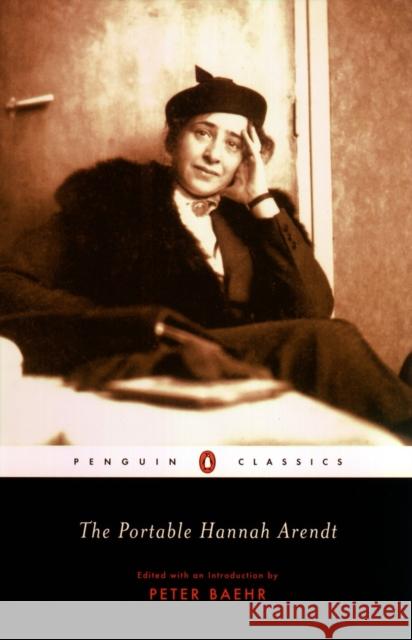
A collection of writings by a groundbreaking political thinker, including excerpts from The Origins of Totalitarianism and Eichmann in Jerusalem She was a Jew born in Germany in the early twentieth century, and she studied with the greatest German minds of her day--Martin Heidegger and Karl Jaspers among them. After the rise of the Nazis, she emigrated to America where she proceeded to write some of the most searching, hard-hitting reflections on the agonizing issues of the time: totalitarianism in both Nazi and Stalinist garb; Zionism and the legacy of the...
A collection of writings by a groundbreaking political thinker, including excerpts from The Origins of Totalitarianism and Eichmann in Je...
From the eighteenth-century rebellions in America and France to the explosive changes of the twentieth-century, this book traces the changing face of revolution and its relationship to war while underscoring the crucial role such events will play in the future.
From the eighteenth-century rebellions in America and France to the explosive changes of the twentieth-century, this book traces the changing face of ...