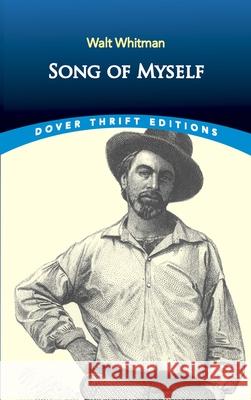
Considered by many to be the quintessential American poet, Walt Whitman (1819-92) exerted a profound influence on all the American poets who came after him. And it was with this inspired, oceanic medley, "Song of Myself" (which in the first editions of Leaves of Grass was still nameless), that this great poet first made himself known to the world. Readers familiar with the later, more widely published versions of Leaves of Grass will find this first version of "Song of Myself" new, surprising, and often superior to the later versions -- and exhilarating in the freshness of...
Considered by many to be the quintessential American poet, Walt Whitman (1819-92) exerted a profound influence on all the American poets who came afte...
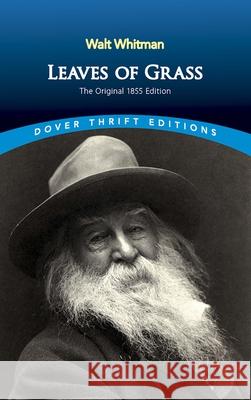
In 1855, Walt Whitman published -- at his own expense -- the first edition of Leaves of Grass, a visionary volume of twelve poems. Showing the influence of a uniquely American form of mysticism known as Transcendentalism, which eschewed the general society and culture of the time, the writing is distinguished by an explosively innovative free verse style and previously unmentionable subject matter. Exalting nature, celebrating the human body, and praising the senses and sexual love, the monumental work was condemned as "immoral." Whitman continued evolving Leaves of Grass...
In 1855, Walt Whitman published -- at his own expense -- the first edition of Leaves of Grass, a visionary volume of twelve poems. Showing the ...
HarperCollins is proud to present its incredible range of best-loved, essential classics.
I believe a leaf of grass is no less than the journey work of the stars
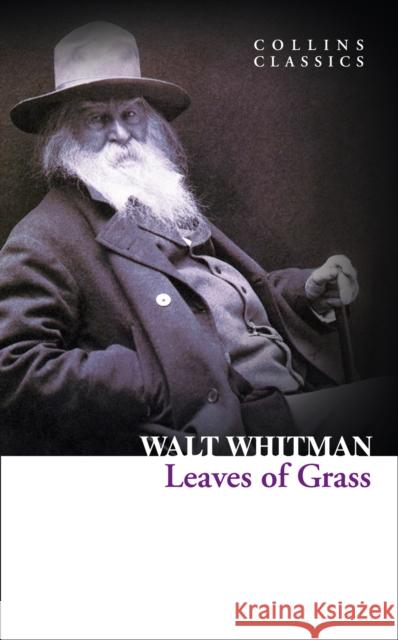
First published in 1855, and edited, revised and expanded over thirty years, Leaves of Grass has become one of the most celebrated poetry collections in the history of American literature. A master of free verse, Walt Whitman captures the true spirit of his homeland and its people through his poetry. He explores a wide range of themes, encompassing American identity and cultural values, democracy, nature and the mysteries of...
HarperCollins is proud to present its incredible range of best-loved, essential classics.
I believe a leaf of grass is no less than the journey w...
'All nations, colors, barbarisms, civilizations, languages...' A selection taken from Walt Whitman's Leaves of Grass. Introducing Little Black Classics: 80 books for Penguin's 80th birthday. Little Black Classics celebrate the huge range and diversity of Penguin Classics, with books from around the world and across many centuries. They take us from a balloon ride over Victorian London to a garden of blossom in Japan, from Tierra del Fuego to 16th century California and the Russian steppe. Here are stories lyrical and savage; poems epic and intimate; essays satirical and inspirational; and...
'All nations, colors, barbarisms, civilizations, languages...' A selection taken from Walt Whitman's Leaves of Grass. Introducing Little Black Classic...
With an Introduction and Bibliography by Stephen Matterson, Trinity College, Dublin.
Walt Whitman's verse gave the poetry of America a distinctive national voice. It reflects the unique vitality of the new nation, the vastness of the land and the emergence of a sometimes troubled consciousness, communicated in language and idiom regarded by many at the time as shocking.
Whitman's poems are organic and free flowing, fit into no previously defined genre and skilfully combine autobiographical, sociological and religious themes with lyrical sensuality. His verse...
With an Introduction and Bibliography by Stephen Matterson, Trinity College, Dublin.
"I am large, I contain multitudes" When Walt Whitman self-published his Leaves of Grass in July 1855, he altered the course of literary history. One of the greatest masterpieces of American literature, it redefined the rules of poetry while describing the soul of the American character. Throughout his great career, Whitman continuously revised, expanded, and republished Leaves of Grass, but many critics believe that the book that matters most is the 1855 original. Penguin Classics proudly presents that text in its original and complete form, with an introductory...
"I am large, I contain multitudes" When Walt Whitman self-published his Leaves of Grass in July 1855, he altered the course of lite...
To mark 160 years since its first publication, a new edition of the great American poet's most famous work Do I contradict myself?
Very well then I contradict myself.
(I am large, I contain multitudes.) Abundant, ecstatic, generous, courageous this is the first American epic poem, a celebration of selfhood and a catalogue of 19th-century American life of all ages and races. Revolutionary in style and controversial in content when it was first published in 1855, Whitman's masterwork has since inspired generations with its intoxicating...
To mark 160 years since its first publication, a new edition of the great American poet's most famous work Do I contradict myself?
Leaves of Grass embodies Walt Whitman's lifetime ambition to create a new voice that could capture the spirit and vibrancy of the young American nation, while celebrating at the same time "Nature without check with original energy".
Leaves of Grass embodies Walt Whitman's lifetime ambition to create a new voice that could capture the spirit and vibrancy of the young American natio...