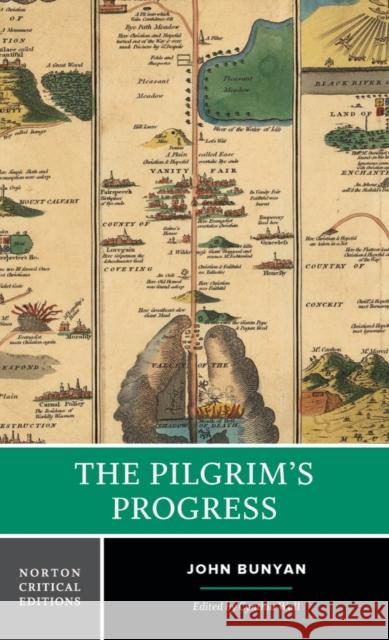
Briefly imprisoned for preaching without a license, he is believed to have begun writing the most famous Christian allegory, The Pilgrim s Progress, while in jail. The Pilgrim s Progress was published in 1678 (Part I) and 1684 (Part II). Edited and annotated with the student reader in mind, this Norton Critical Edition is the indispensable guide to the language, allusions, and historical references of this challenging text. An unusually rich Contexts section is thematically organized in four sections: Biographical, Geographical and Visual, Theological and Literary, and Abridgements and...
Briefly imprisoned for preaching without a license, he is believed to have begun writing the most famous Christian allegory, The Pilgrim s Progress, w...
Walking through the wilderness of this world I came upon a place where there was a hollow. There I lay down to sleep: and as I slept I dreamed a dream.PILGRIM'S PROGRESS tells the story of Christian and his spiritual pilgrimage from the City of Destruction to the Celestial City. On his journey he experiences joy, struggle, temptation and danger during his memorable encounters with such characters as Pliable, Talkative, Giant Despair, Worldly-Wiseman, Evangelist, Apollyon, Faithful, Hopeful and Ignorance. One of the most significant works in the English language, it has encouraged and...
Walking through the wilderness of this world I came upon a place where there was a hollow. There I lay down to sleep: and as I slept I dreamed a dr...
Biographical Introduction by William S. Barker. Bunyan wrote extensively on topical theological and practical matters, issues that faced the church in his time, which face us still. The Intercession of Christ is one of these works. In it Bunyan traces the nature of Jesus' intercession, who it should affect, the benefits it gives us and how effective that intercession is. Bunyan is also keen to show the interferences of the doctrine on such subjects as backsliding, how Christ's intervention is affected when we continue to sin, and there sins of God's people worse than the...
Biographical Introduction by William S. Barker. Bunyan wrote extensively on topical theological and practical matters, issues that faced the...
John Bunyans "The Pilgrims Progress from This World to That Which Is to Come" is one of the most famous books written in the English Language. It is a Christian allegory written and was published in February, 1678. It is without doubt one of the most significant works of religious English literature, translated into over 200 languages, it has never been out of print. It traces the spiritual journey of Christian as he learns lessons that help him to grow in Christian maturity.
It is thought that Bunyan wrote it during his imprisonment from 1660-1672 in the Bedfordshire county gaol for...
John Bunyans "The Pilgrims Progress from This World to That Which Is to Come" is one of the most famous books written in the English Language. It is a...
Bunyan's classic work describes the journey undertaken by Christian as he makes his way from the City of Destruction to the Celestial City. Bunyan's intention is to encourage the follower of Christ to remain faithful to Christ's message.
Bunyan's classic work describes the journey undertaken by Christian as he makes his way from the City of Destruction to the Celestial City. Bunyan's i...
A new edition of one of the greatest allegorical stories ever written A masterpiece of the English Puritan tradition, The Pilgrim's Progress is rich in its imaginative power and its vivid and heartfelt language. It recounts the story of Christian, who appears to the author in a dream, and his journey to Heaven through the trials and tribulations of life. He meets many like-minded pilgrims on his way, such as Faithful and Hopeful, but before they attain their goal they encounter the Giant Despair and the River of Death itself. Translated into more than one hundred languages,...
A new edition of one of the greatest allegorical stories ever written A masterpiece of the English Puritan tradition, The Pilgrim's Prog...