Edna F. Einsiedel, Arturo Escobar, Ronald Walter Greene, Robert Huesca, Thomas L. Jacobson, Brij Kothari, Srinivas R. Me
To reshape the field of development communication, Redeveloping Communication for Social Change proposes situating theory and practice within contexts of power, recognizing both the ability of dominant groups to control and the potential for marginal communities to resist. Contributors from communication and anthropology explore the global and institutional structures within which agencies construct social problems and interventions, the discourse guiding the normative climate for conceiving and implementing projects, and the practice of strategic interventions for social change. Examining...
To reshape the field of development communication, Redeveloping Communication for Social Change proposes situating theory and practice within contexts...
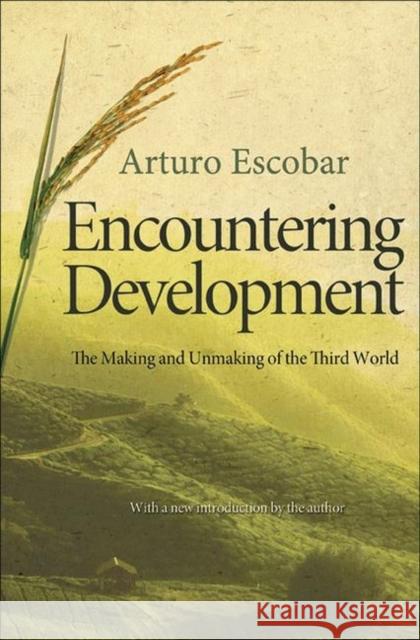
How did the industrialized nations of North America and Europe come to be seen as the appropriate models for post-World War II societies in Asia, Africa, and Latin America? How did the postwar discourse on development actually create the so-called Third World? And what will happen when development ideology collapses? To answer these questions, Arturo Escobar shows how development policies became mechanisms of control that were just as pervasive and effective as their colonial counterparts. The development apparatus generated categories powerful enough to shape the thinking even of its...
How did the industrialized nations of North America and Europe come to be seen as the appropriate models for post-World War II societies in Asia, A...
In Territories of Difference, Arturo Escobar, author of the widely debated book Encountering Development, analyzes the politics of difference enacted by specific place-based ethnic and environmental movements in the context of neoliberal globalization. His analysis is based on his many years of engagement with a group of Afro-Colombian activists of Colombia s Pacific rainforest region, the Proceso de Comunidades Negras (PCN). Escobar offers a detailed ethnographic account of PCN s visions, strategies, and practices, and he chronicles and analyzes the movement s struggles for...
In Territories of Difference, Arturo Escobar, author of the widely debated book Encountering Development, analyzes the politics of diffe...
In Designs for the Pluriverse Arturo Escobar presents a new vision of design theory and practice aimed at channeling design's world-making capacity toward ways of being and doing that are deeply attuned to justice and the Earth. Noting that most design--from consumer goods and digital technologies to built environments--currently serves capitalist ends, Escobar argues for the development of an "autonomous design" that eschews commercial and modernizing aims in favor of more collaborative and placed-based approaches. Such design attends to questions of environment, experience, and...
In Designs for the Pluriverse Arturo Escobar presents a new vision of design theory and practice aimed at channeling design's world-making capa...
Investigating the complex interrelations between culture and politics in a wide range of social movements in Latin America, this book focuses on the cultural politics enacted by social movements as they struggle for new visions and practices of citizenship, democracy, social relations, and development. The volume explores the potential of these cul
Investigating the complex interrelations between culture and politics in a wide range of social movements in Latin America, this book focuses on the c...
During the last decade, Latin American social movements have brought about a profound transformation in the nature and practice of protest and collective action. This book surveys the full spectrum of movements in Latin America today-from peasant and squatter movements to women's and gay movements, as well as environmental and civic movements - exa
During the last decade, Latin American social movements have brought about a profound transformation in the nature and practice of protest and collect...