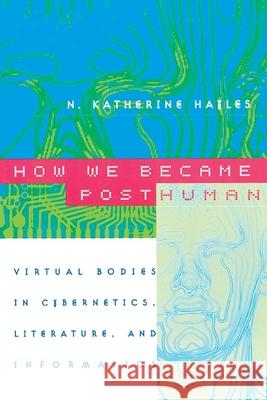
In this age of DNA computers and artificial intelligence, information is becoming disembodied even as the "bodies" that once carried it vanish into virtuality. While some marvel at these changes, envisioning consciousness downloaded into a computer or humans "beamed" Star Trek-style, others view them with horror, seeing monsters brooding in the machines. In How We Became Posthuman, N. Katherine Hayles separates hype from fact, investigating the fate of embodiment in an information age. Hayles relates three interwoven stories: how information lost its body, that is, how it...
In this age of DNA computers and artificial intelligence, information is becoming disembodied even as the "bodies" that once carried it vanish into vi...
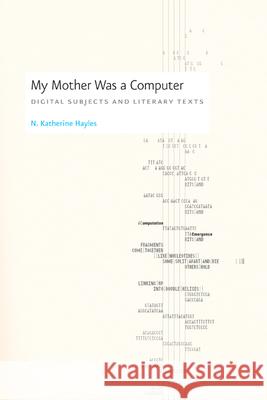
We live in a world, according to N. Katherine Hayles, where new languages are constantly emerging, proliferating, and fading into obsolescence. These are languages of our own making: the programming languages written in code for the intelligent machines we call computers. Hayles's latest exploration provides an exciting new way of understanding the relations between code and language and considers how their interactions have affected creative, technological, and artistic practices. My Mother Was a Computer explores how the impact of code on everyday life has become comparable to...
We live in a world, according to N. Katherine Hayles, where new languages are constantly emerging, proliferating, and fading into obsolescence. These ...
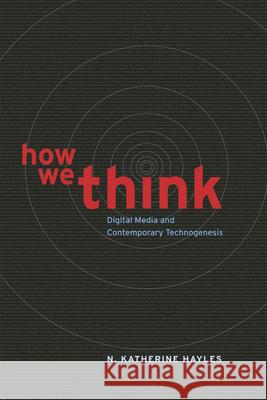
How do we think? N. Katherine Hayles poses this question at the beginning of this bracing exploration of the idea that we think through, with, and alongside media. As the age of print passes and new technologies appear every day, this proposition has become far more complicated, particularly for the traditionally print-based disciplines in the humanities and qualitative social sciences. With a rift growing between digital scholarship and its print-based counterpart, Hayles argues for contemporary technogenesis the belief that humans and technics are coevolving and advocates for...
How do we think? N. Katherine Hayles poses this question at the beginning of this bracing exploration of the idea that we think through, wi...
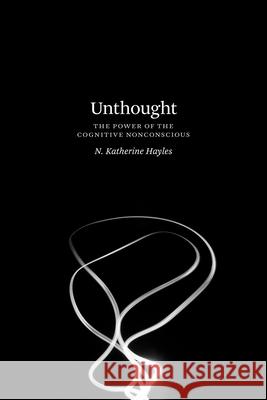
N. Katherine Hayles is known for breaking new ground at the intersection of the sciences and the humanities. In Unthought, she once again bridges disciplines by revealing how we think without thinking--how we use cognitive processes that are inaccessible to consciousness yet necessary for it to function. Marshalling fresh insights from neuroscience, cognitive science, cognitive biology, and literature, Hayles expands our understanding of cognition and demonstrates that it involves more than consciousness alone. Cognition, as Hayles defines it, is applicable not only to...
N. Katherine Hayles is known for breaking new ground at the intersection of the sciences and the humanities. In Unthought, she once again bridg...