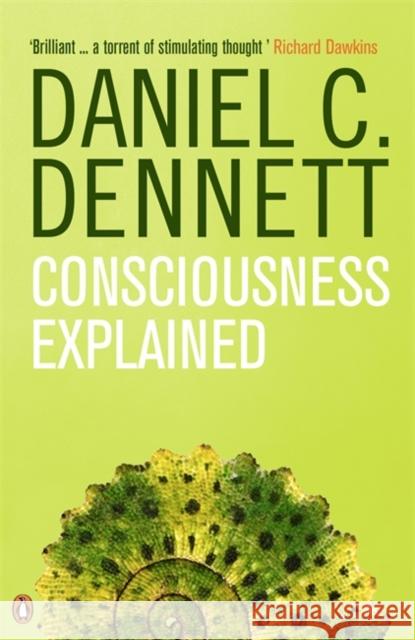
This book revises the traditional view of consciousness by claiming that Cartesianism and Descartes' dualism of mind and body should be replaced with theories from the realms of neuroscience, psychology and artificial intelligence. What people think of as the stream of consciousness is not a single, unified sequence, the author argues, but multiple drafts of reality composed by a computer-like virtual machine. Dennett considers how consciousness could have evolved in human beings and confronts the classic mysteries of consciousness: the nature of introspection, the self or ego and its...
This book revises the traditional view of consciousness by claiming that Cartesianism and Descartes' dualism of mind and body should be replaced with ...
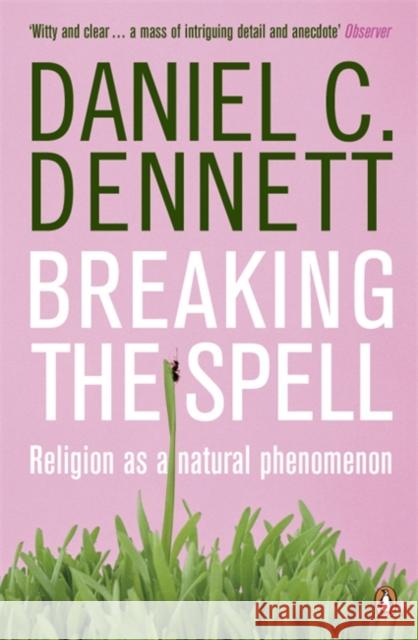
Religion as a Natural Phenomenon. 'Breaking the Spell' is Daniel Dennett's most innovative and important work yet, a profound challenge to society and a compelling new history of belief. Few forces in the world are as potent as religion: it comforts people in their suffering and inspires them to both magnificent and terrible deeds. In this provocative and timely book, he seeks to uncover the origins of this power, and discusses why and how different faiths have commanded allegiance and shaped so many lives. A truly original - and comprehensive - explanation for religion. Now in paperback.
Religion as a Natural Phenomenon. 'Breaking the Spell' is Daniel Dennett's most innovative and important work yet, a profound challenge to society and...
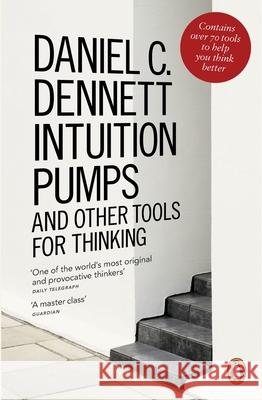
Thinking is hard - yet barely a waking moment passes when we're not labouring away at it. A few of us may be natural geniuses, able to work through the toughest tangles in an instant; others, blessed with reserves of willpower, stay the course in the dogged pursuit of truth. Then there's the rest of us. Not prodigies and a little bit lazy, but still aspiring to understand the world and our place in it. What can we do? In 'Intuition Pumps', Daniel Dennett, one of the world's most original and provocative thinkers, takes us on a profound, illuminating and highly entertaining philosophical...
Thinking is hard - yet barely a waking moment passes when we're not labouring away at it. A few of us may be natural geniuses, able to work through th...
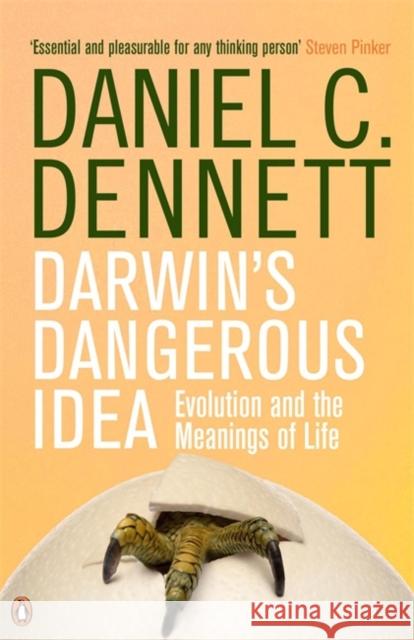
Argues that the theory of evolution can demystify the miracles of life without devaluing our most cherished beliefs. In this book, the author explores every aspect of evolutionary thinking to show why it is so fundamental to our existence, and why it affirms - not threatens - our convictions about the meaning of life.
Argues that the theory of evolution can demystify the miracles of life without devaluing our most cherished beliefs. In this book, the author explores...
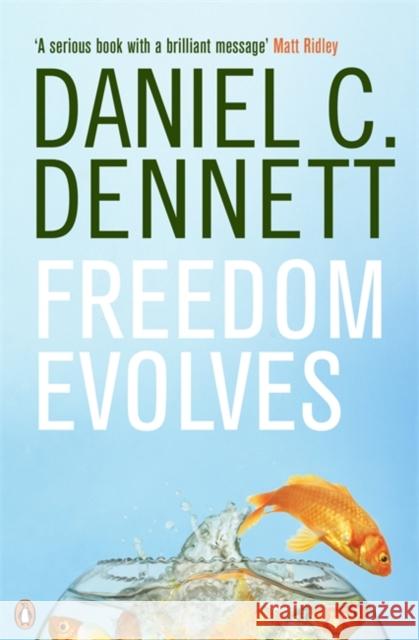
Is there really such a thing as free will? How can humans make genuinely independent choices if we are just a cluster of cells and genes in a world determined by scientific laws? In this title, the author provides a defense of free will.
Is there really such a thing as free will? How can humans make genuinely independent choices if we are just a cluster of cells and genes in a world de...