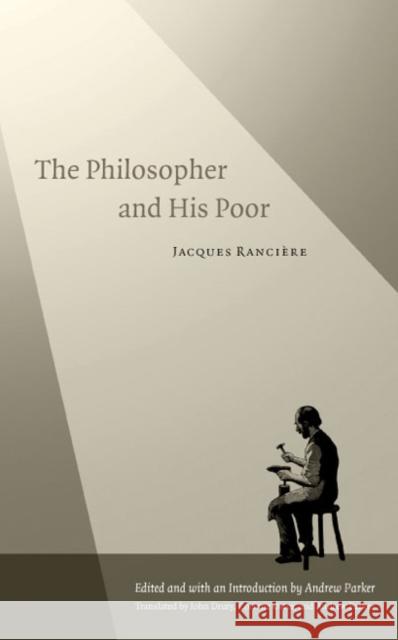
What has philosophy to do with the poor? If, as has often been supposed, the poor have no time for philosophy, then why have philosophers always made time for them? Why is the history of philosophy--from Plato to Karl Marx to Jean-Paul Sartre to Pierre Bourdieu--the history of so many figures of the poor: plebes, men of iron, the demos, artisans, common people, proletarians, the masses? Why have philosophers made the shoemaker, in particular, a remarkably ubiquitous presence in this history? Does philosophy itself depend on this thinking about the poor? If so, can it ever refrain from...
What has philosophy to do with the poor? If, as has often been supposed, the poor have no time for philosophy, then why have philosophers always made ...
-Is there any such thing as political philosophy?- So begins this provocative book by one of the foremost figures in Continental thought. Here, Jacques Ranciere brings a new and highly useful set of terms to the vexed debate about political effectiveness and -the end of politics.-
What precisely is at stake in the relationship between -philosophy- and the adjective -political-? In Disagreement, Ranciere explores the apparent contradiction between these terms and reveals the uneasy meaning of their union in the phrase -political philosophy---a juncture related to age-old...
-Is there any such thing as political philosophy?- So begins this provocative book by one of the foremost figures in Continental thought. Here, Jac...
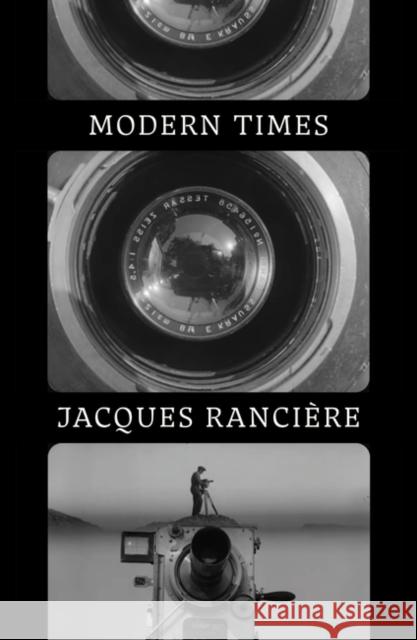
In this book Jacques Ranciere radicalises his critique of modernism and its postmodern appendix. He contrasts their unilinear and exclusive time with the interweaving of temporalities at play in modern processes of emancipation and artistic revolutions, showing how this plurality itself refers to the double dimension of time. Time is more than a line drawn from the past to the future. It is a form of life, marked by the ancient hierarchy between those who have time and those who do not. This hierarchy, continued in the Marxist notion of the vanguard and nakedly exhibited in Clement...
In this book Jacques Ranciere radicalises his critique of modernism and its postmodern appendix. He contrasts their unilinear and exclusive time with ...