What does diversity do? What are we doing when we use the language of diversity? Sara Ahmed offers an account of the diversity world based on interviews with diversity practitioners in higher education, as well as her own experience of doing diversity work. Diversity is an ordinary, even unremarkable, feature of institutional life. Yet diversity practitioners often experience institutions as resistant to their work, as captured through their use of the metaphor of the "brick wall." On Being Included offers an explanation of this apparent paradox. It explores the gap between symbolic...
What does diversity do? What are we doing when we use the language of diversity? Sara Ahmed offers an account of the diversity world based on intervie...
In this groundbreaking work, Sara Ahmed demonstrates how queer studies can put phenomenology to productive use. Focusing on the orientation aspect of sexual orientation and the orient in orientalism, Ahmed examines what it means for bodies to be situated in space and time. Bodies take shape as they move through the world directing themselves toward or away from objects and others. Being orientated means feeling at home, knowing where one stands, or having certain objects within reach. Orientations affect what is proximate to the body or what can be reached. A queer phenomenology, Ahmed...
In this groundbreaking work, Sara Ahmed demonstrates how queer studies can put phenomenology to productive use. Focusing on the orientation aspect of ...
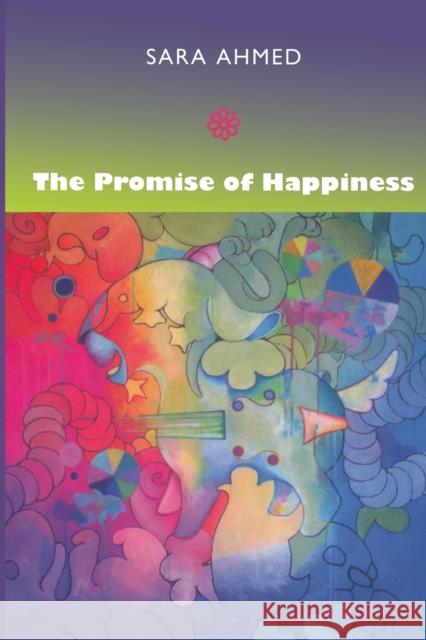
The Promise of Happiness is a provocative cultural critique of the imperative to be happy. It asks what follows when we make our desires and even our own happiness conditional on the happiness of others: "I just want you to be happy"; "I'm happy if you're happy." Combining philosophy and feminist cultural studies, Sara Ahmed reveals the affective and moral work performed by the "happiness duty," the expectation that we will be made happy by taking part in that which is deemed good, and that by being happy ourselves, we will make others happy. Ahmed maintains that happiness is a promise...
The Promise of Happiness is a provocative cultural critique of the imperative to be happy. It asks what follows when we make our desires and ev...
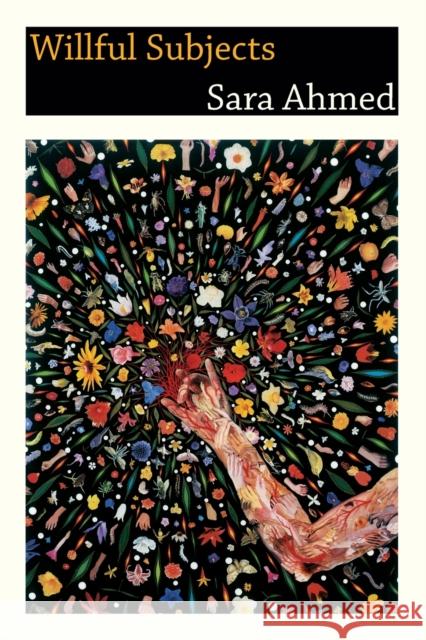
In Willful Subjects Sara Ahmed explores willfulness as a charge often made by some against others. One history of will is a history of attempts to eliminate willfulness from the will. Delving into philosophical and literary texts, Ahmed examines the relation between will and willfulness, ill will and good will, and the particular will and general will. Her reflections shed light on how will is embedded in a political and cultural landscape, how it is embodied, and how will and willfulness are socially mediated. Attentive to the wayward, the wandering, and the deviant, Ahmed considers...
In Willful Subjects Sara Ahmed explores willfulness as a charge often made by some against others. One history of will is a history of attempts...
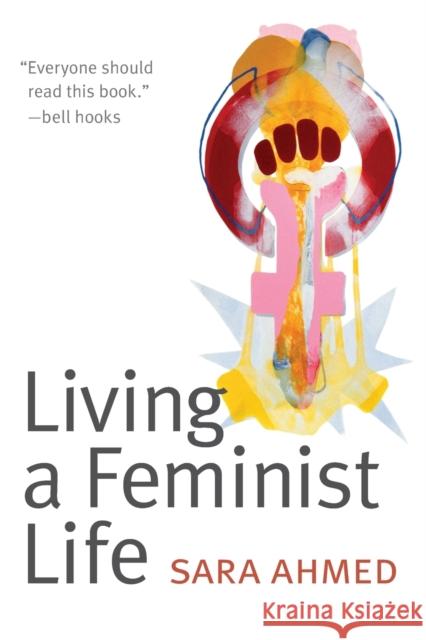
In Living a Feminist Life Sara Ahmed shows how feminist theory is generated from everyday life and the ordinary experiences of being a feminist at home and at work. Building on legacies of feminist of color scholarship in particular, Ahmed offers a poetic and personal meditation on how feminists become estranged from worlds they critique--often by naming and calling attention to problems--and how feminists learn about worlds from their efforts to transform them. Ahmed also provides her most sustained commentary on the figure of the feminist killjoy introduced in her earlier work while...
In Living a Feminist Life Sara Ahmed shows how feminist theory is generated from everyday life and the ordinary experiences of being a feminist...
Continuing the work she began in The Promise of Happiness and Willful Subjects by taking up a single word and following its historical, intellectual, and political significance, Sara Ahmed explores how use operates as an organizing concept, technology of control, and tool for diversity work.
Continuing the work she began in The Promise of Happiness and Willful Subjects by taking up a single word and following its historical, intellectual, ...