Adam Smith (1723-1790) was one of the brightest stars of the eighteenth-century Scottish Enlightenment. An Inquiry into the Nature and Causes of the Wealth of Nations was his most important book. First published in London in March 1776, it had been eagerly anticipated by Smith's contemporaries and became an immediate bestseller. That edition sold out quickly and others followed. Today, Smith's Wealth of Nations rightfully claims a place in the Western intellectual canon. It is the first book of modern political economy, and still provides the foundation for the study...
Adam Smith (1723-1790) was one of the brightest stars of the eighteenth-century Scottish Enlightenment. An Inquiry into the Nature and Causes of th...
The Wealth of Nations by Adam Smith It is symbolic that Adam Smith's masterpiece of economic analysis, The Wealth of Nations, was first published in 1776, the same year as the Declaration of Independence. In his book, Smith fervently extolled the simple yet enlightened notion that individuals are fully capable of setting and regulating prices for their own goods and services. He argued passionately in favor of free trade, yet stood up for the little guy. The Wealth of Nations provided the first--and still the most eloquent--integrated description of the...
The Wealth of Nations by Adam Smith It is symbolic that Adam Smith's masterpiece of economic analysis, The Wealth of Nations, was...
First published in 1776, the year in which the American Revolution officially began, Smith's Wealth of Nations sparked a revolution of its own. In it Smith analyzes the major elements of political economy, from market pricing and the division of labor to monetary, tax, trade, and other government policies that affect economic behavior. Throughout he offers seminal arguments for free trade, free markets, and limited government.Criticizing mercantilists who sought to use the state to increase their nations' supply of precious metals, Smith points out that a nation's welath should be measured by...
First published in 1776, the year in which the American Revolution officially began, Smith's Wealth of Nations sparked a revolution of its own. In it ...
First published in 1776, the year in which the American Revolution officially began, Smith's Wealth of Nations sparked a revolution of its own. In it Smith analyzes the major elements of political economy, from market pricing and the division of labour to monetary, tax, trade and other government policies that affect economic behaviour. Throughout he offers seminal arguments for free trade, free markets and limited government.
First published in 1776, the year in which the American Revolution officially began, Smith's Wealth of Nations sparked a revolution of its own. In it ...
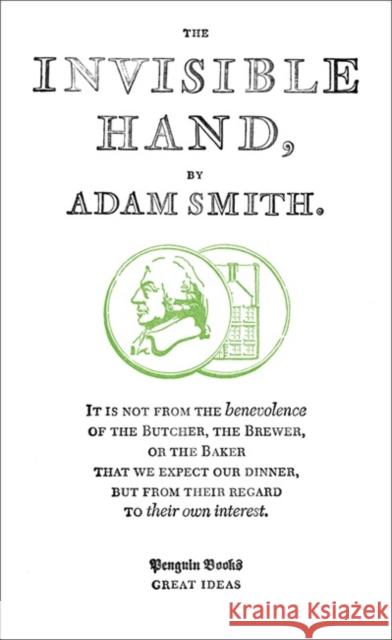
Adam Smith's landmark treatise on the free market paved the way for modern capitalism, arguing that competition is the engine of a productive society, and that self-interest will eventually come to enrich the whole community, as if by an 'invisible hand'. Throughout history, some books have changed the world. They have transformed the way we see ourselves - and each other. They have inspired debate, dissent, war and revolution. They have enlightened, outraged, provoked and comforted. They have enriched lives - and destroyed them. Now Penguin brings you the works of the great thinkers,...
Adam Smith's landmark treatise on the free market paved the way for modern capitalism, arguing that competition is the engine of a productive society,...
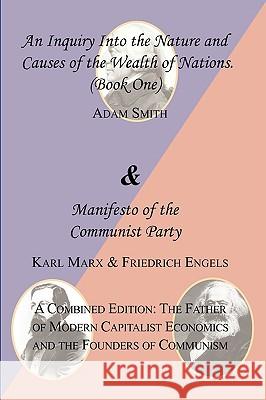
Book one of the all time capitalist classic 'The Wealth of Nations' and the complete 'Manifesto of the Communist Party, together in one edition at a great price.
Book one of the all time capitalist classic 'The Wealth of Nations' and the complete 'Manifesto of the Communist Party, together in one edition at a g...
This book is divided into an examination of the several ways of communicating our thoughts by speech and an attention to the principles of those literary compositions which contribute to persuasion or entertainment. The species of communication discussed include descriptive and narrative (or historical) composition, poetry, demonstrative oratory, panegyric, didactic or scientific language, deliberative oratory, and judicial or forensic oratory. The subjects addressed in his teachings include the style and genius of some of the best of the ancient writers and poets, especially the historians...
This book is divided into an examination of the several ways of communicating our thoughts by speech and an attention to the principles of those liter...