Překlad dvou významných přednášek z roku 1953 (Otázka techniky. Věda a zamyšlení), které reprezentují Heideggerovo definitivní stanovisko k novověké vědě a moderní technice. Svou celoživotní otázku, jíž byla otázka po bytí, promýšlel Heidegger jednak v rozhovoru se svými antickými i novověkými předchůdci, jednak na pozadí především Hölderlinova myslivého básnění, a konečně v opakované konfrontaci s tím, co určuje naši dobu, což pro něho byla věda a technika.
Překlad dvou významných přednášek z roku 1953 (Otázka techniky. Věda a zamyšlení), které reprezentují Heideggerovo definitivní stanovisko...
Nejvýznačnější filosof 20. století Martin Heidegger jako básník? I pro ty, kdo se zabývají Heideggerovou filosofií to bude zřejmě překvapivé. Sám autor píše: Mé návrhy se ostře odlišují od každého druhu poezie: od poetické básně, avšak především od básně naučné, protože žádnou nauku do veršů nevnášejí. To už jsou spíše spřízněny s výroky raných myslitelů, příbuzné snad raným počátkům myšlení, a přesto z jiného vrhu bytí. Návrhy jsou vzkazy bytí, jež se vyřklo do jazyka, a zároveň platí, že jazyk toto sycené ticho chová...
Nejvýznačnější filosof 20. století Martin Heidegger jako básník? I pro ty, kdo se zabývají Heideggerovou filosofií to bude zřejmě překva...
The Principle of Reason, the text of an important and influential lecture course that Martin Heidegger gave in 1955 56, takes as its focal point Leibniz s principle: nothing is without reason. Heidegger shows here that the principle of reason is in fact a principle of being. Much of his discussion is aimed at bringing his readers to the "leap of thinking," which enables them to grasp the principle of reason as a principle of being. This text presents Heidegger's most extensive reflection on the notion of history and its essence, the Geschick of being, which is considered on of the most...
The Principle of Reason, the text of an important and influential lecture course that Martin Heidegger gave in 1955 56, takes as its focal point Le...
The text of Martin Heidegger's 1930-1931 lecture course on Hegel's Phenomenology of Spirit contains some of Heidegger's most crucial statements about temporality, ontological difference and dialectic, and being and time in Hegel. Within the context of Heidegger's project of reinterpreting Western thought through its central figures, Heidegger takes up a fundamental concern of Being and Time, "a dismantling of the history of ontology with the problematic of temporality as a clue." He shows that temporality is centrally involved in the movement of thinking called phenomenology of...
The text of Martin Heidegger's 1930-1931 lecture course on Hegel's Phenomenology of Spirit contains some of Heidegger's most crucial statements abo...
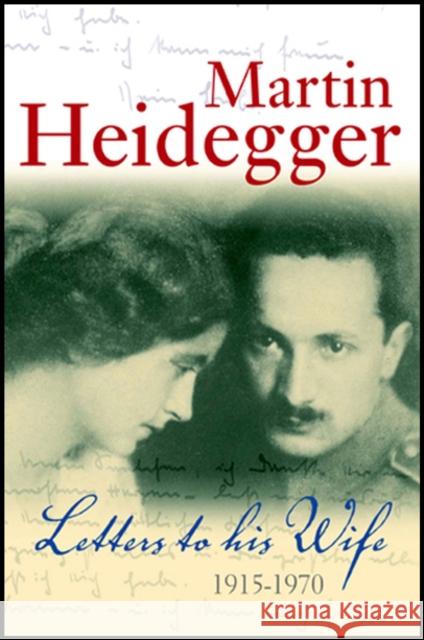
'There is something absolute about the letters between you & me; ... The letter is a form of communion of the soul-spirit - ... one that is faded & yet unimpeded, complete', wrote Martin Heidegger to his fiancee Elfride Petri shortly before their wedding.
'There is something absolute about the letters between you & me; ... The letter is a form of communion of the soul-spirit - ... one that is faded & ye...
In Four Seminars, Heidegger reviews the entire trajectory of his thought and offers unique perspectives on fundamental aspects of his work. First published in French in 1976, these seminars were translated into German with Heidegger's approval and reissued in 1986 as part of his Gesamtausgabe, volume 15. Topics considered include the Greek understanding of presence, the ontological difference, the notion of system in German Idealism, the power of naming, the problem of technology, danger, and the event. Heidegger's engagements with his philosophical forebears--Parmenides, Heraclitus, Kant,...
In Four Seminars, Heidegger reviews the entire trajectory of his thought and offers unique perspectives on fundamental aspects of his work. First p...
Phenomenological Interpretations of Aristotle is the text of a lecture course presented at the University of Freiburg in the winter of 1921 1922, and first published in 1985 as volume 61 of Heidegger's collected works. Preceding Being and Time, the work shows the young Heidegger introducing novel vocabulary as he searches for his genuine philosophical voice. In this course, Heidegger first takes up the role of the definition of philosophy and then elaborates a unique analysis of "factical life," or human life as it is lived concretely in relation to the world, a relation he calls "caring."...
Phenomenological Interpretations of Aristotle is the text of a lecture course presented at the University of Freiburg in the winter of 1921 1922, a...