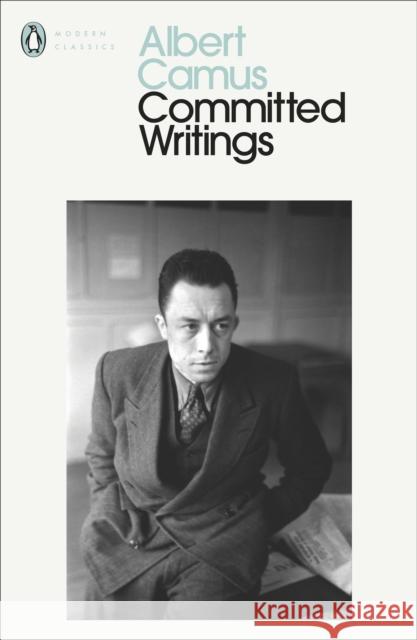
'To create today means to create dangerously' This new collection contains some of Camus' most brilliant political writing as he reflects on moral responsibility and the role of the artist in the world. Letters to a German Friend, written and published underground during the Nazi occupation of France, was born out of Camus' experience in the Resistance and explores what it truly means to love your country. Reflections on the Guillotine, his impassioned polemic against the death penalty, became a touchstone for the movement to abolish capital punishment, while in his Nobel speeches Camus...
'To create today means to create dangerously' This new collection contains some of Camus' most brilliant political writing as he reflects on moral ...
'One of those books that marks a reader's life indelibly' William Boyd 'A compelling, dreamlike fable' Guardian In The Outsider, Camus explores the alienation of an individual who refuses to conform to social norms. Meursault, his anti-hero, will not lie. When his mother dies, he refuses to show his emotions simply to satisfy the expectations of others. And when he commits a random act of violence on a sun-drenched beach near Algiers, his lack of remorse compounds his guilt in the eyes of society and the law. Yet he is as much a victim as a criminal.
'One of those books that marks a reader's life indelibly' William Boyd 'A compelling, dreamlike fable' Guardian In The Outsider, Camus explores ...
'A story for our, and all, times' Guardian The Plague is Albert Camus's world-renowned fable of fear and courage The townspeople of Oran are in the grip of a deadly plague, which condemns its victims to a swift and horrifying death. Fear, isolation and claustrophobia follow as they are forced into quarantine. Each person responds in their own way to the lethal disease: some resign themselves to fate, some seek blame, and a few, like Dr Rieux, resist the terror. An immediate triumph when it was published in 1947, The Plague is in part an allegory of France's suffering under the Nazi...
'A story for our, and all, times' Guardian The Plague is Albert Camus's world-renowned fable of fear and courage The townspeople of Oran are i...
'An irresistibly brilliant examination of modern conscience' The New York Times Jean-Baptiste Clamence is a soul in turmoil. Over several drunken nights in an Amsterdam bar, he regales a chance acquaintance with his story. From this successful former lawyer and seemingly model citizen a compelling, self-loathing catalogue of guilt, hypocrisy and alienation pours forth. The Fall (1956) is a brilliant portrayal of a man who has glimpsed the hollowness of his existence. But beyond depicting one man's disillusionment, Camus's novel exposes the universal human condition and its absurdities -...
'An irresistibly brilliant examination of modern conscience' The New York Times Jean-Baptiste Clamence is a soul in turmoil. Over several drunken...
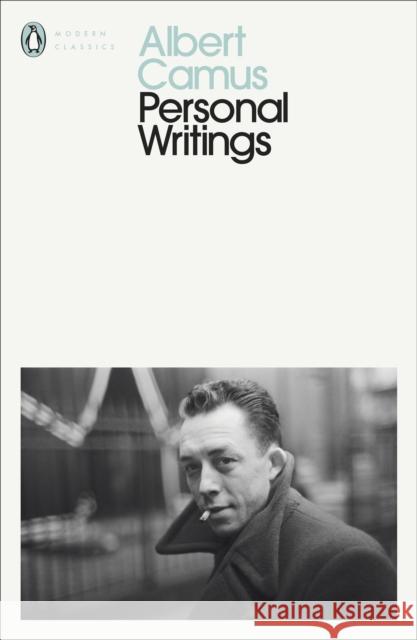
'It was the discovery of the essays celebrating his childhood and youth that altered my perception of Camus, from a thinker to a writer whose intellectual lucidity was a product of the wealth - the sensual immediacy and clarity - that had been heaped on his senses' Geoff Dyer Albert Camus was born in a 'world of poverty and sunshine' in Algeria, which would infuse all of his work. This new collection brings together three volumes of Camus' most intimate autobiographical writings for the first time. The Wrong Side and the Right Side, his first book, describes his family and his early years...
'It was the discovery of the essays celebrating his childhood and youth that altered my perception of Camus, from a thinker to a writer whose intellec...