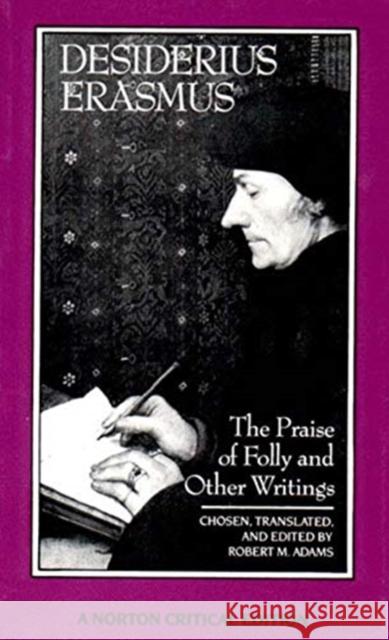
Critical commentary is provided in essays by H. R. Trevor-Roper, R. S. Allen, J. Huizinga, Mikhail Bakhtin, Paul Oskar Kristeller, and Robert M. Adams Also included are a Chronology of Erasmus's life and a Selected Bibliography.
Critical commentary is provided in essays by H. R. Trevor-Roper, R. S. Allen, J. Huizinga, Mikhail Bakhtin, Paul Oskar Kristeller, and Robert M. Adams...
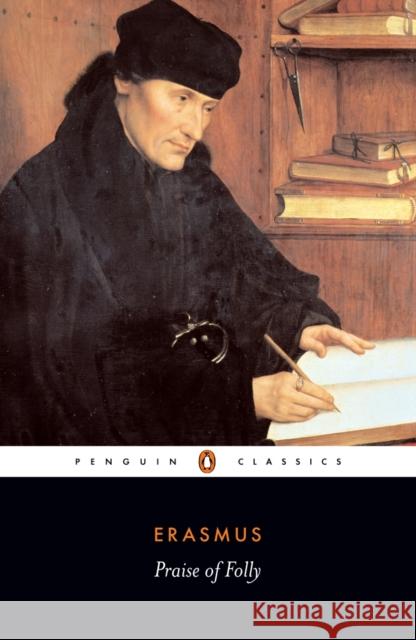
Erasmus of Rotterdam (c. 1466-1536) is one of the greatest figures of the Renaissance humanist movement, which abandoned medieval pieties in favour of a rich new vision of the individual's potential. Praise of Folly, written to amuse his friend Sir Thomas More, is Erasmus's best-known work. Its dazzling mixture of fantasy and satire is narrated by a personification of Folly, dressed as a jester, who celebrates youth, pleasure, drunkenness and sexual desire, and goes on to lambast human pretensions, foibles and frailties, to mock theologians and monks and to praise the 'folly' of simple...
Erasmus of Rotterdam (c. 1466-1536) is one of the greatest figures of the Renaissance humanist movement, which abandoned medieval pieties in favour of...
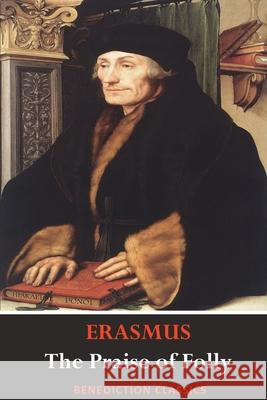
The goddess Folly gives a speech, praising herself and explaining how much humanity benefits from her services, from politicians to philosophers, aristocrats, schoolteachers, poets, lawyers, theologians, monarchs and the clergy. At the same time, her discourse provides a satire of Erasmus's world, poking fun at false pedantry and the aberrations of Christianity. Woven throughout her monologue, a thread of irony calls into question the goddess's own words, in which ambiguities, allusions and interpretations collide in a way that makes Praise of Folly enduringly fascinating.
The goddess Folly gives a speech, praising herself and explaining how much humanity benefits from her services, from politicians to philosophers, aris...