Foucaultova disertační práce Historie šílenství je prvním z jeho velkých „archeologických“ spisů. Jejím tématem je způsob, jakým byl v moderních evropských dějinách pojímán fenomén šílenství. Foucault zde analyzuje – počínaje tím, co označuje jako „velké uvěznění“ – několik historických konstelací, které v nejrůznějších kontextech charakterizovaly vztah západní kultury k postavě šílence. Šílenství je zde spíše než jako biologický či medicínský fakt analyzováno jako kulturní jev, jehož tvářnost se v moderní době...
Foucaultova disertační práce Historie šílenství je prvním z jeho velkých „archeologických“ spisů. Jejím tématem je způsob, jakým byl...
'Imaginative, illuminating and innovative' The New York Times Book Review The grisly spectacle of public executions and torture of centuries ago has been replaced by the penal system in western society - but has anything really changed? In his revolutionary work on control and power relations in our public institutions, Michel Foucault argues that the development of prisons, police organizations and legal hierarchies has merely changed the focus of domination from our bodies to our souls. Even schools, factories, barracks and hospitals, in which an individual's time is...
'Imaginative, illuminating and innovative' The New York Times Book Review The grisly spectacle of public executions and torture of centuries ago h...
'Bristles with provocative insights into the tangled liaisons of sex and self' Times Higher Education In the third volume of his acclaimed examination of sexuality in modern Western society, Foucault investigates the Golden Age of Rome to reveal a decisive break from the classical Greek version of sexual pleasure. Exploring the moral reflections of philosophers and physicians of the era, he identifies a growing anxiety over sexual activity and its consequences. At the core of this transformation Foucault found the principles of the 'care of the self': the belief that the self is an ...
'Bristles with provocative insights into the tangled liaisons of sex and self' Times Higher Education In the third volume of his acclaimed examina...
'A brilliant display of fireworks, attacking the widespread and banal notion that "in the beginning" sexual activity was guilt-free and delicious, being repressed and blighted only by the gloom of Victorianism' Spectator We talk about sex more and more, but are we more liberated? The first part of Michel Foucault's landmark account of our evolving attitudes in the west shows how the nineteenth century, far from suppressing sexuality, led to an explosion of discussion about sex as a separate sphere of life for study and examination. As a result, he argues, we are making a ...
'A brilliant display of fireworks, attacking the widespread and banal notion that "in the beginning" sexual activity was guilt-free and delicious,...
'No brief survey can do justice to the richness, complexity and detail of Foucault's discussion' New York Review of Books The second volume of Michel Foucault's pioneering analysis of the changing nature of desire explores how sexuality was perceived in classical Greek culture. From the stranger byways of Greek medicine (with its advice on the healthiest season for sex, as well as exercise and diet) to the role of women, The Use of Pleasure is full of extraordinary insights into the differences - and the continuities - between the Ancient, Christian and Modern worlds, showing how...
'No brief survey can do justice to the richness, complexity and detail of Foucault's discussion' New York Review of Books The second volume of Mic...
'Who since Weber, or perhaps even Hobbes, has done as much to show why power is such a profound, elusive and treacherous presence throughout our experience?' The Times Higher Education The third and final volume of the Essential Works of Foucault series, Power brings together his writings on the issues that he helped make the core agenda of Western political culture: medicine, prisons, psychiatry, government and sexuality, in particular showing his concerns with human rights, discrimination and exclusion. It also includes articles and open letters published directly in response to the...
'Who since Weber, or perhaps even Hobbes, has done as much to show why power is such a profound, elusive and treacherous presence throughout our exper...
'Foucault must be reckoned with by humanists, social scientists, and political activists' The New York Times Book Review Society Must Be Defended is Michel Foucault's devastating critique of the systems of power and control inherent in civilization. Taken from a series of lectures given by Foucault at the College de France in 1975-76, it reveals how war is the foundation of all power relations, and politics ultimately a continuation of battlefield violence. He offers a politically charged re-reading of history, with examples ranging from the Trojan myth to Nazi Germany, to show a...
'Foucault must be reckoned with by humanists, social scientists, and political activists' The New York Times Book Review Society Must Be Defended i...
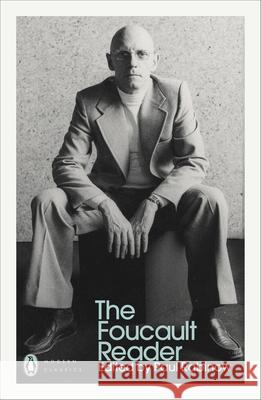
'The most innovative and influential French thinker of the contemporary era' Guardian This is the ideal introduction to one of the most significant and radical philosophers of the past century. It includes detailed excerpts from all of Foucault's major works, including Discipline and Punish and The History of Sexuality, as well as many of his most revealing interviews, covering subjects from madness to desire, art to the nature of truth. No other writer has made us think more about the structures of power and control in our society, both past and present. 'Scarcely any philosopher...
'The most innovative and influential French thinker of the contemporary era' Guardian This is the ideal introduction to one of the most significant...
'Foucault leaves no reader untouched or unchanged' Edward Said Aesthetics, the second volume of the complete collection of Michel Foucault's courses, articles and interviews, focuses on the philosophy, literature and art which informed his engagement with ethics and power, including brilliant commentaries on the work of de Sade, Rousseau, Marx, Magritte, Nietzsche, Freud and Wagner. He also explores a number of avant-garde authors who challenge our traditional notions of humanism, extends his theories on power relations and looks back over the whole of his extraordinary 'critical history...
'Foucault leaves no reader untouched or unchanged' Edward Said Aesthetics, the second volume of the complete collection of Michel Foucault's course...
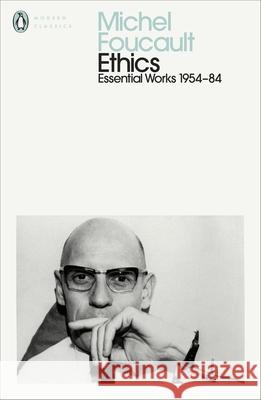
'A fabulous journey through thirty years of political and intellectual ferment ... will reorient our reading of Foucault's major works' Didier Eribon The Essential Works of Michel Foucault offers the definitive collection of his articles, interviews and seminars from across thirty years of his extraordinary career. This first volume, Ethics, contains the summaries of Foucault's renowned courses at the College de France, as well as key writings and candid interviews on ethical matters: from the role of the intellectual and philosopher in society to friendship, sexuality and the care of the...
'A fabulous journey through thirty years of political and intellectual ferment ... will reorient our reading of Foucault's major works' Didier Eribon ...