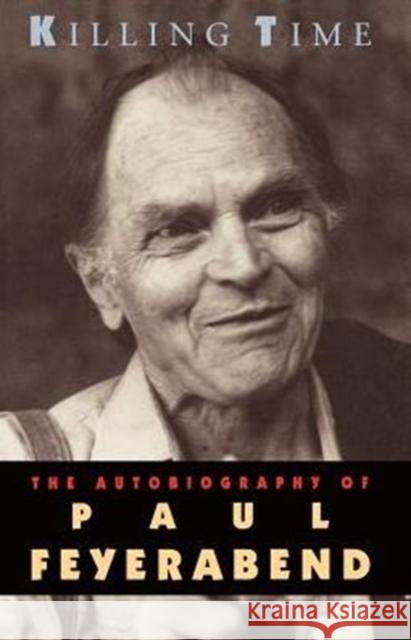
"Killing Time" is the story of Paul Feyerabend's life. Finished only weeks before his death in 1994, it is the self-portrait of one of this century's most original and influential intellectuals. Trained in physics and astronomy, Feyerabend was best known as a philosopher of science. But he emphatically was not a builder of theories or a writer of rules. Rather, his fame was in powerful, plain-spoken critiques of "big" science and "big" philosophy. Feyerabend gave voice to a radically democratic "epistemological anarchism: " he argued forcefully that there is not one way to knowledge, but...
"Killing Time" is the story of Paul Feyerabend's life. Finished only weeks before his death in 1994, it is the self-portrait of one of this century's ...
From flea bites to galaxies, from love affairs to shadows, Paul Feyerabend reveled in the sensory and intellectual abundance that surrounds us. He found it equally striking that human senses and human intelligence are able to take in only a fraction of these riches. "This a blessing, not a drawback," he writes. "A superconscious organism would not be superwise, it would be paralyzed." This human reduction of experience to a manageable level is the heart of "Conquest of Abundance," the book on which Feyerabend was at work when he died in 1994. Prepared from drafts of the manuscript left at...
From flea bites to galaxies, from love affairs to shadows, Paul Feyerabend reveled in the sensory and intellectual abundance that surrounds us. He fou...